
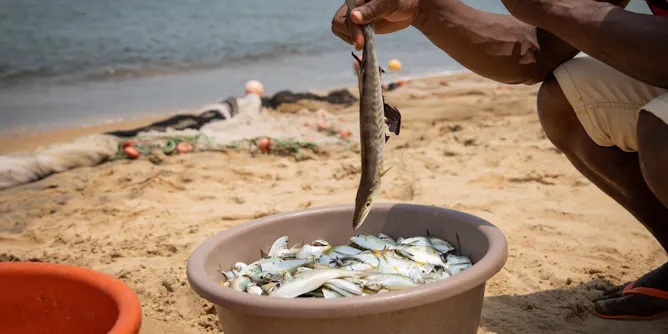
There is a need for better innovations and policies to help improve the fisheries sector in this region.
Articles on UN sustainable development goals (SDG)
Displaying 61 - 80 of 287 articles
Governments agreed in 2015 to transform society by 2030. Here’s how that’s going.

Child malnutrition is no stranger to high-income countries. In Canada and the U.S., food insecurity affects one in six children under 18, but policies to address the issue are still lacking.

Traffic crashes kill and injure millions worldwide every year and are a major drain on economic development. Improving road safety would produce huge payoffs, especially in lower-income countries.
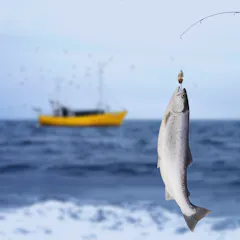
Successful management of shared fish stocks depends on countries’ collaborative efforts and adaptation to a changing world.
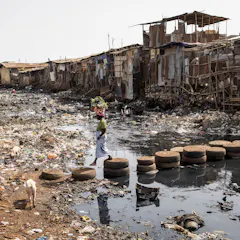
Although there is strength in diversity, members of ethnic groups in power distributing resources to members of their ethnic group at the expense of national growth entrench poverty in Africa.

A new study finds that by 2030, less than one-third of the world’s major crop harvests will go directly to feed people.

As a major contributor of knowledge, Nigeria could make giant strides in nanotechnology – which in turn could help various industries blossom.

Not only are physical banks out of reach, people also face barriers to using digital financial services.

While the developed world is making rapid technological progress, the developing world is underrepresented in the AI revolution.

Humanity is off track to keeping global warming to 1.5°C. But if we pull out all stops, we’ve still got a chance.
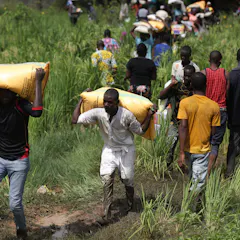
Nigeria has the largest number of people living in extreme poverty in Africa. Turning the tide requires inclusive growth, value added productivity and strong institutions.
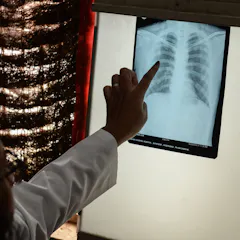
Manufacturers and health systems have shown that vaccines can be quickly and effectively deployed when accompanied by keen political and financial commitments.

The answers to Nigeria’s poor social science research output seem to lie in quantity and quality of personnel, time available for research, funding, support institutions and policy.
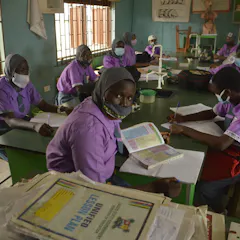
Learning about sustainable development and consumption should not be limited to particular disciplines like those in the sciences and technologies.

Adolescents and young people should get involved early in the design, planning and scale up of interventions.
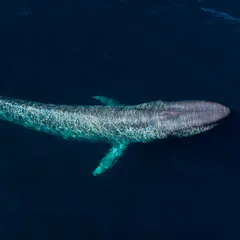
The world needs to protect 30% of the ocean by 2030. We won’t achieve this goal without using new technology to patrol and preserve marine protected areas.

A child born in sub-Saharan Africa or Southern Asia is 10 times more likely to die in the first month of life than a child born in a rich country.

African countries can’t afford to tread water waiting for the global multilateral and private financing system to become more equitable.
Carbon dioxide can be classed as pollution under the UN law of the sea and countries have an obligation to prevent it from entering the ocean.
Top contributors
-
 John Thwaites is a Friend of The Conversation.
Chair, Monash Sustainable Development Institute & ClimateWorks Australia, Monash University
-
Chair of Policy Innovation, School for Data Science and Computational Thinking, Stellenbosch University
-
Senior Research Fellow, Monash University
-
Sustainable Development Solutions Network Manager, Monash Sustainable Development Institute, Monash University
-
Professor of Business and Sustainable Development, University of Edinburgh
-
Professor of Development Economics, Monash University
-
Thomas Wiedmann is a Friend of The Conversation.
Professor of Sustainability Research, UNSW
-
Vice-Chancellor's Senior Research Fellow, RMIT University
-
Research Fellow, Stellenbosch University
-
Associate Professor in Construction and Environmental Performance, The University of Melbourne
-
Canada Research Chair of Epidemiology & Global Health, McGill University
-
Associate Director (International) - Melbourne Centre for Cities, The University of Melbourne
-
Reader in Development Economics, University of Manchester
-
Senior Lecturer, Crawford School of Public Policy, Australian National University
-
Associate Professor in Public Health, The University of Queensland