
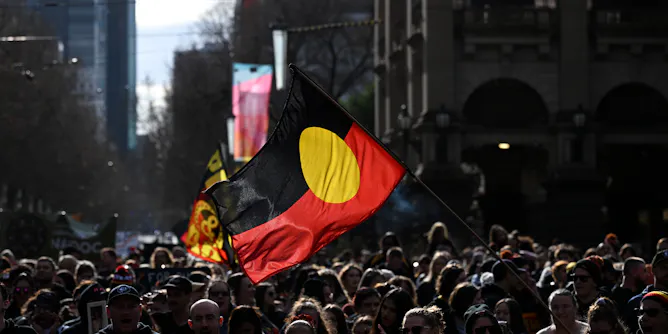
In this podcast, Thomas Mayo and Derryn Hinch discuss misinformation in the Voice to Parliament campaign.
Articles on Constitutional recognition
Displaying 1 - 20 of 83 articles
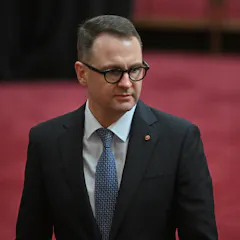
Liberal Senator Andrew Bragg, a ‘yes’ backer, suggested the referendum should be put off until mid-2024 in a radio interview last week
In this podcast, @michellegrattan discusses the Voice with Indigenous Senators Dorinda Cox and Kerrynne Liddle
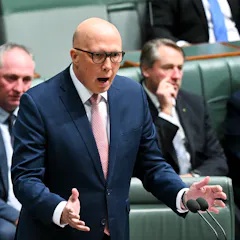
As debate on the historic referendum legislation, Dutton claimed the Voice would ‘re-racialise our nation’.
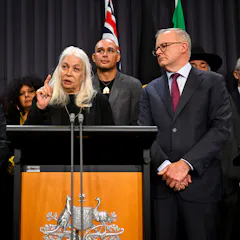
In this podcast, Michelle Grattan and Professor Marcia Langton discuss the Voice to Parliament and constitutional recognition for First Nations Australians
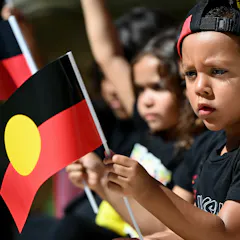
The Uluru Statement from the Heart will give us new meaning to the expression.
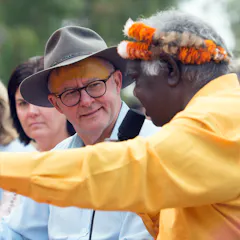
Anthony Albanese will propose draft wording to insert into the constitution an Indigenous “Voice” to parliament when he addresses the Garma Festival in Arnhem Land on Saturday. The Prime Minister is also…
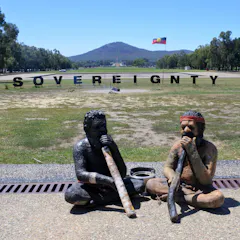
Survey findings bring insight to the general public’s thoughts and concerns of an Indigenous Voice to parliament. What questions still need to be answered to obtain a yes vote in a referendum?

Mission, a series of Noel Pearson’s essays, speeches and eulogies, delves into many of the key parts of the author’s life and politics.
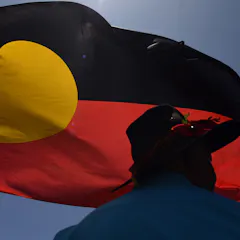
There has been a clear trend since the 1980s towards more favourable public attitudes on Indigenous issues. The reason? A better-educated citizenry.
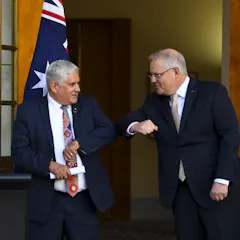
The simple truth is that a legislation-first approach to establishing a Voice without constitutional protection is bad policy. And it is not true to the Uluru Statement.

New research reveals high support for a First National Voice to be enshrined in the Constitution.

Recognition is about sovereignty, or how political authority is distributed. It can be transformative — not merely a symbolic step.
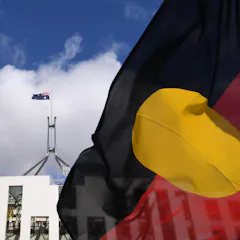
There is a quiet process underway, aimed at achieving the recognition of the First Nations that has so far eluded Australia.

The mission of Voice. Treaty. Truth in the Uluru Statement represents very carefully sequenced reforms. A proper understanding of these should guide any constitutional changes.
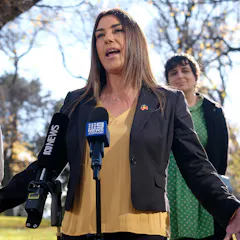
The Greens senator-elect believes a treaty should be prioritised over a Voice to Parliament. But we believe a Voice can be a pragmatic first step toward deeper reform.
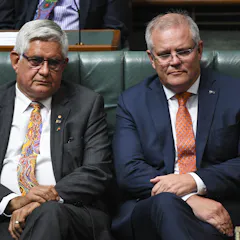
Australians have been working towards meaningful change for almost a decade. That cannot be derailed by reverting to symbolic recognition.
Next week begins the year’s final parliamentary fortnight, and the main attention will be on the fate of two bills - the ensuring integrity legislation, and the medevac repeal.
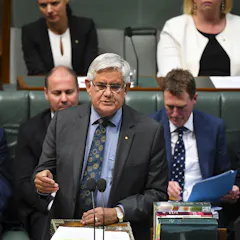
We have welcomed the opportunity to guide the co-design process because we feel this is a once-in-a-generation opportunity to recast how decisions are made in Indigenous affairs.

Michelle Grattan discusses this week in politics with University of Canberra Deputy Vice-Chancellor Leigh Sullivan.
Top contributors
-

Professorial Fellow, University of Canberra
-
Associate Professor, Faculty of Law & Justice, UNSW
-
Associate Professor, UNSW
-
Pro Vice-Chancellor Indigenous UNSW and Professor of Law, UNSW ; University of Pennsylvania
-
Adjunct Professor, Stout Research Centre, Victoria University of Wellington and Auckland University of Technology, Professor of Political Science, Charles Sturt University
-
Lecturer, Griffith Law School, Griffith University
-
Professor in Human Rights and International Law, University of Newcastle
-
Professor of Public Policy & Law, Centre for Governance & Public Policy, Griffith University
-
Lecturer - Law, CQUniversity Australia
-
Professor of Archaeology and Biological Anthropology, School of Social Science, The University of Queensland
-
Professor of Law, UNSW Law School, UNSW
-
Chancellor, University of Canberra
-
Professor, Law Faculty, Monash University
-
Associate Professor, Melbourne Law School, The University of Melbourne
-
Senior Lecturer in Law, Charles Darwin University