
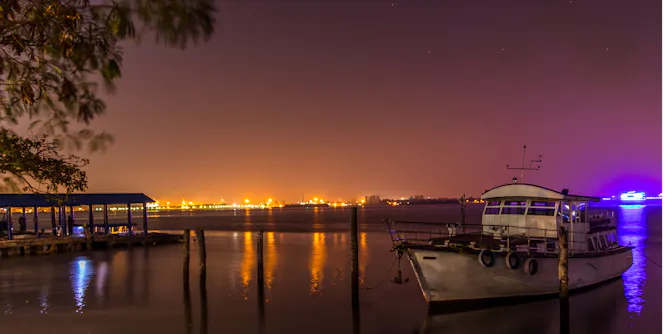
Artificial lighting from cities illuminates coastal waters and can change the physiology and behaviour of marine organisms.
Articles on Turtles
Displaying 21 - 40 of 63 articles
In a warming world, a species’ ability to acclimatise to temperatures is crucial. But young ectotherms can struggle to handle the heat.
While artificially illuminating the night allows humans to make use of the the night, in doing so we catastrophically change the environment for all other species. How can we fix this?
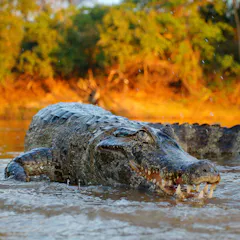
More than half of all crocodile species are a high priority for conservation according to the assessment.

Increased motorboat activity has resulted in an alarming increase in turtle injuries. Northern map turtles are an at-risk species, and boat collisions threaten their survival.

A 5-million-year-old fossil that sat collecting dust in a Melbourne museum for more than a century has rewritten the evolutionary history of turtles in prehistoric Australia’s tropical climate.
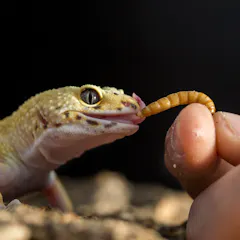
Reptiles get a bad rap, but this is because they’re misunderstood. Promoting healthy reptile pet ownership can contribute to conservation and education efforts.
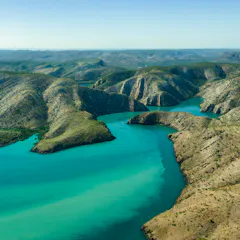
Traditional ecological and cultural wisdom was embraced and valued, enhancing Western scientific knowledge of a beautiful, fragile marine area.
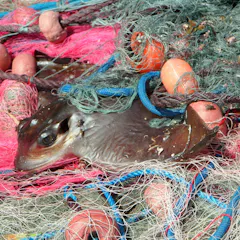
Tackling bycatch in large-scale fishing can make our seafood habit more sustainable
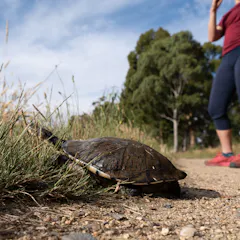
Plus, researchers recommend four environmental citizen programs to join. It’s never been easier.
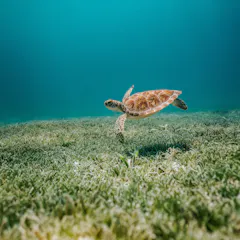
Though often seen as placid, turtles have been depicted as powerful, fighting animals since ancient times. One of the most famous battleships, the Korean Geobukseon, was called the ‘Turtle Ship’.
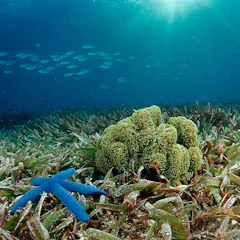
Between 1986 and 2016, Kenya lost about 21 of its seagrasses.

We have transformed the night-time environment in a very short time, relative to evolutionary timescales. Most wildlife hasn’t had time to adjust.
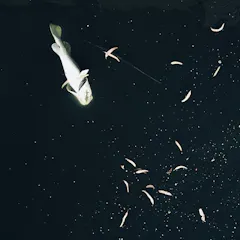
Fish, frogs, turtles and platypus at major risk of extinction following the bushfires. So why aren’t they getting much attention?
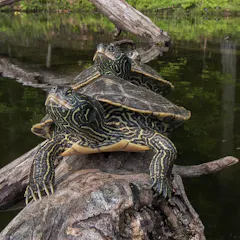
New technologies are revealing more about the secret lives of underwater turtles. Using underwater cameras and 3D printing, researchers are learning more than ever before.
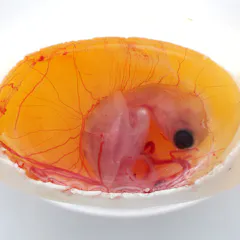
How and why animals develop as male or female is far more complex than we ever imagined.
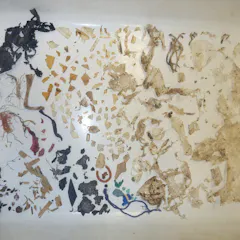
Autopsies of 1,000 turtles washed up on Australian beaches paint a grim picture of the impact of plastic debris. Even a single piece can be deadly, and on average 14 pieces equals a 50% fatality rate.
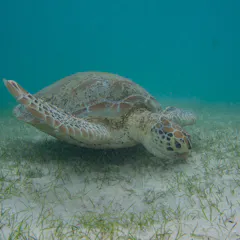
New research highlights the role of sea turtles and dugong in the dispersal of seeds and maintenance of seagrass meadows, an important marine habitat and the primary food source for both animals.
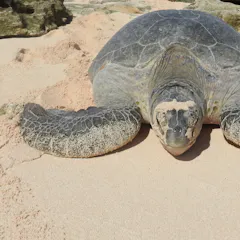
With 99% of green sea turtles in the northern Great Barrier Reef hatching as females due to changing climate, the future for this species now depends largely on effective global conservation measures.
Crisp temperatures, ice-capped ponds and frozen landscapes send animals scurrying for cover. But just what do turtles do when winter takes hold?
Top contributors
-

Professor, Western Sydney University
-
Instructor, Ecology and Evolutionary Biology, Carleton University
-
Emeritus Professor in Zoology, University of Sydney
-
Associate professor in marine bioloy, James Cook University
-
Associate Professor in Biomedical Sciences, La Trobe University
-
Associate Professor in Zoology and Ecology, University of New England
-
PhD candidate, James Cook University
-
Senior Lecturer (Applied Ecology and Landscape Management), University of New England
-
PhD
-
PhD Candidate, Charles Sturt University
-
Professor of Marine Science, Deakin University
-
Professor, Department of Biology, Laurentian University
-
ARC Super Science Fellow, James Cook University
-
Research Biologist, The University of Queensland
-
Research Fellow, Centre for Integrative Ecology, Deakin University