
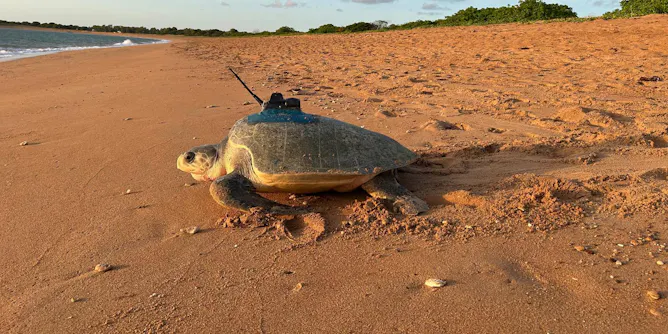
We paired a GPS tracker with a probe that measures temperature when the turtle dives.
Articles on Sea turtles
Displaying 1 - 20 of 50 articles

To date, every family of marine mammal and seabird and all seven species of sea turtles have been documented to ingest plastics.
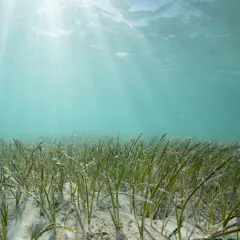
Scientists are using mollusk shells to evaluate the health of Florida’s seagrass ecosystems.
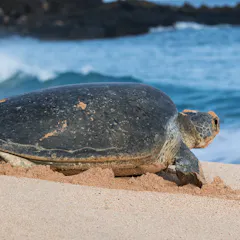
New research estimates that approximately 60 tonnes of plastic debris discarded in the ocean reside within female green turtles at any given time.
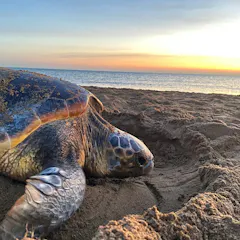
The temperature of a sea turtle’s nest controls the sex and survival rate of their offspring.
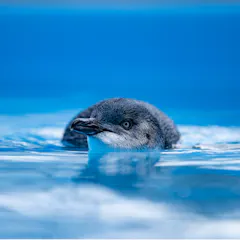
New research shows sea turtles, penguins and whales swim at optimal depths to minimise the energetic cost of travel.
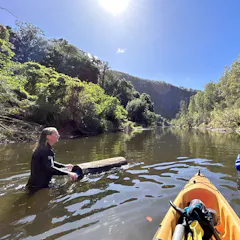
Conservation groups can now share and compare climate adaptation tactics to support threatened species and ecosystems through a new online tool called AdaptLog.
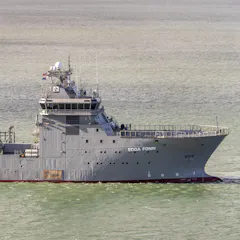
Damage from the loss of a New Zealand naval ship in Samoa can be limited if salvage and cleanup crews move fast. But the depth at which the ship now lies will be a challenge.
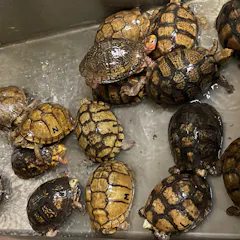
More than half of the world’s turtle species are endangered or threatened, and overhunting of wild species is a major cause.
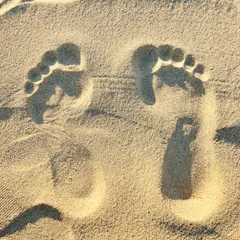
Environmental DNA provides a wealth of information for conservationists, archaeologists and forensic scientists. But the unintentional pickup of human genetic information raises ethical questions.
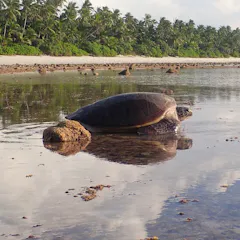
Leatherback turtles are predicted to lose half of their nesting habitat, on one beach studied.
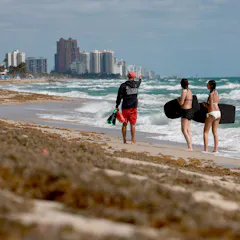
Scientists are predicting a record sargassum bloom in 2023. It’s already starting to wash up on beaches in Florida and the Caribbean and cause a stink.
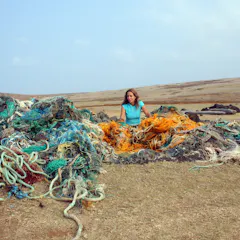
Pam Longobardi collects and documents ocean plastic waste and transforms it into public art and photography. Her work makes statements about consumption, globalism and conservation.
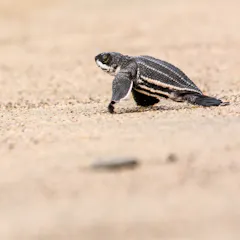
If environmental harm wrought by the port cannot be addressed, the project should not be allowed to proceed.
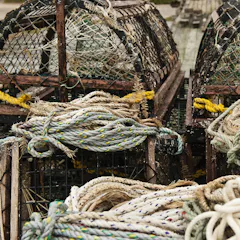
To fish the oceans sustainably, nations must reduce bycatch, or accidental catches. But fishermen often resist changing gear or techniques that kill nontargeted species.
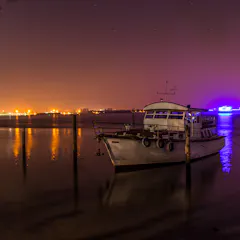
Artificial lighting from cities illuminates coastal waters and can change the physiology and behaviour of marine organisms.
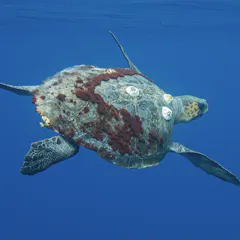
Standard marine protected areas with fixed boundaries can’t effectively shelter these ocean nomads.

Scientists don’t know what prompts turtle hatchlings to emerge from their nests and head for the water, but vibrations appear to play a role.
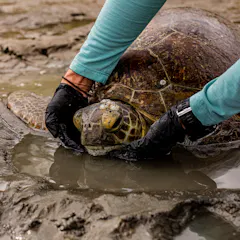
Floodwater carries dense clouds of sediment, choking the lush seagrass meadows on which these gentle grazers rely.
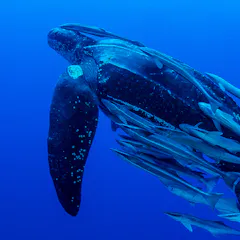
New Zealand has no mandatory measures to prevent the bycatch of turtles. This is in stark contrast to Hawai'i, which has reduced its turtle bycatch by 90% using various mitigation measures.
Top contributors
-

Professor of Marine Science, Deakin University
-
Postdoctoral associate, University of Florida
-
Senior Lecturer in Animal Ecology, University of the Sunshine Coast
-
Associate Research Professor and Director, Texas Sea Grant, Texas A&M University
-
Professor of Marine Biology and Aquaculture, The University of Melbourne
-
Assistant Professor of Wildlife Disease Genomics, University of Florida
-
Post-Doctoral Research Fellow, James Cook University
-
Postdoctoral Researcher, Universidad Autónoma de Baja California
-
Research Associate Professor of Biology, Texas A&M University
-
Senior Principal Research Scientist, Environment, CSIRO
-
Lecturer in Tropical Biology, James Cook University
-
Research Fellow, Centre for Integrative Ecology, Deakin University
-
Emeritus Professor of Marine Ecology, Macquarie University
-
Assistant Professor in the Department of Earth, Ocean and Atmospheric Science, Florida State University
-
Associate professor, James Cook University