
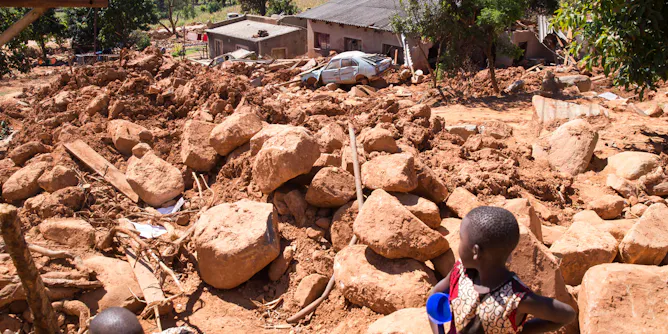
Disaster recovery agencies and governments must pay more attention to survivors’ invisible losses: grief, broken communities and disrupted identities.
Articles on Tropical cyclone Idai
Displaying all articles

The threats of climate change to plants, animals and people in Africa mean that the continent is an excellent place for biometeorological research.
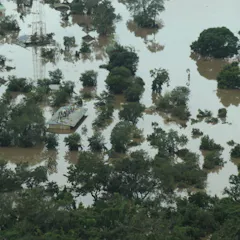
Tropical cyclones Idai and Kenneth have shown how important it is to integrate local information and resources with global scale forecasts and support.
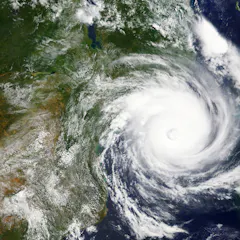
CC BY-NC-ND5.61 MB (download)
Warmer oceans are contributing to more frequent tropical cyclones.
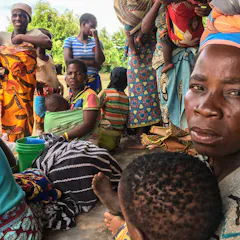
Women in disaster zones are frequently targeted by sexual predators who take advantage of their vulnerability.
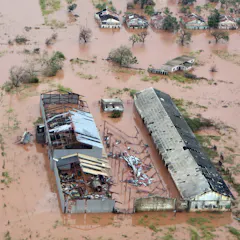
The spate of high intensity tropical cyclones making landfall in Southern Africa has been tied to very warm sea surface temperatures.
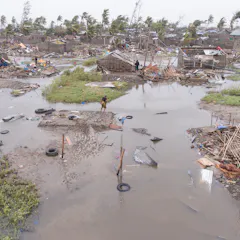
CC BY-NC-ND5.88 MB (download)
Diseases like cholera are among the many health crises Cyclone Idai has created.
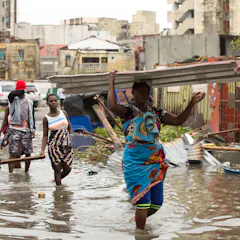
Cyclone Idai hit poor countries the hardest and shows why disaster resilience is a necessity.
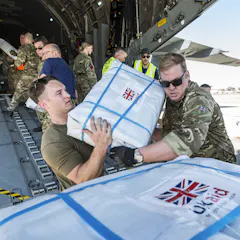
The international community responded quickly to Cyclone Idai as the African Union dragged its feet.
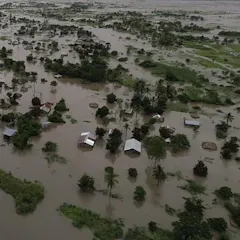
Climate change is making hurricanes more destructive, and may have boosted the intensity of cyclone Idai that hit Mozambique, Zambia and Malawi.
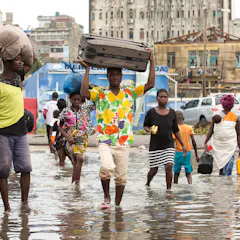
The recent storms provide a grim reminder of the prospect of future tropical cyclones in a region under continued threat from climate change.
Top contributors
-

Professor of Physical Geography, University of the Witwatersrand
-
Reader in Law, University of Sussex
-
Senior Director, Transformation Strategies Department, International Food Policy Research Institute (IFPRI), CGIAR
-
Professor of Civil Engineering and Director of the Beaty Water Research Centre, Queen's University, Ontario
-
Research Professor in Humanitarian Studies and Professor of Sociology of Law, Department of Criminology and Sociology of Law, University of Oslo, Peace Research Institute Oslo (PRIO)
-
Part-time Lecturer in the Department of Peace, Security and Society and Climate Change Consultant, University of Zimbabwe
-
Research Fellow in the Tugwi-Mukosi Multidisciplinary Research Institute, Midlands State University; University of South Africa
-
Post-doctoral fellow in the African Synthesis Centre for Climate Change, Environment and Development (ASCEND) research centre, University of Cape Town
-
Deputy Director, Environment and Production Technology Division, International Food Policy Research Institute (IFPRI)
-
Postdoctoral Research Fellow, Hydrologist and Data Scientist, AXA Research Fund; Polytechnic University of Milan