
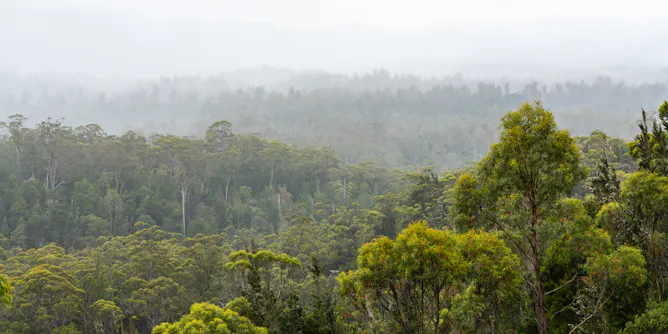
Trees are supposed to grow faster as a result of increased CO₂ in the atmosphere - but this research suggests there are many exceptions to the rule.
Articles on Trees
Displaying 81 - 100 of 415 articles
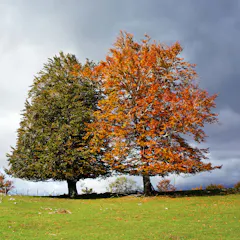
Botanist Paul Ashton explains the difference between trees that lose their leaves, and those that don’t on The Conversation’s Curious Kids podcast.
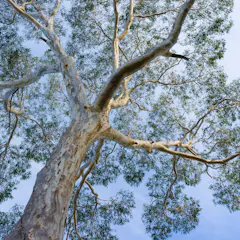
Most of us just take it for granted. But bark is one of the most complex parts of a tree and has many different jobs to do.

Many in the wider community still see sugar gums as risky trees that drop dangerous branches. But there is much to appreciate and admire about Eucalyptus cladocalyx.
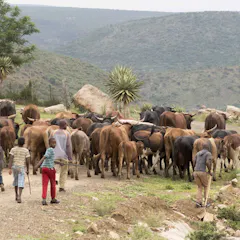
Planting millions of trees in natural grassland is largely ineffective in the battle against global warming because it adds little or no additional carbon storage.

The last time that these two groups of cicadas emerged from underground together, Thomas Jefferson was president.
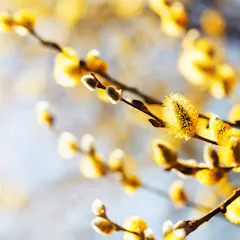
As temperatures and rainfall patterns change, the time that trees produce catkins could change and affect wildlife that rely on catkins for food.

A new study offers a rare window into the hidden effects of aggressive fire suppression that go beyond fuel accumulation. The practice may even change the course of forest evolution.
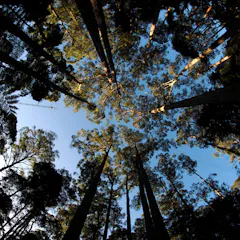
Our tallest trees are world champions when it comes to capturing and storing carbon, but they don’t like the heat. Climate change will trigger mass tree deaths in Tasmania. Here’s what can be done.
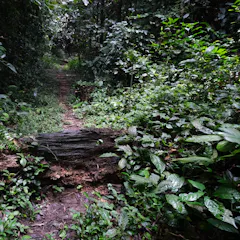
Nigeria’s forest resources have dwindled and are in danger of disappearing in a few decades if nothing is done to save them.
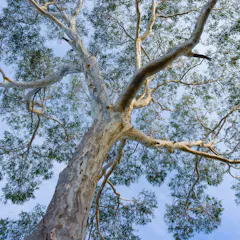
We scanned the tree canopy with lasers and found birds much prefer the branches of big old trees.
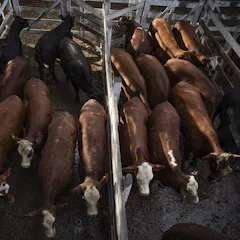
Cattle are major producers of methane, a potent greenhouse gas. But there are methods that can reduce their climate impact – if ranchers have incentive to use them.
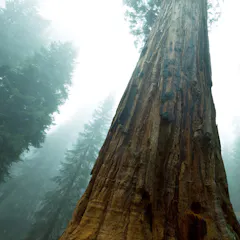
Their incredible resilience means they are becoming part of the UK landscape.

Trees – and all plants – harvest sunlight to gain the energy they need to live and grow.
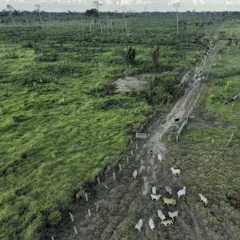
Effective use of genomic identification could revolutionize the control of the illegal timber trade.
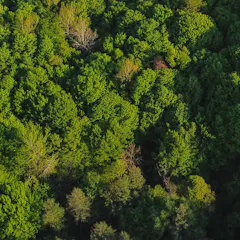
Planting trees to remove carbon from the atmosphere will only be effective alongside other strategies to reduce greenhouse gas emissions.
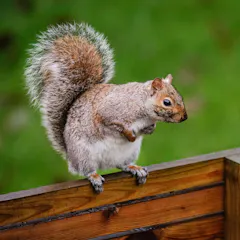
New research suggests the gut bacteria of red and grey squirrels differ significantly, potentially explaining the decline of the native red and the success of its grey counterpart.

Large parts of Appalachia’s forests, once owned by coal companies, now make money for investors by storing carbon. But the results bring few jobs or sizable investments for residents.

Satellite images and community perceptions combine to give a fuller picture of land use changes.

Incentives have so far benefited large landowners and created lifeless plantations.
Top contributors
-

Senior Research Associate, School of Agriculture, Food and Ecosystem Sciences, The University of Melbourne
-
Honorary Associate Professor, Forest Measurement and Management, Fenner School of Environment and Society, Australian National University
-
Distinguished Professor of Ecology, Fenner School of Environment and Society, Australian National University
-
Professor of Environmental Science, Australian National University
-
Distinguished Professor, Ecosystem Function and Integration, Western Sydney University
-
Professor Emeritus of Global Change Biology and Terrestrial Systems Science, Oregon State University
-
Professor Emeritus of International Environmental Policy, Tufts University
-
Vice-Chancellor's Research Fellow, Centre for Urban Research, RMIT University
-
Associate professor, The University of Melbourne
-
Professor of Plant Eco-physiology, Western Sydney University
-
Professor in Forest and Landscape Dynamics, The University of Melbourne
-
Vice President of Academic Affairs and Dean of the College, Grinnell College
-
Professor of Atmospheric Science, University of Birmingham
-
Professor, Plant Physiology, James Cook University
-
Distinguished Research Professor and Australian Laureate, James Cook University