
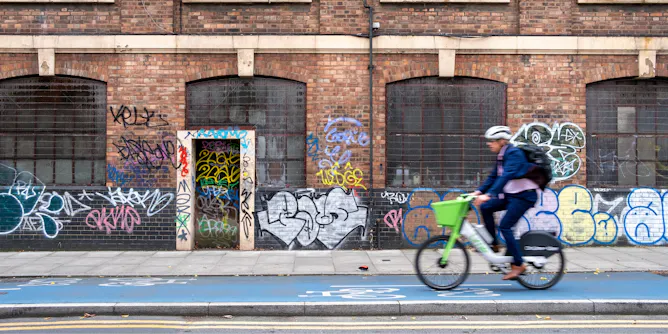
Findings show that the most political people have the strongest views on green transport infrastructure, potentially skewing the debate.
Articles on transport infrastructure
Displaying 1 - 20 of 28 articles

Walking and cycling get 90c per person each year from the Australian government. What if that figure rose to $5, $10 or $15?
Rebates may well increase ownership but won’t overcome the main obstacles to riding e-bikes and e-scooters, which are lack of infrastructure and concerns about safety.
If the international reactions are anything to go by, Ethiopia’s Red Sea port deal is easier said than done.

Support for road-user charging strengthens when people are assured that revenue goes into reducing traffic congestion, maintaining transport infrastructure, improving public transport.
A deadly crash in India that claimed the lives of around 300 people has refocused international attention on the importance of railways in the country.
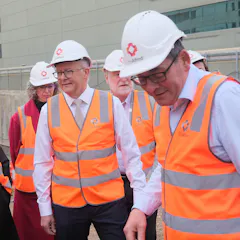
It’s easy to spot the similarities in how this first Labor budget and its Coalition predecessors approached transport projects. Their eye-watering spending isn’t supported by proper assessments.
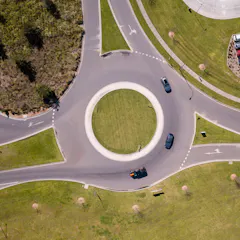
There’s more spending on small local projects, so does it follow that it’s ‘pork-barrelling’? A new report shows what really matters is if the money is allocated under objective, transparent criteria.
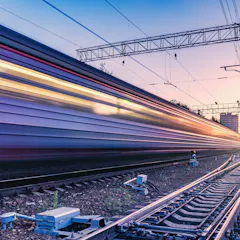
Anthony Albanese’s plan for high-speed rail between Sydney and Newcastle could well be worth the cost, so long as he doesn’t muddy it with 1970s-style industry policy.
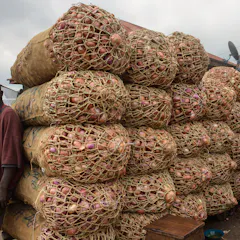
Food inflation figures in Nigeria give cause for concern. Accusing fingers are pointed at rising dollars, farmers and middlemen, but this expert says the can may have been placed on the wrong heads.

While the road toll has come down over the decades, it’s largely a result of fewer car occupants dying. Pedestrian deaths have barely changed for a decade, but they remain a road safety blind spot.
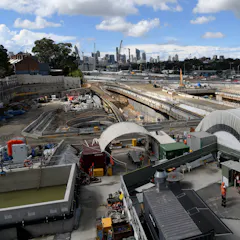
Three big firms win almost all the $1 billion-plus contracts. And they often team up in joint ventures, further reducing the competition that would keep the price tags of road and rail projects down.
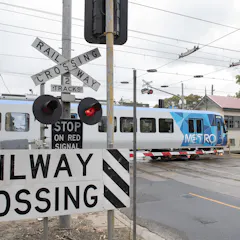
The pervasive impacts of infrastructure projects on public health are often overlooked. New research is teasing out the many ways Melbourne’s level-crossing removals will affect people’s health.
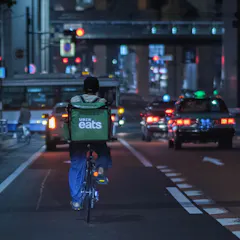
Delivery riders are paying the ultimate price for the fact that our cities, their infrastructure and the rules governing them make cycling much more dangerous than it should be.
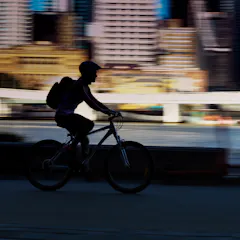
Investing more in cycling and walking would boost both physical and economic health, with a typical return of $5 for every $1 spent on cycling infrastructure.

Governments are throwing billions of taxpayer dollars on stimulus measures after COVID-19. But they must do it diligently, and transparently.
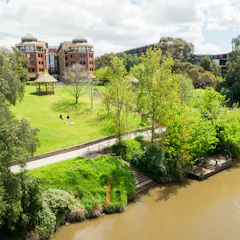
Only the inner suburbs of Melbourne and other capital cities meet the 20-minute neighbourhood test. But we could transform the other suburbs for much less than the cost of current transport projects.

States across Australia are increasingly using market-led proposals to build infrastructure. The emerging problems reflect the inherent risks of projects that bypass proper public planning processes.
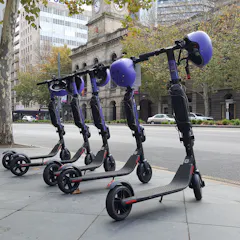
Are debates about e-scooters too narrow? Perhaps it is time to focus more on revitalising urban spaces and retrofitting road infrastructure.
Unsolicited market proposals are not transparently assessed. Infrastructure should be built to serve the public interest, not shaped by its private backers, but the checks to ensure this are broken.
Top contributors
-

Transport and Cities Program Director, Grattan Institute
-
Associate Professor of Urban Planning, The University of Melbourne
-
Professor of Transport Technology and Sustainability, Swinburne University of Technology
-
Honorary Senior Fellow in Transport Planning, The University of Melbourne
-
Adjunct Research Fellow, School of Human Sciences, The University of Western Australia
-
PhD student, Australian National University
-
Postdoctoral Research Fellow, Melbourne School of Design, The University of Melbourne
-
Associate, Grattan Institute
-
Curtin University
-
Vice-Chancellor's Senior Research Fellow, RMIT University
-
Senior Researcher, Urban Transformations Research Centre, Western Sydney University
-
Senior Lecturer in Urbanism, University of Sydney
-
Senior Research Consultant, Institute for Sustainable Futures, University of Technology Sydney
-
Adjunct Professor, Institute of Transport and Logistics Studies, University of Sydney Business School, University of Sydney
-
Elaine Stratford is a Friend of The Conversation.
Professor, School of Geography, Planning, and Spatial Sciences, University of Tasmania