
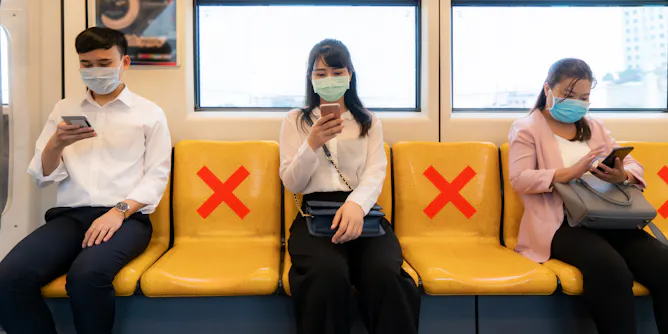
Without plastic shielding between seats or more efficient engines, the environmental benefits of public transport are lost.
Articles on Transport emissions
Displaying 81 - 100 of 117 articles

The drop in traffic during COVID-19 lockdowns reduced global emissions. If we keep encouraging cycling and working from home beyond the pandemic, our climate goals may become more achievable.
Removing engine idling would be like removing up to 1.6 million cars from the road.
Bullet trains are back on the agenda. But a new analysis shows that rather than helping cut emissions, such a project would drive them up for at least 24 years.
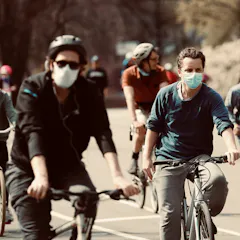
New research reveals which sectors of the global economy fuelled the emissions decline during COVID-19. We have a narrow window of time to make the change permanent.
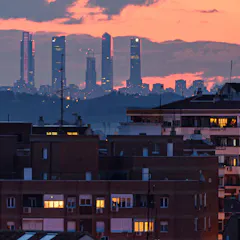
As lockdowns have came into effect around the world, air pollution has plummeted.
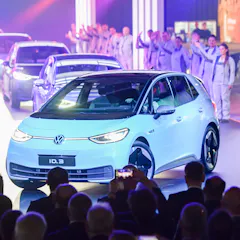
After ‘Dieselgate’, Volkswagen appears keen to rescue its public image. Now it’s looking to hire its own ‘Greta Thunberg’.
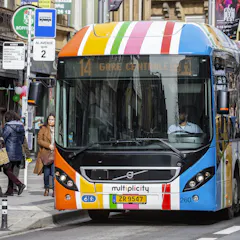
Fare free public transport exists in at least 98 cities and towns around the world.
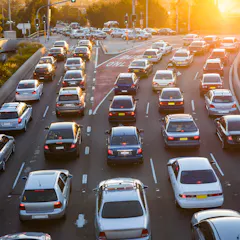
The continued upward trend in our second-biggest source of emissions is a result of government inaction on a transport mix dominated by trucks and cars and a lack of fuel-efficiency standards.
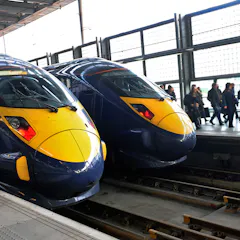
All modes of high-speed travel come with a cost to the environment.
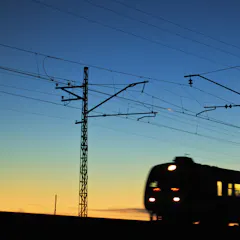
Since 2019, night train networks have seen a remarkable revival across Europe.

Electric trains use seven times less carbon dioxide than cars. With careful planning, railways could drastically cut emissions from a sector that now accounts for a quarter of the carbon in our air.
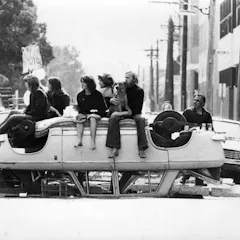
Public protests eventually forced the scrapping of some proposed freeways in 1973. Today, we have another round of projects and people are protesting again, with good reason. Government should listen.
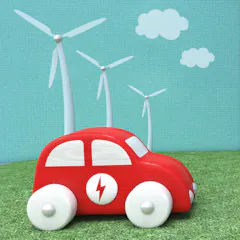
Our power plants may be dirty now. But unlike combustion vehicles, electric cars give us the chance to finally free ourselves from high-carbon travel.
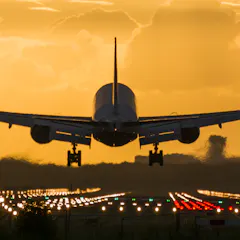
Globally, emissions from air travel account for only about 3% of the warming human activities are causing, but aviation affects our climate in a number of ways.

Surprise findings have revealed that Australia’s cars are getting less fuel efficient. This is bad news for the hip-pockets of motorists - and for the climate.
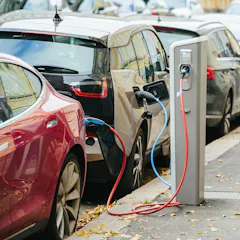
New Zealand has proposed new fuel standards, along with a consumer rebates for cleaner cars – paid for by higher costs for high-polluting cars – to cut its rising transport emissions.
How far would you go to limit your carbon footprint?

Electric motors are used in everything from utes to mining trucks – because they pack plenty of oomph.
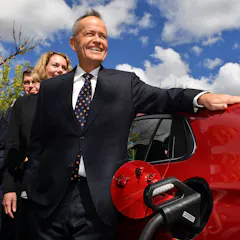
Labor’s ambitious plans to reduce transport emissions will be dead in the water without regulatory CO2 emission standards and real financial and non-financial incentives for buyers.
Top contributors
-

Adjunct Professor of Transport, University of Technology Sydney
-
Professor of Transport Technology and Sustainability, Swinburne University of Technology
-
Professor in Applied Mathematics, Te Kunenga ki Pūrehuroa – Massey University
-
Professor, School of Economics, The University of Queensland
-
Honorary Principal Fellow, University of Wollongong
-
Professor in Supply Chain and Freight Innovation, Swinburne University of Technology
-
Senior Lecturer in Culture & Climate, The University of Melbourne
-
E-Mobility Research Fellow, The University of Queensland
-
Professor in Transport Planning, University of Westminster
-
Professor, Crawford School of Public Policy and Director, Centre for Climate and Energy Policy, Australian National University
-
Associate Professor in Sustainability, University of Sydney
-
Senior Lecturer in Law, Cardiff University
-
Senior Associate Institute of Governance and Policy Studies, Te Herenga Waka — Victoria University of Wellington
-
Senior Researcher, Center for International Climate and Environment Research - Oslo
-
Senior Lecturer in Operations and Supply Chain Management, Anglia Ruskin University