

The old promise that hard work will lead to a good job and a fair wage no longer seems to apply.
Articles on Training
Displaying 21 - 40 of 105 articles

Running doesn’t have to be all or nothing. Jeffing, the run-walk strategy developed in the 1970s, is helping people achieve their running goals.

People on the autism spectrum are often overlooked in hiring because of how they come across in interviews. But with the right understanding and fixes to the process, employers can make smarter choices.

Excessive delays and hurdles are rife in Australia’s A$4 trillion superannuation industry’s death benefits system. There should be consequences for failure.
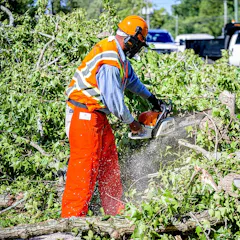
South Africa’s Working for Water programme addresses environmental issues and provides temporary jobs. But it’s not equipping participants for stable employment.
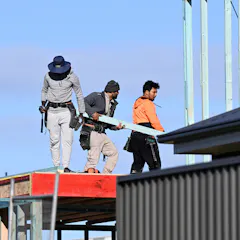
The government has proposed new incentives to attract apprentices to the construction sector, but this could divert talent from other key sectors of the economy.

Low rates of pay, often combined with buying their own equipment, can leave apprentices with no choice but to do cash-in-hand work.
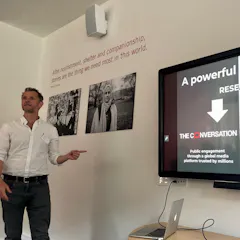
What Universal Impact has learnt from a year of producing the Research Reach Roundup newsletter

Every done leadership training for work, come back to the office and thought: ‘That was a huge waste of time’?
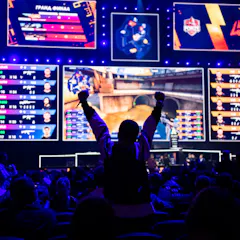
Electronic sports, or esports, is a practice that is often looked down upon. But it is a growing global phenomenon played on an incredible scale.
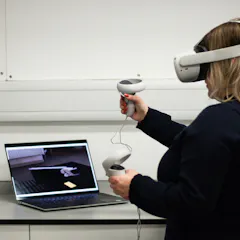
VR can help responders hone the decision making skills they’ll need in emergency scenarios.

When people hear the term ‘liberal arts,’ it may sound like a phrase with political overtones. A scholar of literature explains why that’s wrong and takes a closer look at its origin and meaning.

Each encounter that health-care students have with patients and families helps them understand real-world patient needs. That means all Canadians have a role in educating future health-care providers.

In the rapidly changing, ambiguous and unpredictable world of work, future leaders must be able to learn fast.

Does intermittent fasting have a negative or positive effect on athletic performance? At the moment, the scientific data about this is contradictory.

Vocational education and training is facing some big changes. The federal government is proposing a five-year National Skills Agreement with the states to start next year.
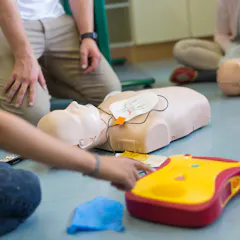
Rates of cardiac arrest are high. So, why don’t more people know CPR?

Lockdown stopped many puppies developing the social skills they need to navigate the human world with confidence.
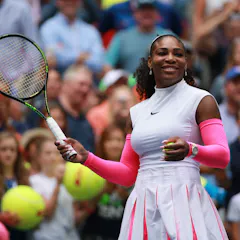
Better knowledge of the right training strategies is one reason more athletes are continuing to compete longer than they used to.

We hear the term ‘skills shortages’ all the time in media and policy debates. But what skills do we need, and more importantly, how do we get them?
Top contributors
-

Associate Professor, College of Business, Government and Law, Flinders University
-
Professor of Entrepreneurship and Innovation, Edith Cowan University
-
Lecturer in Exercise and Environmental Physiology and Exercise Immunology, University of Westminster
-
Professor in Neuromuscular Physiology and Head of Sport Sciences, Nottingham Trent University
-
Associate Professor of Family & Community Medicine and Pediatrics, retired, University of California, San Francisco
-
Principal Research Scientist, CSIRO
-
Senior Lecturer, Division of Family Medicine and Primary Care, Faculty of Medicine and Health Sciences, Stellenbosch University
-
Associate Professor, Health and Physical Education/Sport Development, Western Sydney University
-
Associate Professor of Sport Physiology and Performance, Sheffield Hallam University
-
Assistant Professor of Medicine, Emory University
-
Professor of Health Sciences, Adelaide University
-
Researcher at The Work Foundation
-
Research Scientist in Digital Economics, CSIRO
-
Lecturer in Economics, Macquarie University
-
Managing Director, Florida Center for Cybersecurity, University of South Florida