

Job preparation through internships matters more than ever for young people amid a precarious and fast-changing job market.
Articles on Job training
Displaying 1 - 20 of 23 articles

One candidate has gone after for-profit colleges. The other has tried to loosen restrictions. What else does the record show about what Donald Trump and Kamala Harris have done on education?

Slowing climate change means cutting fossil fuel use. Many oil- and gas-producing communities aren’t prepared for that future, as a former White House economic and climate adviser explains.

The credentials can be earned online in a matter of weeks and may lead to higher salaries, but not always.
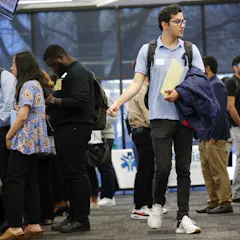
Students should know that a key part of the value of their undergraduate degree lies in taking advantage of all the opportunities for learning that universities offer.

What organisations can do to avoid promoting people into management positions without the correct set of skills.
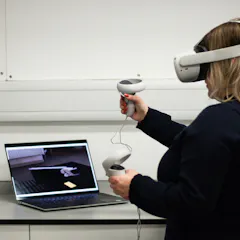
VR can help responders hone the decision making skills they’ll need in emergency scenarios.

When people hear the term ‘liberal arts,’ it may sound like a phrase with political overtones. A scholar of literature explains why that’s wrong and takes a closer look at its origin and meaning.

Jobs in the clean energy industry are expected to grow thanks to a historic federal investment in fighting climate change. Many of the jobs have low barriers to entry, an expert says.

As new ways of working have spread throughout the workplace, a culture of lifelong learning is competing with the traditional practice of on-the-job training.

Three federal public policy changes impacting employed and contingent workers could significantly buffer anticipated impacts of automation, Artificial Intelligence and a changing economy.

A culture of fear and blame in the NHS could be improved by a different approach to how nurses and doctors learn from gaps in their performance.

A Trump administration proposal to merge the federal departments of Labor and Education could spell doom for the liberal arts, an education scholar asserts.

Research shows that coaching employees makes them feel valued and empowered, and builds better relationships with management.

Canadian firms say there’s a dire shortage of skilled workers. But recent studies suggest they’re not investing in training, apparently expecting universities to train their employees for them.

As technology and the labor market rapidly evolve, so too does the value of a high school diploma. Despite the changes, one thing remains true: Education is still the cornerstone of career success.

The so-called ‘crisis’ has united both sides of politics, employers and trade unions, but wrongly conflates apprenticeships and traineeships to skew the picture.

Early intervention via education and training will cost money straight up. But it makes no sense to watch young people drift through unemployment and disengagement and turn into unemployable adults.

Incidents that may have been mere hiccups a few years ago today can go viral in an instant, causing a massive backlash and leaving some of the biggest companies wrong-footed.

Rust Belt youth often want to stay near home but can’t find jobs. The key may be in educational initiatives that help young people find and acquire the jobs that are already readily available.
Top contributors
-

Professor of Education & Policy, Boston College
-
Director, Centre for Western Sydney, Western Sydney University
-
Associate Professor of Geography and Tourism Studies, specializing in economic geography, regional development and cultural industries, Brock University
-
Professor of Education Theory and Policy, Penn State
-
Professor Emeritus, School of Medicine, Dentistry and Nursing, University of Glasgow
-
Professeur associé en RH, Institut Mines-Télécom Business School
-
Dean of Business, University of Wollongong
-
Professor of Political Science, Fordham University
-
Professor of Education, Concordia University
-
Adjunct Fellow, Griffith University
-
Assistant Professor of Forensic Psychology, Department of Psychology, Florida Institute of Technology; University of Portsmouth
-
Deputy Director (Research) Peter Underwood Centre, University of Tasmania
-
Mitchell Professorial Fellow, Victoria University
-
Professor, School of Public Policy and Administration, York University, Canada
-
Lecturer, The Cairnmillar Institute Melbourne, La Trobe University