

Reforms to land policies and regulations are enabling the traditional custodians of the land in Ghana to transfer ownership. Communal land users could lose their basic rights.
Articles on Traditional leadership
Displaying all articles
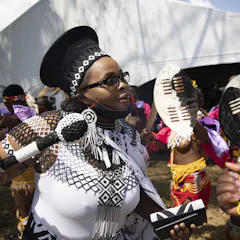
Royal women play important roles in succession disputes, such as the naming of King Goodwill Zwelithini kaBhekuzulu’s heir.
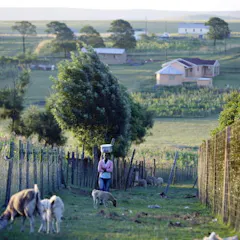
South African legislators are steadily moulding indigenous laws into the image of western laws.

Peddlers of dangerous ideas regarding the constitution should be reminded of what was done in the name of a legislative majority under apartheid.

The deteriorating situation prompted regional leaders to intervene in a bid to restore peace and stability.
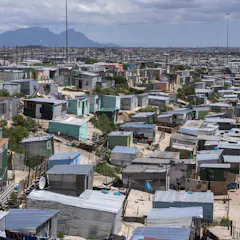
Trevor Ngwane, an activist and academic, shows how structures that emerged in the struggle against apartheid continue in democratic South Africa, now in conflict with the ruling ANC.

A monarch with absolute powers is just as dangerous as self-serving politicians in a democracy.
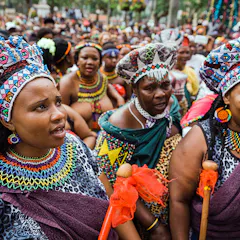
Denying people the right to opt out of the traditional court system conflicts with the notion of customary law as a voluntary and consensual system of law.

Traditional leaders do not adequately represent the interests of rural communities in dealing with mining companies.

The king retained his position because undemocratic centralised power is too big a temptation for those who seek to benefit.
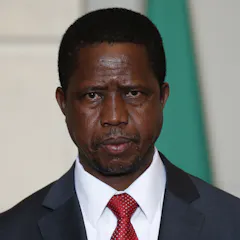
The unstable authoritarian pathway that many post-colonial African states followed was facilitated by the way in which European empires undermined democratic elements within African societies.
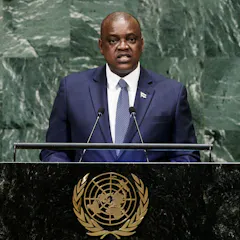
Serious challenges lie ahead for Botswana’s governing party as it celebrates retaining power.

The IFP’s constitution provides that the nomination of national office bearers be approved by the branches. But this was not done in the nomination of its new president.
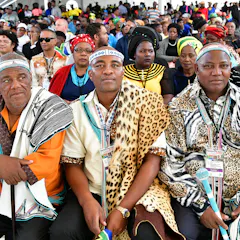
The contested law also defines the jurisdiction of traditional leaders in terms of territory. But traditional community boundaries are actually set by personal relationships.

The mere presence of NGOs, no matter their size or aims, inadvertently reduced the legitimacy of local village headmen.

The main reason land reform in South Africa has been lethargic is not the Constitution, but a flawed approach.

Shortcomings of Namibia’s land reforms suggest that voluntary, market-based transactions might not be suitable.
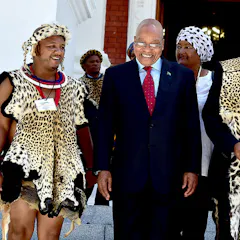
The clash over South Africa’s Traditional Courts Bill is essentially about custom and constitutionalism. The government is often seen as pandering to traditional leaders’ whims.
Top contributors
-

Professor, Department of Legal Studies, School of Public Policy, University of Massachusetts Amherst
-
Sociology Lecturer, University of Namibia
-
Researcher at the Centre for African Studies, University of Basel
-
Senior lecturer, University of Cape Town
-
Research Assistant of Southern Center for Inequality Studies, University of the Witwatersrand
-
Honorary Research Fellow, La Trobe University
-
Lecturer, La Trobe University, La Trobe University
-
Emeritus Professor of Political Sociology, University of KwaZulu-Natal
-
Distinguished Reserach Professor, Southern Centre for Inequality Studies, University of the Witwatersrand
-
Post-Doctoral Research Fellow, University of Johannesburg
-
Head of Department, Public and Environmental Law Department, University of Limpopo
-
Professor of Democracy, University of Birmingham
-
Professor Emeritus of Public Law, University of Cape Town
-
Historian, University of Eswatini
-
Associate Professor of History, Southern Methodist University