
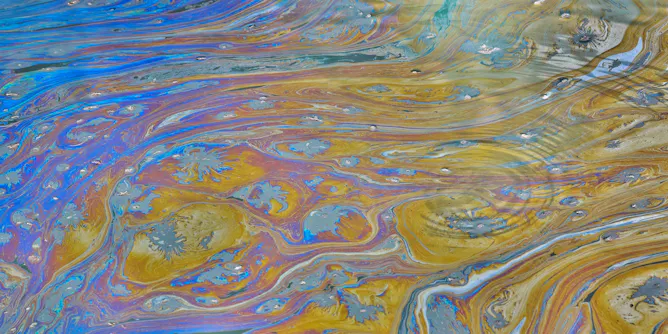
Companies with relatively many patents and more employees own facilities that tend to release lower proportions of their toxic waste into the environment.
Articles on Toxic waste
Displaying 1 - 20 of 27 articles

Toxic remnants of war can damage ecosystems and communities long after the fighting stops.

The show highlights the urgent need for environmental regulations in a time when governments are rolling back on them
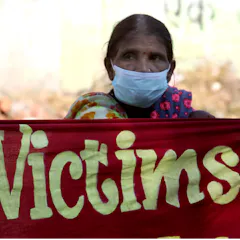
Four decades on, survivors of the Bhopal gas disaster are still campaigning for a fair settlement.
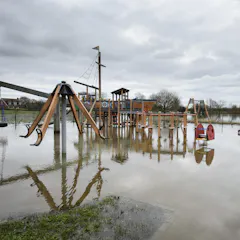
As floods get more severe and more frequent as a result of climate change, the risk of toxic pollutants being released from old landfills rises.
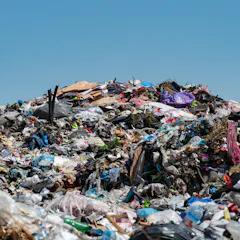
Due to their persistence and toxicity, strict regulation of PCBs should continue to be a top priority.

If not properly managed, heavy metals such as arsenic can accumulate in landfills and leach into soils and groundwater.
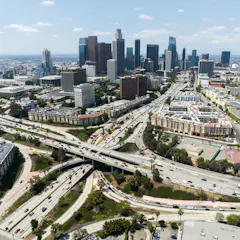
An analysis by scholars at the University of California, Davis showed that just a small number of cities in California actively consider racism when developing their plans.

Canada is seen as leading the way in banning single-use plastics. But how comprehensive are these actions, and how realistic is the dream of a zero-waste future?

The common timber treatment CCA is made up of heavy metals copper, chromium and arsenic. They don’t decompose and leach into soil and water. Why does New Zealand still allow its use?

Research proves that plant-based fiber from pineapple can be used as an alternative material to create biodegradable single-use masks
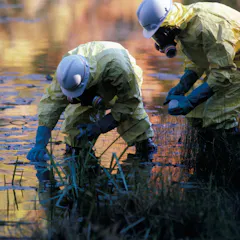
The production and release of synthetic chemicals worldwide is destabilising the Earth system.

The Doomsday Clock has never before been as close to midnight as it is now. There is scant hope of it winding back on its 75th anniversary.
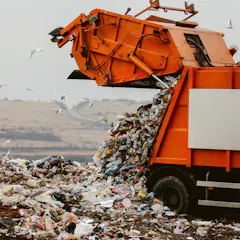
A high court judge said the Environment Agency was failing to fulfil its legal duty to protect the public.
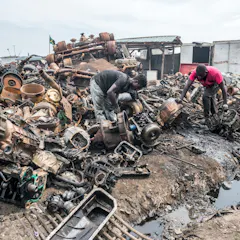
Despite knowing how harmful it can be, companies and businesses (primarily those in Europe and the US) target countries in the Gulf of Guinea as a dump for their toxic waste.

Batteries power much of modern life, from electric and hybrid cars to computers, medical devices and cellphones. But unless they’re made easier and cheaper to recycle, a battery waste crisis looms.
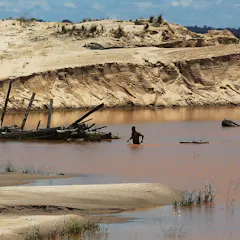
Small-scale gold mining operations in developing countries are major sources of toxic mercury pollution, using techniques that haven’t changed much since the California Gold Rush 150 years ago.

Snorkeling off the California coast, a high school student found heaps of golf balls on the ocean floor. With a marine scientist, she showed that golf courses were producing tons of plastic pollution.

Many homes, parks and businesses in US cities stand on former manufacturing sites that may have left legacy hazardous wastes behind. A new book calls for more research into our urban industrial past.

Gentrification is not the only path for improving urban neighborhoods. A cleanup in Brooklyn and Queens offers another, more inclusive model that scholars have dubbed ‘just green enough.’
Top contributors
-

Research Scientist, Stanford University
-
Reader in Environmental Science, University of Hull
-
Emeritus Professor of Civil and Environmental Engineering, Colorado School of Mines
-
Faculty in Medical Toxicology, Brigham & Women's Hospital, Harvard University
-
Assistant Professor of Sociology, University of California, Santa Cruz
-
Furman Public Policy Scholar, New York University
-
Assistant professor, University of Nottingham
-
Associate Professor of Geography, University at Buffalo
-
Senior Lecturer in Earth System Science, Northumbria University, Newcastle
-
Professor of Economics, College of the Holy Cross
-
Professor of Epidemiology and Core Faculty of Disaster Research Center, University of Delaware
-
Lecturer in Sustainable Futures, University of St Andrews
-
Doctoral candidate, Universitas Gadjah Mada
-
PhD Candidate in Sustainable Development, Stockholm Resilience Centre, Stockholm University
-
Associate Professor of Geography, DePaul University