
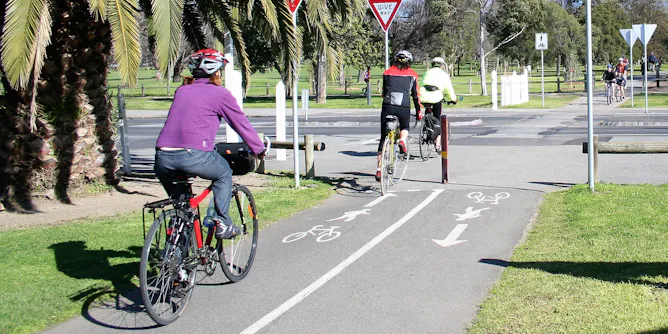
Planners understand the key elements of urban communities that will improve residents’ health and well-being. They also need to be able to convince others to create such communities.
Articles on Town planning
Displaying 41 - 60 of 85 articles

Rezoning to mixed-use residential development drove small manufacturers and creative producers out of the inner city. The result is less diversity of land uses, jobs and services where we most want it.
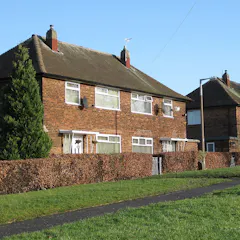
The Addison Act of 1919 introduced admirable housing standards, but in the century since the industry has put a sqeeze on space and quality.
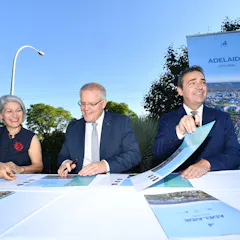
The seemingly ad hoc collection of nine City Deals announced so far falls short of a national settlement strategy that finally gets to grips with where our growing population might live and live well.

Australia has well established urban design guidelines, whereas many Chinese cities don’t have any – and it shows. But Australia can also learn from China.

Faced with local planning changes like infill development people often fear they could lose the neighbourhood they love. But serious games are proving effective in giving locals a say in their future.

Good urban design and walkability boost local economic activity by increasing public activity, but cities need to pay more attention to the effects of microclimates on streets and public spaces.

Planning controls in Melbourne were eased 20 years ago, with mixed results, and new limits are now in place. Will other cities that have eased height limits, like Adelaide, avoid the same mistakes?
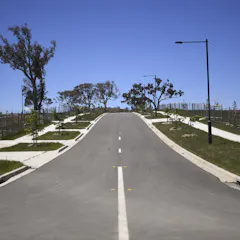
A sense of place matters for people and communities. When a suburb is created from scratch, close attention needs to be paid to the cues from the landscape and meanings people attach to the area.

Traffic impact assessments required of major building developments mainly focus on the movement of cars, but these account for only 30-40% of trips by inner-city apartment dwellers.
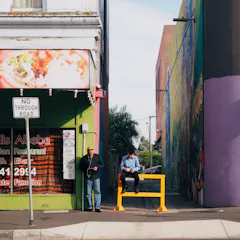
Footpaths are a valuable space for everyday social activity, but their role is often overlooked. In increasingly dense urban areas such as Footscray, footpaths are essential public spaces.

For two decades, a competitive design process pioneered by Sydney City Council has been transforming the city skyline and, new research shows, raising standards as it goes.
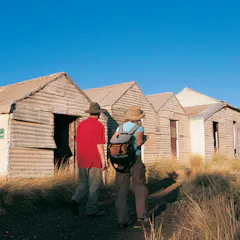
The industrial patterns of mining shaped many Australian towns, which found varied uses for disused mine sites. The mining boom ensures the challenges these sites present will be with us a long time.
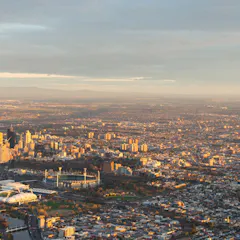
Planning innovations around the world offer inspiration, but ultimately the innovations needed to make Australia’s sprawling cities more sustainable must be shaped by local conditions.
The thing about new housing is you need land to build it on. Developers are able to control its release at a rate that doesn’t put downward pressure on prices.
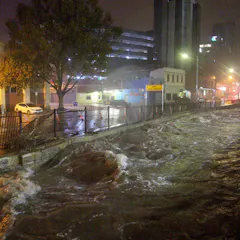
Managing flood risk is not just ‘good planning’; it requires commitment to resilient cities by land developers, politicians and communities. Effective response means learning from mistakes.

Local planning rules have prevailed in a long-running dispute over a proposed Gold Coast quarry that threatened the amenity of nearby residents and koalas.

Australia has no policy designating English as the official language, but an explicit ‘English first’ policy for shop signs would treat speakers of every other language as second-class citizens.
Speaking with: Cameron McAuliffe on NIMBYs, urban planning and making community consultation work
Dallas Rogers speaks with Western Sydney University's Cameron McAuliffe about leveraging conflict and informal processes in the urban planning process.

Given the challenges Australian cities face, the need for urban planning based on solid research is greater than ever. Sadly, when it comes to research funding, planning is at the back of the queue.
Top contributors
-

Professor of Human Geography and Planning, University of Tasmania
-
Senior Lecturer in Urban and Environmental Planning, Griffith University
-
Adjunct Senior Lecturer, School of Architecture and Built Environment, University of Newcastle
-
Deputy Head of School, School of Architecture and Built Environment, University of Newcastle
-
Associate Professor, School of Architecture and Built Environment, University of Newcastle
-
Professor of History, University of Canterbury
-
Senior Lecturer in Planning, The University of Queensland
-
Associate Professor in Urban and Regional Planning, University of Sydney
-
PhD Candidate and Sessional Tutor, The University of Melbourne
-
Professor and Head of School of Architecture and Built Environment, University of Newcastle
-
Assistant professor, School of Resource and Environmental Management, Simon Fraser University
-
Senior Lecturer, Geography and Environmental Studies, University of Tasmania
-
Associate, Institute for Public Policy and Governance, University of Technology Sydney
-
Professor of Management, University of the Sunshine Coast
-
Associate Professor of Real Estate Management, Delft University of Technology