

It is an unenviable position for a government to have potentially misallocated tens of billions of dollars to poorly selected infrastructure.
Articles on Planning
Displaying 1 - 20 of 101 articles

New census-based research shows Ghana’s policy must confront the quality of the homes people already occupy.
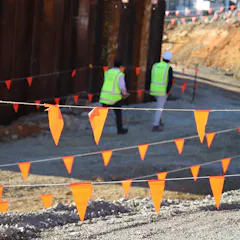
The government’s resource management reforms aim to make development easier. But will the new regime benefit everyone equally?

In Ghana, the degradation of wetlands is widespread and many are in poor condition.

Addressing the financial and personal aspects of aging proactively helps to ensure that you will receive the care you need – and want – as you age.

There are other parts of popular areas – and different locations altogether – that can be great places for outdoor recreation and enjoyment.

Why the new planning and infrastructure bill won’t make the process any fairer for people or planet.

The Bingin Beach settlement has proven sustainable for more than 50 years, and has become an integral part of the local heritage.

Developers will always choose low-density suburbs at the edge of cities over more environmental alternatives.

Developers could save time and money by planning for nature at the outset.

Companies need adept planning to solve supply chain issues.

Public goods like clean air and a stable climate demand more democratic planning, not less.

Meta and OpenAI are working to incorporate planning abilities into their AI systems.

Street sales are a source of jobs, income and survival for the urban poor in Ghana.

England’s new ‘biodiversity net gain’ policy is ambitious, but researchers have identified flaws and loopholes.

We’re getting faster at building renewables – but we’ll have to speed up even more to reach our 2030 target of 82% clean energy
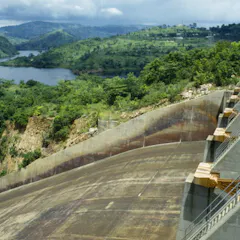
Communities along the bank of the dam have been victims of injustice since the early 1960s.

Cycling in Canada has been experiencing a great boom in recent years. Yet, there was no consistent and complete way to measure cycling infrastructure, until now.
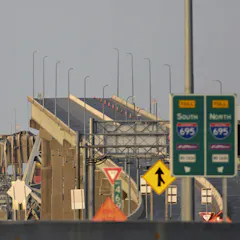
Transportation agencies plan for events like major bridge or highway collapses, but these events can disrupt traffic for months and affect residential neighborhoods as well as motorists.

Fire risk communication strategies must not only be supported by formal institutions such as government agencies but also be rooted in and sensitive to each market’s socio-cultural dynamics.
Top contributors
-

Associate Professor, RMIT University
-
Senior Lecturer, Griffith Law School, Griffith University
-
Teaching Assistant Professor, University of Pittsburg and Visiting Associate Professor, The University of Osaka, University of Pittsburgh
-
Professor of Environmental Geography, Northumbria University, Newcastle
-
Senior Lecturer, Department of Planning, Kwame Nkrumah University of Science and Technology (KNUST)
-
Reader in Planning, Oxford Brookes University
-
Senior Research Fellow, Acting Director, CHETRE, UNSW
-
Associate Professor in Urban and Regional Planning, University of Sydney
-
Professor of Human Geography and Planning, University of Tasmania
-
Adjunct Associate Professor, South Western Sydney Local Health District
-
Senior Research Associate, University of Oxford
-
Senior Lecturer, Department of Planning, Kwame Nkrumah University of Science and Technology (KNUST)
-
Lecturer in Infrastructure Planning, Bartlett School of Planning, UCL
-
Intern at the Centre for Climate and Resilience Research (CR2), Santiago, Chile; Research Assistant, Centre for Resources Energy and Environmental Law, The University of Melbourne
-
Senior Lecturer, University of Environment and Sustainable Development