

A criminologist whose nephew died in prison awaiting trial explains why the federal government’s proposed bail reforms will reduce, not enhance, safety without big investments in correctional systems.
Articles on Tough on crime
Displaying all articles

As political debate over law and order grows, leaders must address the divide in how city and country Australians view crime and punishment.

There is scant evidence to suggest more punitive measures will discourage violence against women. Policy-makers should instead use a balanced approach that prevents violence before it occurs.

Research shows that imposing longer sentences harms inmates and society. There are less expensive − and more effective − ways to hold people accountable and help them prepare for life after prison.

Hate crime legislation is often touted as a progressive tool to end violence and champion inclusion. Its origins tell a more complicated story.

There are proven ways to significantly reduce violent crime within the next five years. It requires becoming not “tough on crime,” but “smart on crime” before it happens.

Pierre Poilievre’s “tough-on-crime” rhetoric relies on discredited ideas that can lead to overly harsh penalties and actually increase crime.
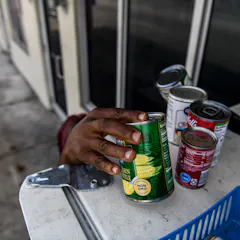
Formerly incarcerated Americans face food insecurity rates double that of the general population. A 1996 law that prohibits drug felons from getting crucial benefits may be partially to blame.

For the first time since 1994, incarcerated individuals can get federal aid to pay for college. A prison education scholar explains how higher education helps those who have run afoul of the law.

Those living in rural areas have more punitive attitudes toward crime and how to control it than city-dwellers, and it’s a major component of the growing urban-rural divide in Canada.

Tough-on-crime models of policing students don’t reduce youth crime, but community engagement programs for at-risk youth can be beneficial.
Top contributors
-

Associate professor in Criminology, University of New England
-
Senior Lecturer in Criminology, University of New England
-
Associate Professor of Criminal Justice, University of Baltimore
-
Ph.D. Candidate, Legal Studies, Carleton University
-
Assistant Professor of History, Purdue University
-
Professor of Law, University of British Columbia
-
Emeritus professor of Criminology, L’Université d’Ottawa/University of Ottawa
-
Associate Professor of Social Work, Boston College
-
Associate Professor of Social Work, Washington University in St. Louis
-
Assistant Professor of Church and Community Ministries, Baylor University
-
Assistant Professor of Criminal Justice, University of Cincinnati
-
Professor of Sociology, West Virginia University
-
PhD student, Sociology, University of Alberta
-
PhD Candidate, Sociology, University of Alberta
-
Lecturer of Criminology, Griffith University