

The bigger movement in the data over the past quarter-century is at the other end of the age spectrum: A reliable base of older Conservative Party voters is largely gone.
Articles on Pierre Poilievre
Displaying 1 - 20 of 68 articles

Being seen as an effective crisis manager is central to Mark Carney’s political brand, but an emphasis on communication and symbolism in support of the brand can only go so far. Results matter.

Canadians should push for more than immediate byelections after floor crossings to strengthen the country’s democracy — they should turn their attention once again to broader electoral reform.

As the Liberal government inches closer to a majority thanks to the latest Conservative floor crossing, its legitimacy is being called into question.
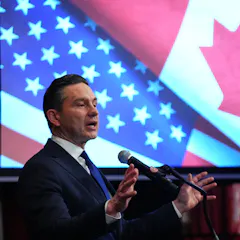
By promoting politically expedient misinformation on a show like Joe Rogan’s, Pierre Poilievre appears intent on pushing dangerous and misleading claims that resonate only with his base.

Pierre Poilievre’s leadership review was less about absolution than affirmation: a collective judgment that the party is closer to power with him than without him.

The Pierre Poilievre leadership review will likely retain the status quo: an opposition leader only liked by his party’s base but deeply distrusted by non-conservative Canadians.

The future of equity in Canada depends on moving beyond simply counting racialized people in power and instead examining how power works, upholds injustice and can be transformed.

Defending democracy requires more than just countering populism in general. It requires recognizing and addressing the authoritarian currents that run through some forms of populist politics.

Now that Pierre Poilievre has won a byelection to return to the House of Commons, will he maintain his libertarian-flavoured populism of the last few years? Or will he pivot to broaden his base?

A healthy and sustainable planet means supporting action based on scientific evidence, not misinforming people with catchy phrases and political rhetoric.
Canada’s voter gender gap is not just about party preference — it reflects deeper ideological divides shaped by cultural values, policy priorities and gender identities.

Calls by Pierre Poilievre and Donald Trump to defund public broadcasters seem aimed at silencing criticism and obscuring oversight of their actions. That’s dangerous for democracy.
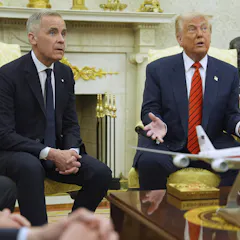
In the coming months, Canada’s political leaders and their parties face difficult circumstances — most importantly, how Mark Carney manages the relationship with Donald Trump.
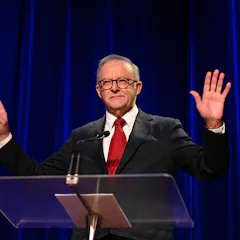
The ‘Trump effect’ has influenced elections in Canada and Australia. But the New Zealand left can’t bank on the same thing happening here.
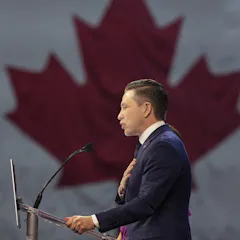
Despite losing the federal election, Pierre Poilievre brought the party its greatest electoral performance in decades and has generated a unique degree of energy and enthusiasm among supporters.
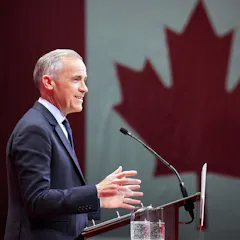
The Liberals helmed by Mark Carney have felled yet another Conservative opponent amid continuing threats by U.S. President Donald Trump to make Canada a 51st American state.

With women comprising more than half of the electorate, the Conservative Party of Canada’s focus this election on working-class men risked alienating female voters.

Canada’s new working class is more likely to be personified by a retail clerk than someone manufacturing cars in an auto-assembly factory.

The leaders’ debates featured few answers to questions about how Canada should move forward in an emergent new global order amid daunting new threats to peace and democracy.
Top contributors
-

PhD Candidate, Political Science, Western University
-
Professor of Political Science and Founding Director, International Studies Program, Burman University
-
Professor Emeritus, Department of Politics, York University, Canada
-
Associate Professor of European Studies, Norwegian University of Science and Technology
-
Associate Professor, Political Science, University of Northern British Columbia
-
Associate Professor, Political Science, MacEwan University
-
Professor, Political Science, McGill University
-
Lecturer, Political Science, University of British Columbia
-
PhD Student, Political Science, L’Université d’Ottawa/University of Ottawa
-
Postdoctoral Fellow in the Department of Political Science, Dalhousie University
-
Climate Associate at the Information Integrity Lab and Adjunct Professor in Political Studies, L’Université d’Ottawa/University of Ottawa
-
Professor, History, Saint Mary’s University
-
Professor, School of Public Policy and Administration, York University, Canada
-
Professor, Dalla Lana School of Public Health, University of Toronto
-
Associate Professor, Politics, Western University