
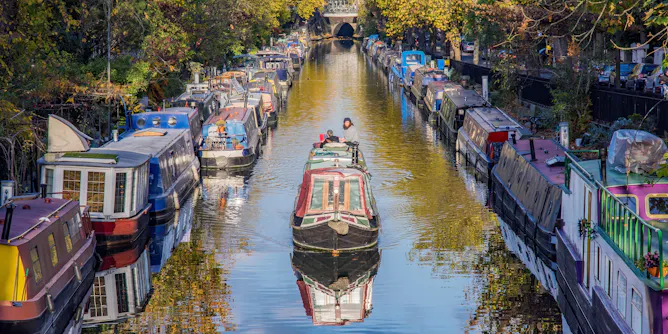
Do canal boats have toilets? Yes, and they’re greener than your average bog.
Articles on Toilets
Displaying 41 - 60 of 67 articles

Just because something is advertised as ‘flushable’ doesn’t mean you should put it in your toilet.
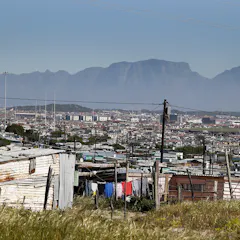
South Africa is a water-scarce country where inequity and a lack of fairness and justice pervades water distribution.

If you want to live like a local when on holiday, you should defecate like one.
More than half of the global population do not have safe sanitation. What is the best way to go about changing this?

Opening the minds of worried new parents to other ways of raising children may assuage fears that if they fail to ‘do the right thing,’ their children will be doomed.

Incontinence is frighteningly common.
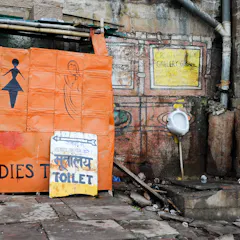
Cultural, social and environmental factors all matter if India wants to succeed in its goal to boost sanitation.

You flush the toilet. Down it goes. What happens after that? Clancy, age four, wants to know.
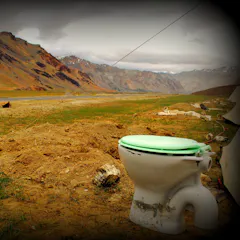
Modern sewerage infrastructure, exported from Britain to the globe, is entirely dependent on water. In a world of growing climate extremes, it’s time to look beyond this colonial legacy.
The invention of the flush toilet was probably one of the most unsustainable innovations in human history.
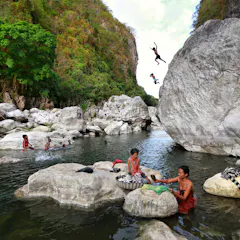
Community participation is vital to achieve the Sustainable Development Goals. But at the moment it often comes too little, too late.
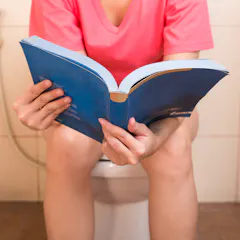
Pauline Hanson’s concern about the ATO installing squat toilets to cater for its increasingly diverse workforce has prompted debate about the best way to go to the toilet: sitting or squatting.

Expecting the rest of the world to adopt expensive, centralized sewage treatments systems common in the U.S. is not realistic.
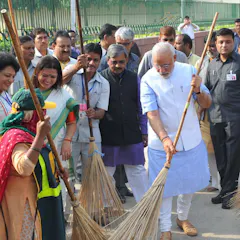
Indian Prime Minister Narendra Modi wants to bring 1.5 million toilets to the 600 million Indians without access by 2019. If he fails that could prove dangerous in an election year.
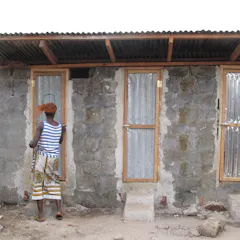
While everyone needs access to proper sanitation to stay healthy, for girls and women it is also an issue of safety and equal participation in society.
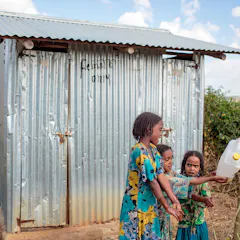
More than two billion people lack access to decent sanitation. Innovative sanitation technologies can bring toilets into the 21st century with benefits for the developing and developed world.
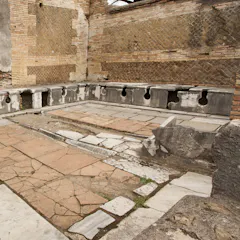
Archaeological and textual detective work is filling in some information about how ancient Romans used and thought about their sewers thousands of years ago.

Public ‘restroom’ is a euphemism of the highest order. We don’t find it restful.

We know that Africa’s cities need better sanitation. But is the global focus on private rather than shared toilets really the best approach?
Top contributors
-

Senior Lecturer in Global Health, The University of Western Australia
-
Associate Professor and Clinical Academic Gastroenterologist, Western Sydney University
-
Associate Professor in Environmental Science, Western Sydney University
-
Research fellow, Seoul National University
-
Senior Lecturer in Clinical Microbiology, University of Leicester
-
Professor of Environmental Engineering, Seoul National University
-
Operations Manager, Engineering Field Testing, University of KwaZulu-Natal
-
Gradute Research Fellow, Obafemi Awolowo University
-
Postdoctoral research fellow in the Usher Institute of Population Health Sciences and Informatics, University of Edinburgh
-
Assistant Professor of Civil and Environmental Engineering, Tufts University
-
Academic Officer, Water Resource Management Unit lead, Institute for Integrated Management of Material Fluxes and of Resource (UNU-FLORES), United Nations University
-
Senior lecturer, Rhodes University
-
PhD canditate, UCL
-
Associate Professor of Marketing, Monash University
-
Postdoctoral fellow, Rutgers University