
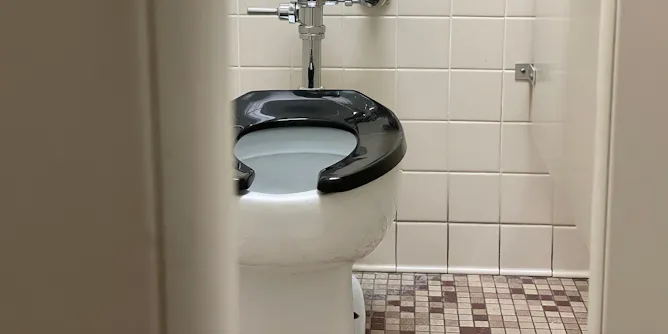
Poo anxiety, bashful bowels, shy bowel syndrome: they’re all terms for what’s medically known as parcopresis.
Articles on Public toilets
Displaying all articles

A New South Wales senate enquiry into public toilets is underway. Now’s our chance to talk about how public toilets communicate social values.

While many of us may not be thrilled at the idea of doing a ‘number two’ in a public toilet, some people face more serious anxiety. This is called parcopresis, or shy bowel.
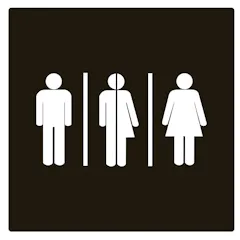
Studies show unisex toilets don’t lead to violence – and they create a safer space for gender diverse people.

Coronavirus has amplified the fact that inadequate toilet access has long been a feature of UK life for many, including women and the disabled. Vulnerable people deserve better.
From crude drawing to advice and support, the scrawlings on toilet walls reveal differing communication patterns between the sexes

In the rush to become ‘open defecation free’, cities are taking quick fixes that are making matters worse.

Men spend, on average, around 60 seconds in a toilet, while women spend 90. This is for many reasons, including biology. This leads to a bottleneck that keeps women waiting around to use the loo.

Sit v squat – the big public toilet stand-off.
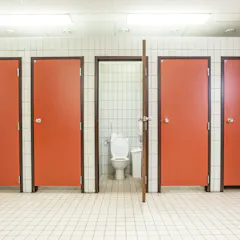
What it’s like trying to use a public loo when they aren’t designed for you.

If you want to live like a local when on holiday, you should defecate like one.
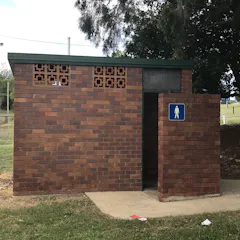
Public toilets are an essential amenity, but most of them aren’t places we’d want to go to unless we have to. What does the failure to provide more restful and inviting places say about us?
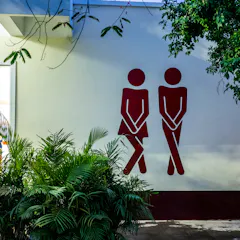
More than half of the global population do not have safe sanitation. What is the best way to go about changing this?

Incontinence is frighteningly common.

Millions of people need to be confident that suitable public toilets will be available when they leave their homes. A shortage of such facilities is a serious problem for an ageing population.
Top contributors
-

Senior Lecturer in Global Health, The University of Western Australia
-
Adjunct Senior Lecturer, School of Social and Policy Studies, Flinders University
-
Senior Lecturer in Industrial Design, UNSW
-
Associate Professor in Surgical Technologies, University of Leeds
-
Senior Lecturer in Marketing, University of Nottingham
-
Postdoctoral research fellow in the Usher Institute of Population Health Sciences and Informatics, University of Edinburgh
-
Associate Professor and Clinical Academic Gastroenterologist, Western Sydney University
-
Postdoctoral Research Associate, Sustainable Sanitation, University of Manchester
-
Director of the Water Institute, University of North Carolina at Chapel Hill
-
PhD student, University of Stirling
-
Professor of Architecture and Urban Studies, University of Manchester
-
Postdoctoral fellow, ETH Zurich
-
PhD Scholar, University of Manchester
-
Senior Lecturer in Clinical Psychology, University of Pretoria
-
Lecturer in Environmental Geography, University of Stirling