

Liquid medicines are often messy, expensive and hard to give so why do they remain the default?
Articles on Tablets
Displaying 1 - 20 of 39 articles

Three recent developments in AI – in video games, wearable technology and education – suggest that building something like Stephenson’s Young Lady’s Illustrated Primer is possible.
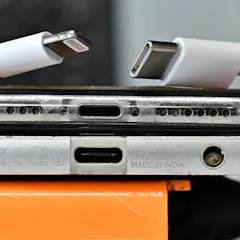
With Apple’s capitulation on the latest iPhone models, USB-C is poised to become the standard connector for all devices.

One size doesn’t fit all – customising your medicines with 3D printing could be a game changer, especially for people with complex medical needs.

Three quarters of Australians are living with HSV-1, with cold sores tending to appear at the most inconvenient times.

About half the population of people taking regular medicines don’t take them as prescribed. Here are some tips to help you remember.

The impact of using electronic devices is critical during the first years of life, both visually and on the cognitive and social development of the child.

Older people are often labelled technophobic, but since lockdown the digital divide is closing as more and more use technology to connect with others.

Here’s how to make the learning process fun and safe.

Technical advances are reducing the volume of e-waste generated in the US as lighter, more compact products enter the market. But those goods can be harder to reuse and recycle.

Understanding others’ emotions is a crucial social skill. Counter to concerns about screen time stunting kids’ development, one study suggests they’re getting better at recognizing emotion on screen.

Parents shouldn’t fear putting tech under the tree. In fact, it could bring families closer together.

Mobile phones and tablets are basically mini computers – and to a computer, everything is a number.

As their kids get older, should parents should be more – not less – vigilant?
A brief guide for teachers and parents on tech in the classroom.

Thanks to a burgeoning procrastination economy, developers are creating content that can be consumed in short spurts. What does it mean for productivity?

The amount of time teens have spent working and participating in extracurricular activities has held steady in recent years. There has, however, been one big change in their lives: smartphones.

It feels like we’ve seen less progress on charge time than almost anything else in smartphones. Could software efficiency be the answer?

For decades, parents have fretted over ‘screen time,’ limiting the hours their children spend looking at a screen. But as times change, so does media… and how parents should (or shouldn’t) regulate it.

We have never been so connected and we are producing more data than ever before. But how can we manage our data effectively while making sure it remains safe?
Top contributors
-

Professor of Reading and Children’s Development, The Open University
-
Professor of Pharmaceutical Chemistry, Macquarie University
-
Professor of Psychology, San Diego State University
-
Professor Emerita of Linguistics, American University
-
Associate Professor, School of Engineering, RMIT University
-
Assistant Professor of Cybersecurity Education, University of South Florida
-
Professor of Developmental Psychology, University of Nottingham
-
Associate Professor, Teacher Education, University of Technology Sydney
-
Professor of Education (Innovation in Schooling & Educational Technology), University of Newcastle
-
Senior Lecturer in Human-Computer Interaction, Lancaster University
-
Director, Blockchain R&D Lab, Curtin University, Curtin University
-
Postdoctoral Research Fellow, The University of Queensland
-
Professor of Psychology, University of California, Davis
-
Associate Professor, Informatics and Operations, Kingston University
-
Senior Research Fellow, University of York