
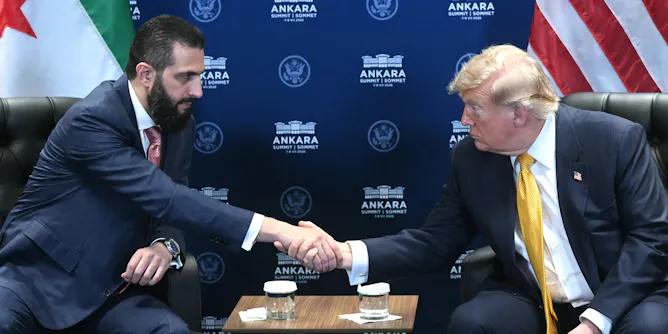
Syria was among the first nations to be added to the State Department’s proscribed list. It has been removed under the rule of a former al-Qaida-affiliated militant.
Articles on Syrian civil war
Displaying 1 - 20 of 53 articles

Master storyteller Mohammed Massoud Morsi’s touching new novel explores the fate of asylum seekers fleeing the Syrian civil war.

Despite risks, Kurds in Syria have the best chance in a generation to protect their national rights. Their success may hinge on the international community.

Some 1 million Syrians were welcomed in Germany after fleeing civil war. They are increasingly unwelcome in a country where politics have swung sharply right.
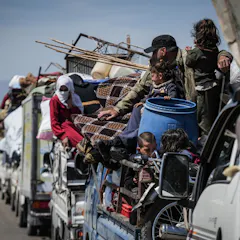
A quarter of the 6 million Syrians who fled the country during the decadelong civil war have returned home in the past 12 months.
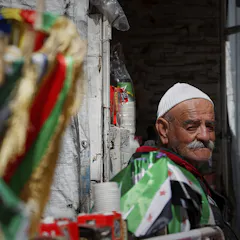
The violence that overwhelmed Sweida in July 2025 reflects challenges under the transitional government, but also age-old tensions over Druze autonomy.
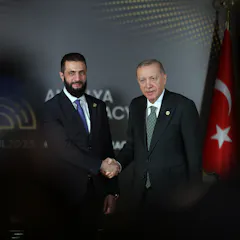
Ankara sees the fall of the Assad regime and the rise of new Syrian leader Ahmad al-Sharaa as a generational opportunity for domestic and regional goals.

More than 6 million Syrians fled the country after it descended into civil war in 2011.
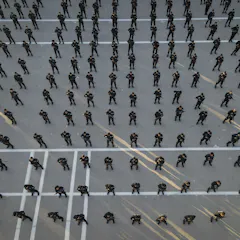
The fall of the Assad regime opens the door for a new, inclusive, democratic, Syrian-led and Syrian-owned path, but it remains a path full of pitfalls and challenges.
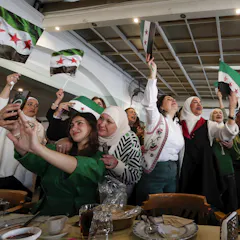
The international community should focus on empowering Syria’s local civil society groups and advocating for women’s rights to ensure a more inclusive society.

While Ahmed al-Shara consolidates his authority in Damascus, armed conflict is escalating in northern Syria.

Lebanon – home to thousands of Syrian refugees – has long suffered at the hands of the Assad family’s 54-year rule.
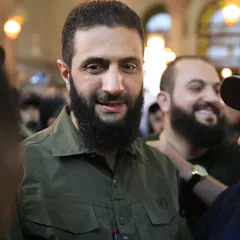
Hayat Tahrir al-Sham, with origins in the terrorist group Nusra Front, spearheaded the rebel advance that ousted longtime Syrian President Bashar al-Assad.
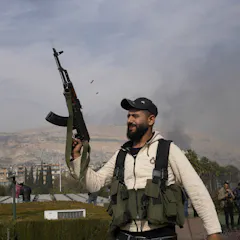
Whatever happens now in the aftermath of the fall of the Syrian dictatorship isn’t likely to return stability to Syria. The continued displacement and suffering of the Syrian people is probable.
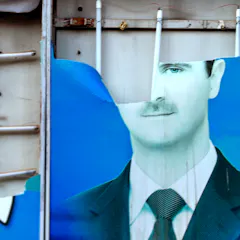
Opposition forces marched into Damascus on Dec. 8, seemingly ending the half-century rule of the Assad family. But what happens next?
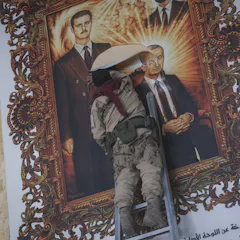
Syria has fractured into three zones: Turkey-backed Sunni forces in the north, US-supported Kurdish forces in the northeast, and the Shiite-backed Assad government controlling the west and south.
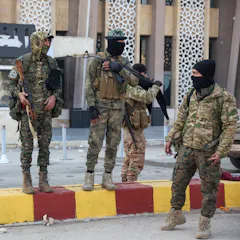
The Islamist group had previously pivoted away from global jihadism and toward {local government} attaining local power?.
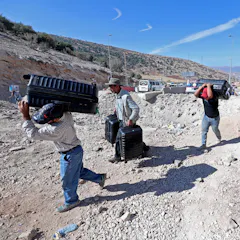
More than 1 million people in Lebanon have fled their homes since a major Israel military operation began in September. For many, it isn’t the first time they have been uprooted.
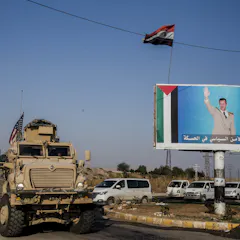
The US maintains close to 1,000 troops in Syria and supports Kurdish groups in the northeast and some opposition groups in the southeast.
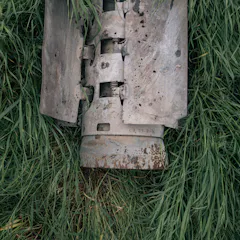
The US administration said that it had received ‘written assurances’ from Ukraine that it would use cluster bombs carefully. Nonetheless, the munition will provide an additional risk to civilians.
Top contributors
-

Professor of Islamic Studies, Head of School, The Centre for Islamic Studies and Civilisation, Charles Sturt University
-
Senior Visiting Scholar with the Center for the Study of Genocide and Human Rights, Rutgers University
-
Lecturer, University of Washington
-
Research Fellow in Counterterrorism, George Washington University
-
Assistant Professor of International and Global Studies, Nazareth University
-
Lecturer in International Relations and International Security, University of Bath
-
Provost Associate Professor, American University School of International Service
-
PhD Researcher, Lancaster University
-
Director of International Studies, Colorado State University
-
PhD Candidate, Department of Politics and International Studies, University of Birmingham
-
Professor of Communication and Middle East Studies, Georgia State University
-
PhD Candidate, Political Science/Middle Eastern Studies, Lund University
-
Senior Lecturer in Chemistry, University of Birmingham
-
Associate Senior Lecturer, Lund University
-
Professor of Modern Middle Eastern History, University of California, Los Angeles