

Research shows that a hidden American worldview can shape AI advice in ways that are culturally misleading.
Articles on Swahili
Displaying all articles

In the Lamu Archipelago, the mention of maulidi elicits a sense of happiness.

Eventually, I found his famous novels in a souvenir shop in his home town that mostly sold skin-care products.

Members of parliaments across Africa face regular accusations of being unrepresentative of their constituents.
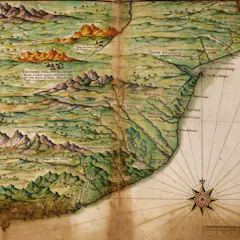
The history of the coastal communities of east Africa shows how ethnic groups and their languages were shaped.
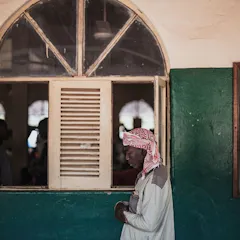
The overwhelming majority of Muslims in Mozambique reject the violence of the insurgents and their quest for a caliphate.

By the 1950s a standard version of the language emerged, today spoken by an estimated 200 million people.

The first ancient DNA sequences from peoples of the medieval Swahili civilization push aside colonialist stories and reveal genetic connections from the past.

Dhamaal music and dance reveals a rich and complex mixing of cultures that is shaped by history.

Research finds that the threat of being sentenced to death has no bearing on how people contemplate violent crime.
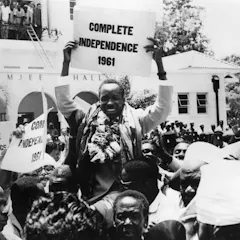
Over two millennia, Swahili has built bridges among people across Africa and into the diaspora.
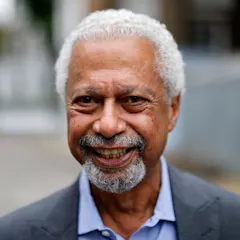
Abdulrazak Gurnah’s stories suggest that it is important to see others in relation to ourselves, to perceive their right of abode even if they cannot claim national belonging.

Kiswahili will be easy for South Africans to learn compared to foreign languages from outside Africa.

A guerrilla movement in Mozambique could upend the government’s plans for stability and prosperity.
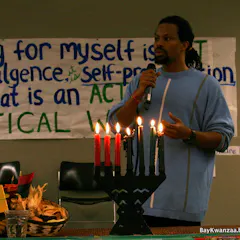
For the African-American community, Kwanzaa is not just any “Black holiday. ” It is a recognition that knowledge of Black history is worthwhile.
Top contributors
-

Professor of African history, Queen's University Belfast
-
Post-doctoral fellow. Rhodes University, Rhodes University
-
Professor of Anthropology, University of South Florida
-
Professor of Genetics and of Human Evolutionary Biology, Harvard University
-
Professor, Harvard University
-
Assistant Professor, Mississippi State University
-
Co-Founder and Co-Executive Director, Death Penalty Project and Visiting Professor of Practice, University of Oxford
-
Postdoctoral Fellow at Wits Centre for Diversity Studies, University of the Witwatersrand
-
Director of the University of Oxford Death Penalty Research Unit, Centre for Criminology, Faculty of Law, University of Oxford
-
Assistant Professor of History, Brigham Young University
-
Ohio University
-
Professor in the English Department, Stellenbosch University
-
Ohio University
-
Lecturer, University of Reading
-
Professor in Government and Public Policy, University of Strathclyde, and Adjunct Professor in the Nelson Mandela School of Public Governance, University of Cape Town, University of Strathclyde