
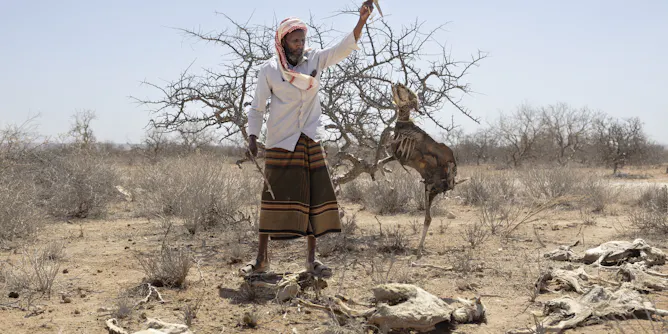
The response to the many problems facing the region has been set back by cuts in humanitarian aid.
Articles on East Africa
Displaying 1 - 20 of 139 articles
The Conversation Africa marks its eleventh anniversary this year with more than 12,000 articles celebrating varying levels of impact.

Tropes against African Indigenous communities linger and continue to shape conservation, which has led to “protective” and often punitive regulations.
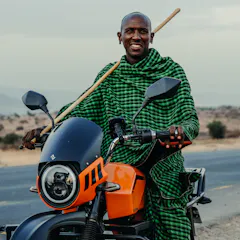
Research suggests a shift to electric mobility is technically and economically feasible.
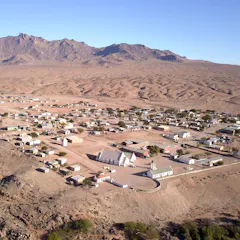
By 2100, rural African dwellers will be exposed to dangerous levels of heat nearly twice as high as those in urban areas.

Why has international success evaded a region that’s so in love with the game?
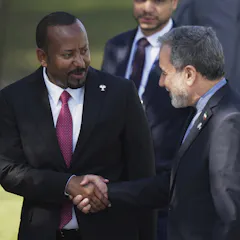
Iran has sought to bolster its economic and security relationships on the continent after a punishing year both at home and in the Middle East.
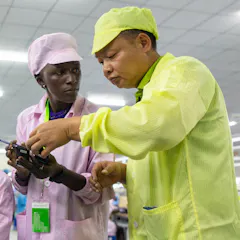
China’s growing role in Africa presents a double-edged sword.
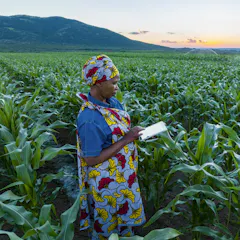
The hype around digital tools can divert attention from farmers’ real, on-the-ground challenges.

Using a method applied directly to ancient hominin teeth, researchers have calculated the age of several important fossils.

There’s been an increase in the amount of runoff generated from rainfall as land is altered by settlement and deforestation.
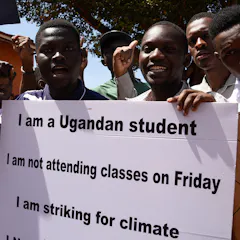
Business and management graduates can become the kind of sustainability champions the world needs today.

New research shows increased rainfall due to climate change is threatening the birds’ food supply.
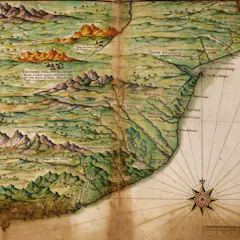
The history of the coastal communities of east Africa shows how ethnic groups and their languages were shaped.
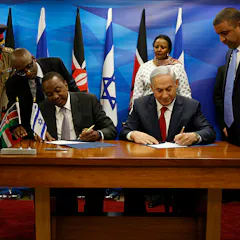
East Africa’s reaction to the war in Gaza appears shaped by history, affinity to the policies of the west and the threat of terrorism.

Members of diasporas may choose to identify with multiple homelands and host countries over time.

Transboundary climate risks can cross borders, continents and oceans to affect communities on the other side of the world. Africa’s new roadmap seeks to address this.

Without refugee status people aren’t able to receive valuable support, like the right to live and work in a country.
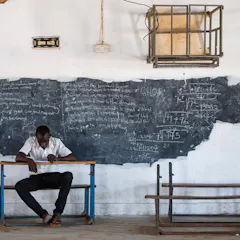
In this area, much of the work of being educated is only indirectly tied to the schooling experience.
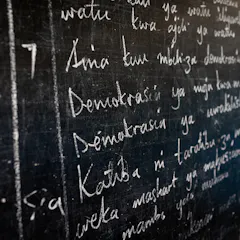
By the 1950s a standard version of the language emerged, today spoken by an estimated 200 million people.
Top contributors
-

Professor of Research, Foundations & Higher Education, Northern Arizona University
-
Assistant Professor, Université Mohammed VI Polytechnique
-
Post-Doctoral Research Fellow, SARChI in Higher Education and Human Development Research Group, University of the Free State
-
Reader (Associate Professor) Department of Political Science, Federal University of Lafia, Nigeria, Federal University Lafia
-
Lecturer and Senior Research Fellow at the South African Research Chair in International Law (SARCIL), University of Johannesburg
-
Postdoctoral Fellow Global Health, University of California Global Health Institute (UCGHI), Makerere University
-
Research associate at African Centre for Cities, University of Cape Town
-
Professor of Earth System Science, UCL
-
Professor of International Security, University of Birmingham
-
Professor of Politics, University of Birmingham
-
Senior Communications Officer, African Population and Health Research Center
-
Director and Lecturer, Extractives Baraza, Strathmore University
-
Guest Lecturer, Climate Change Economics, University of Oxford & Director, Climate and Sustainability Programme, ODI Global
-
Senior Media Relations Officer, London School of Economics and Political Science
-
Professor of International Politics, University of Manchester; Independent Social Research Foundation