

Legislating an ‘objective’ for super could have many unintended consequences.
Articles on Superannuation
Displaying 241 - 260 of 335 articles

Legislating a definition of super overlooks the real motivators behind people saving for retirement.

The Committee for Economic Development of Australia (CEDA) is trying to refocus debate on repairing the budget for the future.

Policymakers have long grappled with the best way to engage a seemingly apathetic public into paying more attention to their superannuation. The introduction of a low-cost and simple default option, MySuper…

Superannuation is a highly researched area, but little has been done on how Indigenous workers fare. The picture is not pretty.
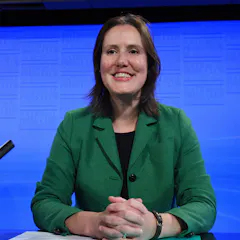
As the government considers a tax reform agenda without changing the GST, Assistant Treasurer Kelly O'Dwyer discusses tax and superannuation with Michelle Grattan.
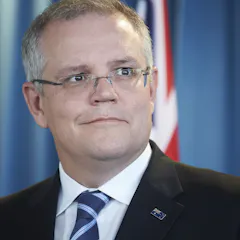
Treasurer Scott Morrison has opened the possibility for an alternative to the government’s present white paper process for tax reform.

Contrary to received wisdom, our super system isn’t designed to attract superior long-term returns.

Research suggests it’s not the independence of super fund directors that matters, but their training and experience.

Despite more women joining the workforce, women are retiring with significantly less super than men, and single women do even worse.

The rhetoric is that “catch-up” superannuation contributions help low income earners. But it’s a myth.
Superannuation has arguably become a tax shelter for the wealthy. But here are three reforms which could re-introduce fairness.

The government compels us to do lots of things without any incentive payment, so why should super be any different?
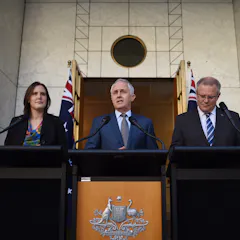
It’s a good thing that Australia’s large and growing super sector will attract greater policy focus in coming years.
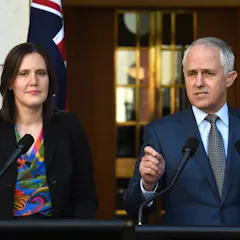
The Turnbull government will ban businesses from charging consumers excessive surcharges on their credit cards, and move to inject more competition into the superannuation industry.
Submissions to the government’s taxation white paper show support for reducing concessions for superannuation but with no clear agreement on how to do this.

Allowing first home buyers to tap their super would worsen housing affordability, leave many people with less to retire on, and cost taxpayers in the long run.

When you consider that the average US household will have just $104,000 in retirement savings, Australia’s compulsory super system starts to look like a really good idea.

First home buyers may be doing it tough, but lessons from the US tell us raiding super is not the solution.

Amid jeers of hypocrisy and cheers of climate leadership, what can we really say about this policy move in one of New South Wales’ historic coal towns?
Top contributors
-

Professorial Fellow, University of Canberra
-
Program Director, Housing and Economic Security, Grattan Institute
-
Adjunct Professor, Curtin Law School and Curtin Business School, Curtin University
-
Professiorial Fellow, The University of Melbourne
-
Visiting Fellow, Crawford School of Public Policy, Australian National University
-
Professor and Head of the Department of Banking and Finance, Monash University
-
Lecturer in Accounting, The University of Queensland
-
Vice Chancellor's Fellow at Victoria University and Adjunct Professor of Economics, Victoria University
-
Professorial fellow, Monash University
-
Emeritus Professor of Finance, The University of Melbourne
-
Senior Lecturer, Finance and Financial Planning, Griffith University
-
Chief executive officer, Grattan Institute
-
Professor of Economics and Director, Tax and Transfer Policy Institute, Crawford School of Public Policy, Australian National University
-
Associate Professor in the UNSW Business School, UNSW
-
Associate Professor, College of Business and Economics, Australian National University