

Forcing funds to invest members’ savings in particular projects or sectors is problematic. There’s a better approach.
Articles on super
Displaying all articles

Unpaid super costs Australians around $6 billion. So how much is ‘payday super’ likely to boost your balance? And where can employees or employers get more help?

Principles could centre on helping members manage their money in retirement, ensuring fairness across the system, and requiring funds to maintain an active duty of care to members.

Estimates produced by the Grattan Institute and the Treasury assume that the right tax treatment for income from retirement savings is the same as income from other savings.

If you’re considering putting more money into your super, and want to know more about how the whole system works, here are the basics.

In superannuation, the detail matters, although Treasurer Jim Chalmers would argue there are always points to be nailed down with such changes

You’d never know it from some of the “socialist tax grab” outrage this week, but Jim Chalmers isn’t the first treasurer to act on this super rort.
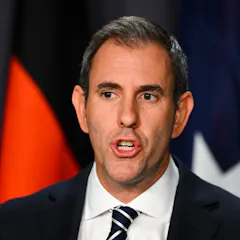
Treasurer Jim Chalmers has used words with specific meanings in the objective he intends to legislate, among them “preserve”, “dignified”, “equitable” and “sustainable”.

Commonwealth Bank data shows the Australians who withdrew super spent more, but paid down their debt.

Unemployed Australians who accessed their super during COVID stayed on benefits seven weeks longer than similarly-placed recipients who did not.

The latest data shows early access to super in the pandemic widened the retirement savings gap between men and women. Housing affordability is a serious problem, but depleting super isn’t the answer.

ASIC suspects some super fund trustees of using inside information for personal gain, but they might not be caught by the insider trading laws.

For some people, accessing their super early for fertility treatments is their only chance to start or extend their family. And they need better protection.

Allowing Australians to use their super to buy homes would most benefit those with the most super. They’re the least in need.

Nothing, not even advertising will be permitted unless it is in the ‘best financial interests’ of members.
Putting more of each pay packet into super would widen the gap between high earners and low earners; between men and women.

The increase will come at the expense of wages, and in the view of two inquiries - a decade apart - is something we don’t need.

Most Australians get enough to live on in retirement. Some get more they get while working, but 30% get less, and boosting super won’t help them.

A leading-edge study conducted for the Retirement Incomes Review used Tax Office data to examine what happened to wages after firms paid more super.

Only 13 of the 44 economists surveyed want them to proceed as planned.
Top contributors
-

Visiting Fellow, Crawford School of Public Policy, Australian National University
-
Adjunct Professor, Curtin Law School and Curtin Business School, Curtin University
-
Professor of Economics and Director, Tax and Transfer Policy Institute, Crawford School of Public Policy, Australian National University
-
Professorial fellow, Monash University
-
Program Director, Housing and Economic Security, Grattan Institute
-
Associate Professor, Corporate Law, University of Sydney Business School, University of Sydney
-
Senior Associate, Grattan Institute
-
Honorary Professor of Public Policy, Australian National University
-
Associate Professor of Law (Health Law), Deakin University
-
Professor, School of Private and Commercial Law, UNSW
-
Professor of Economics, The University of Western Australia
-
PhD Student, School of Psychology, UNSW
-
Associate Professor, College of Business and Economics, Australian National University
-
Lecturer in Accounting, The University of Queensland
-
Senior Lecturer, Finance and Financial Planning, Griffith University