
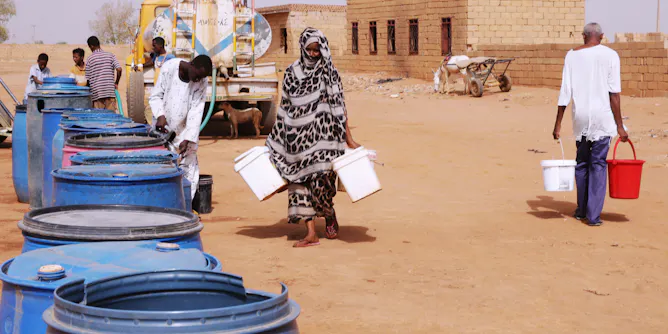
Sudan is one of the most dangerous places in the world to deliver humanitarian assistance. It is also home to one of the most chronically underfunded.
Articles on Sudan conflict
Displaying all articles

A new approach to mediation is needed in Sudan, not simply a new mediator.
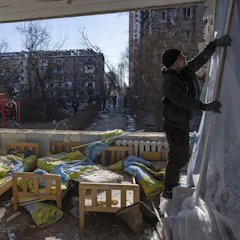
Wars always include killings and destruction, but there are limits. An expert in international law explains the rules of war laid out in the Geneva Conventions − and why they’re so hard to enforce.

The war in Sudan has seen the looting of the country’s museums. Heritage boss Ikhlas Abdel Latief speaks about the losses.

Armed conflicts affect the entire spectrum of healthcare, from prevention to treatment.
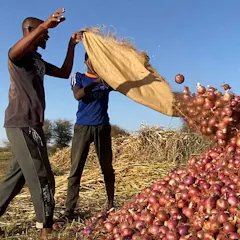
Despite its stark reality, there is a potential path forward for Sudan if peace can be found.

There is a high risk of famine in multiple regions of Sudan if immediate action is not taken.
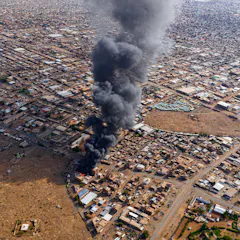
Rural households are especially hard hit by food shortages due to disrupted farming, limited access to markets and soaring food prices.

Sudan has been a key exporter of gum arabic for decades. Producers have warned fighting could wipe out stockpiles soon.

The African Union has several reasons to get involved in Sudan’s peace process.
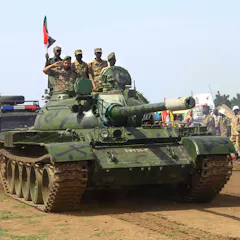
An expert on civil conflicts explains why the international community has so far failed to create peace in Sudan, and what new opportunities lie ahead.
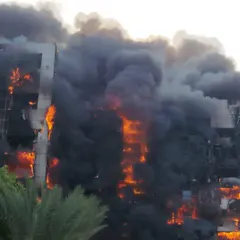
Architects give their views on a landmark skyscraper burning as Sudan’s capital is systematically destroyed.
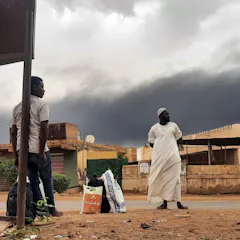
The interplay between diversity and urban planning in Sudan has created vibrant cityscapes, but also led to segregation and division.
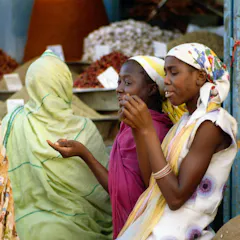
Sudan is riven by conflict and once again, women are the targets of the sexual violence that is rooted in the patriarchal nature of Sudanese society.
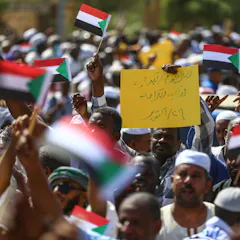
An African-led process would take into account complex regional dynamics – which would lead to a better and more stable peace agreement.
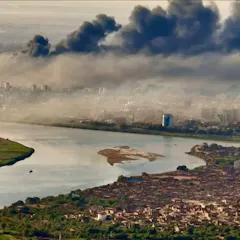
Both residents and Sudanese in the diaspora invested in homes to secure the future. Now the conflict is destroying hope.
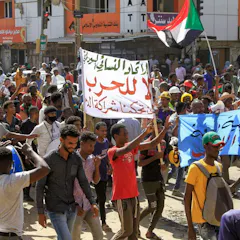
Sudan’s civilian protesters have gained a form of political power that traditional elites have struggled to attain.
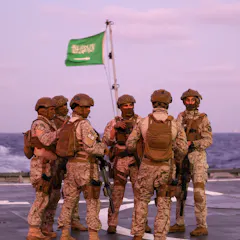
There is a risk that Sudan’s conflict could spill over into neighbouring countries.
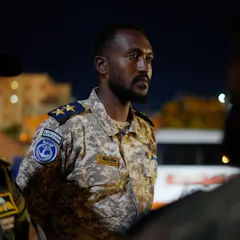
Sudan was formed by conquest, and its politics and, increasingly, its wealth have been controlled by the military ever since.
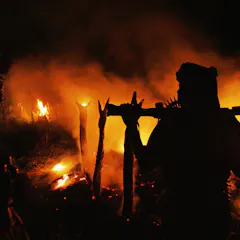
The Rapid Support Forces were created by former president Omar al Bashir to protect his regime from rebels - but they soon became a threat to both him and the future government.
Top contributors
-

Senior Research Fellow and Program Leader for the Sudan Strategy Support Program, International Food Policy Research Institute (IFPRI)
-
Professor of Architecture and SARChI: DST/NRF/SACN Research Chair in Spatial Transformation (Positive Change in the Built Environment), Tshwane University of Technology
-
Associate Professor of Architecture, University of Khartoum
-
Professor of International Development Studies, University of Portsmouth
-
Professor, Weber State University
-
Professor of History, Durham University
-
Unit Director, Markets, Trade, and Institutions, International Food Policy Research Institute (IFPRI)
-
Professor of Post-harvest Biotechnology & Nutrition and Director, Centre of Excellence for Post-harvest Biotechnology (CEPB), University of Nottingham
-
Research Fellow, International Food Policy Research Institute (IFPRI)
-
Associate Professor of Political Science, Texas A&M University
-
Professor of History, Colgate University
-
Director & SARChI Research Chair: Political Economy of Migration in the SADC Region, University of Pretoria
-
Assistant Professor of Architecture, University of Khartoum
-
Adjunct Professor of International Affairs, George Washington University
-
Associate Professor of Urban & Environmental Design, University of Khartoum