
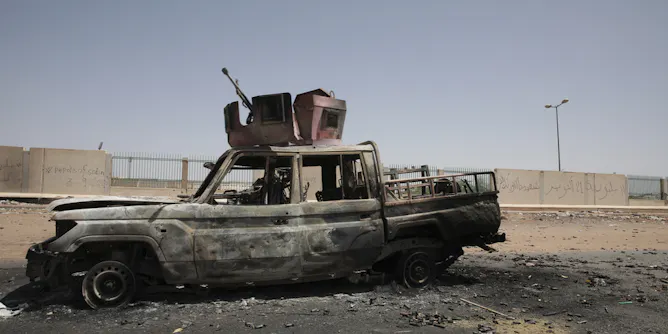
The work of estimating conflict mortality is difficult. But that doesn’t make this grim exercise, nor accounting for the broader effects of conflict, any less critical.
Articles on Sudan crisis
Displaying all articles
The Sudanese state today betrays its history as a plunder state on the margins of the global order.

Abiy Ahmed’s use of the military to address a critical challenge is likely to fail.

A spiralling Sudan will affect peace and security in the Lake Chad Basin region, of which Nigeria is a member.

Peace and security in South Sudan depend on a fully functioning, peaceful and democratic government in Khartoum
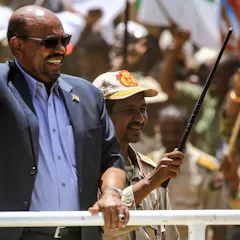
The failure to hold the perpetrators of the Darfur genocide accountable has led to further instability in Sudan.
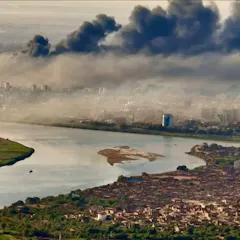
Both residents and Sudanese in the diaspora invested in homes to secure the future. Now the conflict is destroying hope.

The Sudan army’s superiority is in its air force and arsenal of ground forces while the rival paramilitary force relies on nimble mobile units.
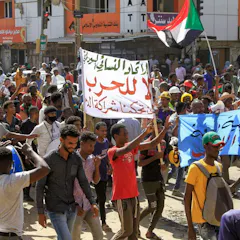
Sudan’s civilian protesters have gained a form of political power that traditional elites have struggled to attain.
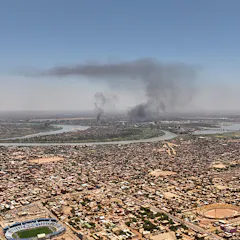
Sudan’s current conflict will have economic, social and political ripple effects across a number of countries
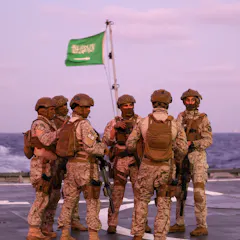
There is a risk that Sudan’s conflict could spill over into neighbouring countries.
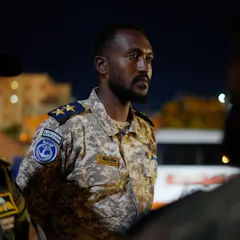
Sudan was formed by conquest, and its politics and, increasingly, its wealth have been controlled by the military ever since.
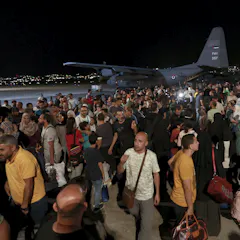
Sudan’s location and natural resources have attracted international partners keen to benefit either geopolitically or economically.
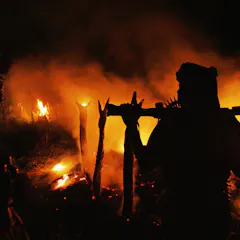
The Rapid Support Forces were created by former president Omar al Bashir to protect his regime from rebels - but they soon became a threat to both him and the future government.
Top contributors
-

Professor, Weber State University
-
Professor of Architecture and SARChI: DST/NRF/SACN Research Chair in Spatial Transformation (Positive Change in the Built Environment), Tshwane University of Technology
-
Senior Lecturer of Political Science, Georgia Gwinnett College
-
Research Professor and Executive Director of the World Peace Foundation at The Fletcher School, Tufts University
-
Associate Professor of History, University of Washington
-
Associate Professor of International Relations of the Middle East, University of Birmingham
-
Adjunct Professor of International Affairs, George Washington University
-
Professor of History, Colgate University
-
Lecturer in Political Economy of Violence, Conflict and Development, SOAS, University of London
-
Senior Researcher and Coordinator of the Small Arms Survey's Human Security Baseline Assessment project on Sudan and South Sudan, Graduate Institute – Institut de hautes études internationales et du développement (IHEID)
-
Professor of History, Durham University
-
DrPH Candidate, University of California, Berkeley
-
Assistant Adjunct Professor of Epidemiology, University of California, Berkeley
-
Professor of Public Health, Université catholique de Louvain (UCLouvain)
-
Post-Doctoral Researcher, Department of Environmental, Occupational, and Agricultural Health, University of Nebraska Medical Center