
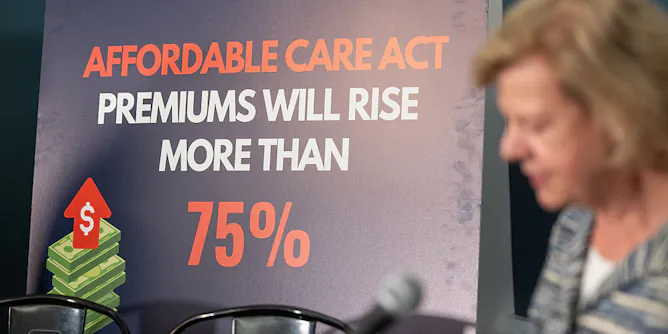
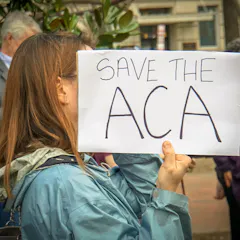
ACA enrollments in Florida dropped in 2026, but the decrease was smaller than anticipated.
Articles on Affordable Care Act (ACA)
Displaying 1 - 20 of 201 articles

For six decades, politicians have blurred the distinction between protecting Medicaid from abuse and using abuse to discredit Medicaid itself.

Research shows that losing coverage, even temporarily, tends to make people less healthy, and it exposes them to financial losses.

Three questions can help patients get a better handle on drug and health care options. But many Americans still hold back from asking providers for information.

The US health insurance system requires that people make strategic and often risky decisions about how much health insurance they can afford and how much coverage they might need.

To lower health care costs, the Trump administration will have to wrangle a complex system fraught with competing interests.
US health care policy will remain fractured until lawmakers address the core question of who is responsible for health care costs.

Young adults can take basic but powerful steps to address risk factors that set the stage for heart disease.
Short-term renewals of policies such as the ACA subsidies set up repeated battles in Congress.
As the battle for health care plays out in Washington, the shutdown itself could also make it harder for Americans to get the care they need.

The biggest changes will be to the Medicaid program, which currently covers more than 78 million people. And Congress may cut health care spending further.

Drastic cuts to Medicaid and other public health provisions in the new law will mean even less money to rural hospitals, many of which are already at risk of closing.
The justices ruled that a key preventive health task force has authority because it is appointed by the Health and Human Services secretary. Some experts worry that RFK Jr. could politicize it.

The founder of Americans for Tax Reform emerged in the 1980s as the fiscal conscience of American conservatism and continues to wield influence.

All told, more than 16 million Americans could become uninsured, reversing major progress seen since the Affordable Care Act’s passage in 2010.

Research shows that decades of policy choices shaped today’s fragmented health care system – which is precisely why reform is so difficult.

After a group of employers refused to provide their employees access to free HIV prevention treatment, the Supreme Court may decide whether insurers are required to fully cover preventive care.

At a time when California’s farm operators are struggling to hire enough people, providing better benefits could attract more workers who are citizens or have legal immigration status.

A health insurance alliance proved to lower costs for individuals and employers.
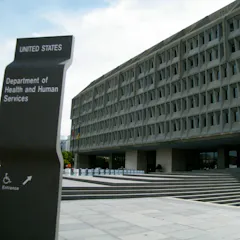
Health Secretary Robert F. Kennedy Jr.’s new vision for US health policy prioritizes deregulation and leaves Americans with fewer benefits, services and protections.
Top contributors
-

Associate Professor of Public Health, The Ohio State University
-
Professor of Health Finance, Weatherhead School of Management & School of Medicine, Case Western Reserve University
-
Associate Professor of Health Law, Policy and Management, Boston University
-
Assistant Professor of Social, Behavioral and Population Sciences, Tulane University
-
Quintiles Professor of Pharmaceutical Development and Regulatory Innovation, Schaeffer Center for Health Policy and Economics, University of Southern California
-
Associate Professor of Health Law, West Virginia University
-
The Lee and Brena Freeman Professor at the University of Chicago Law School and Professor at the Pritzker School of Medicine., University of Chicago
-
Associate Professor of Law, University of Tennessee
-
Senior Lecturer in Sociology, The Open University
-
Professor of Economics, UMass Amherst
-
Associate Professor of Surgery and Public Policy, University of Virginia
-
Assistant professor of Health Policy & Administration, University of Illinois Chicago
-
Associate Professor of Law, Washington University in St. Louis
-
Professor of Surgery, Division of Public Health Sciences, Washington University in St. Louis
-
Assistant Professor of Economics, University of California, Merced