

Social Stress Indicator is invaluable for digital governance, crisis response, mental health monitoring, and platform design to track and respond to social stress.
Articles on Stressors
Displaying all articles
Our study turns a common way of thinking about depression on its head, which may influence how people are treated.

We can’t avoid stress altogether. But there are healthy ways to deal with it and move on.

Employers have a duty to address work stressors and make adjustments for workers with long-term illnesses.

A journalism professor discovers that some of the best lessons for future journalists can be taught on a pool table.

Discrimination, isolation and stigma related to sexual orientation or gender identity likely contribute to the higher rates of depression and lower quality of life of LGBTQ+ caregivers.

Disturbed sleep can worsen depressive symptoms of health care workers whose jobs come with high levels of emotional labor and work-family conflict.

Denmark, despite its cold and gloomy winters, is full of people who consistently rank among the happiest in the world.
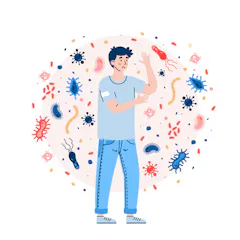
While the immune system naturally gets weaker with age, social stressors like trauma and discrimination can hasten immunosenescence.

A first-of-its-kind study investigated what’s going on in other people’s minds during your nail-biting moments.

Preparing for being active in cold weather can help keep us safe and increase our enjoyment.

The pandemic response has put the long-term health and well-being of children and adolescents at risk, with the possibility of seismic shifts in population health if we do not act.

Although the end of the semester can be a stressful time for students, embracing the stress can help students deal with it better than trying to avoid it, a well-being expert argues.

Can the brain’s conscious mechanisms exert a significant influence on the body’s autonomic functions? New research suggests yes – with possible implications for mental health.

A new way for leopard biologists to monitor this elusive and iconic species has been developed.
Childhood adversity doesn’t just affect our choices – according to new research, it also weakens the body’s fundamental ability to stay healthy in old age.

Melancholia has a strong genetic contribution, so it’s largely biologically underpinned rather than caused by social factors (stressors) or psychological factors, such as personality style.
Top contributors
-

Senior Research Fellow in Youth Mental Health, Brain and Mind Centre, University of Sydney
-
Professor of Management and Marketing, The University of Melbourne
-
Postdoctoral Researcher in Gerontology, University of Southern California
-
Research fellow, Future Of Work Lab, Faculty of Business and Economics, The University of Melbourne
-
Professor of Health and Wellness Studies, Binghamton University, State University of New York
-
Researcher in Social Epidemiology, University of York
-
Professor of Psychology, Dickinson College
-
Associate Professor of Nursing, University of Tennessee
-
Canada Research Chair in Social Epigenetics and Professor, UBC Department of Medical Genetics, University of British Columbia
-
Lecturer in Journalism, University of Maryland
-
Professor of Pediatrics and Radiology, Wayne State University
-
Research Fellow, Department of Psychology, Nottingham Trent University
-
Scientia Professor of Psychiatry, UNSW
-
Professor of Psychiatry, Wayne State University
-
Research and Knowledge Translation Facilitator, University of British Columbia