
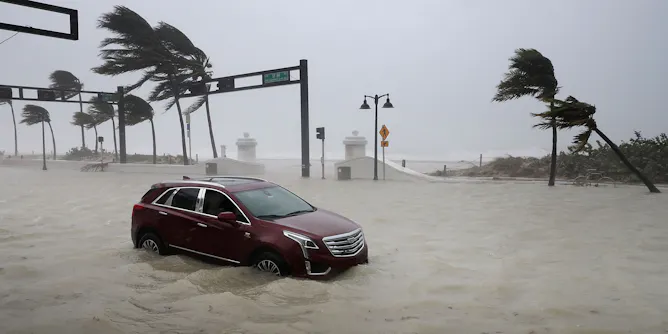
Storm surge is the No. 1 cause of deaths and damage during a hurricane, yet detailed storm surge forecasts are difficult to create. AI could turn that around.
Articles on Storm surge
Displaying 1 - 20 of 29 articles
‘As the storm approached Alaska, everything went sideways,’ leaving people no time to evacuate and little time to prepare. An Alaska meteorologist explains what happened and the challenges ahead.

How do you stay safe while you begin the clean up and recovery? It can be helpful to have a plan of action ready.
Warmer oceans, more rain and higher seas are likely to heighten Cyclone Alfred’s impact

For millions of people, Cyclone Alfred will be their first. From “go bags” to sandbags, here’s what you should do to be as ready as possible.
Some cities are building huge gates and barriers to counter the flood risk from estuary urbanization. But putting nature to work in a big way might be more effective.

Helene’s size and speed worsened everything from its storm surge to its extreme flooding in the mountains. And another hurricane was coming right on Helene’s heels.
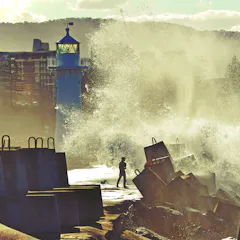
We make long term plans for railways, submarines and manufacturing. Why not for getting ready for rising seas?
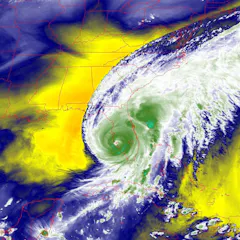
Two hurricane and climate scientists explain what’s known – and still unknown – about global warming’s influence on intensity, rainfall and much more.

Evacuations can save lives, as in the case of post-tropical cyclone Fiona. As more frequent extreme weather events are set to occur, it is important to have evacuation plans in place.
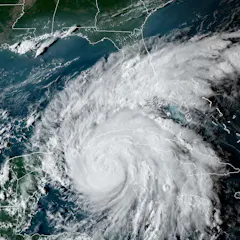
Much of the state is at risk of heavy rainfall, and the coast could see devastating storm surge, particularly around Tampa Bay.

Hurricanes don’t usually maintain high wind speeds as they make their way toward Atlantic Canada. But ocean warming may be linked to the increasing intensity of storms like Fiona.
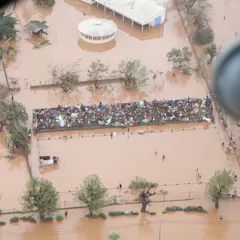
Rising populations and a warming climate mean storm surges from super cyclones are likely to affect increasing numbers of vulnerable people.

Climate change is a true existential threat for small island nations, but the US has done little to help the Marshall Islands, which it administered for decades.
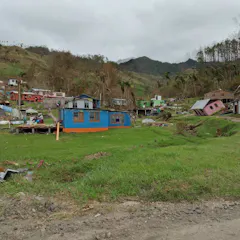
At the start of the cyclone season in the Pacific, weather forecasters are changing their warnings to focus less on weather information and more on the damage expected from an impending storm.
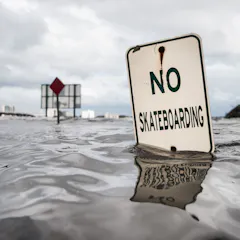
How destructive storm surge gets depends on both the hurricane and the shape of the land.
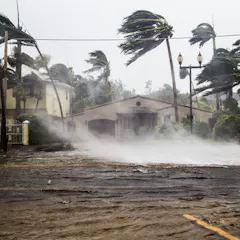
Can maps of people’s flooded properties convince them that rising sea level is a threat?
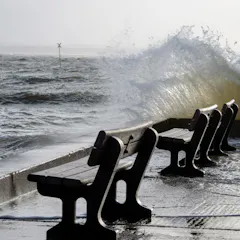
For every ten centimetres of sea level rise, the chances of a 100-year coastal flood increase three-fold. This means we’ll have to build flood defenses or retreat from the coast.

A particular brand of climate denial among coastal property owners presents a conundrum for councils and governments trying to plan for sea-level rise.
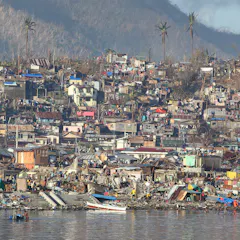
Half the deaths from Atlantic hurricanes are down to storm surge. People in vulnerable regions need to be aware of what it is and how it threatens their safety.
Top contributors
-

Adjunct Senior Lecturer, Centre for Disaster Studies, James Cook University
-
Postdoctoral research associate, University of Edinburgh
-
Atmospheric Scientist, Florida State University
-
Professor of Modern History, Northumbria University, Newcastle
-
Associate Professor of Civil and Environmental Engineering, University of Maine
-
Enterprise Fellow, The University of Melbourne
-
Associate Professor of Global and Sociocultural Studies, Florida International University
-
Assistant Professor, University of Central Florida
-
Professor Spatial Transformation, Hanze University of Applied Sciences, Groningen
-
Lead - Pilot Deployments Program (AIMS); Professor (Queensland University of Technology; Adjunct), Queensland University of Technology
-
Professor of Environmental Economics and Biosecurity, The University of Melbourne
-
Postdoctoral Scholar, University of California, Santa Barbara
-
Associate Professor of Meteorology, Florida State University
-
Distinguished Research Professor of Earth Sciences, Florida International University
-
Visiting Research Fellow, Adelaide University