
Science, technology, engineering and maths are still not an equal playing field for all. Here’s what needs to change.
Articles on STEM
Displaying 21 - 40 of 311 articles

Focusing on student learning preferences could boost the number of students from underrepresented groups earning science and engineering degrees.
The Trump administration has terminated hundreds of federal grants that support engineering, biology, geology, computer science, STEM education and much more.

A survey of graduate students found that California and New York are the most desirable destinations. Over half of survey-takers said they’d be unwilling to move to Alabama, Mississippi or Arkansas.

Student visa holders face high levels of vetting and monitoring. Escalating those protocols will redirect students to other countries and weaken US global leadership, a scholar argues.
Lesson plans incorporating shark fossil teeth help prepare kids to live and work in an AI world.
A reliance on foreign students for academic research has allowed the US to ignore flaws in its domestic tech worker pipeline, a scholar argues.

Women in these fields are almost at parity with men at the most selective schools, but the gender gap doubled at many of the least selective universities.

As school ‘funding wars’ roll into next year, many Australians may not realise the federal government hasn’t always contributed to school funding.

Despite pressure for students to choose STEM over the humanities, classes in literature, art and history can provide students with vital life skills and help combat the current epidemic of loneliness.

Building an inclusive STEM workforce requires a long-term commitment from individuals, industry and the government.

New research shows how the beach provides many ways to teach young children about biology, chemistry and physics.
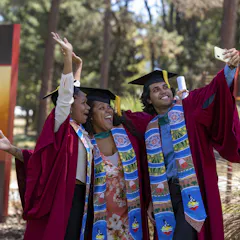
A recent summit in Canada tackled the challenge of how science can be more inclusive and better engage Indigenous communities.
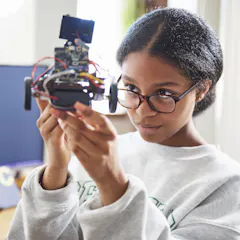
Universities have made little progress diversifying STEM fields in recent years.

Achievement gaps between white, Black and Hispanic students can be substantially explained by one factor: Their family’s socioeconomic status.

When children engage with STEM concepts their visual literacy and conceptual understanding of scientific concepts are strengthened.

More funding and more diversity in STEM are crucial for turning the ambitious goals of the national science statement into a reality.

The majority of jobs will be affected by AI within the next 10 years. Women need to learn how to use this new technology if they don’t want to lose momentum in the job market.
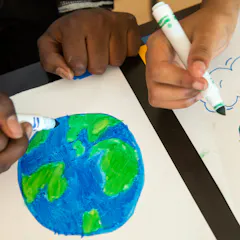
The big, interconnected problem of climate change means teachers need to build lessons beginning with big questions. Five steps for designing classes that draw on interdisciplinary approaches.

Canada needs the arts, with its insights into human behaviour and thinking, more than ever. But governments and funding agencies should shift funding models for arts graduate education.
Top contributors
-

Professor and Deputy Vice-Chancellor (Research), University of Sydney
-
Australian Government Women in STEM Ambassador, Professor of Practice, UNSW
-
Ph.D. Candidate in Psychology, Northwestern University
-
Industry Fellow, University of Technology Sydney
-
Professorial fellow, Flinders University; Australian National University
-
Professor of Social Impact, University of Technology Sydney
-
Distinguished Professor of Media and Communication, Queensland University of Technology
-
Dean of Science, University of California, Santa Cruz
-
Pro Vice-Chancellor (Academic Innovation & Change), Professor of Astrophysics, Swinburne University of Technology
-
Chair of ARC Centre of Excellence for Quantum Biotechnology, The University of Queensland
-
Professorial Fellow, University of Canberra
-
Associate Professor of Education Policy and Psychology and 21st Century Chair, University of Arkansas
-
Professor, Neurology, University of British Columbia
-
Clinical Research Manager, University of Kentucky
-
Professor, School of Education, Thompson Rivers University