
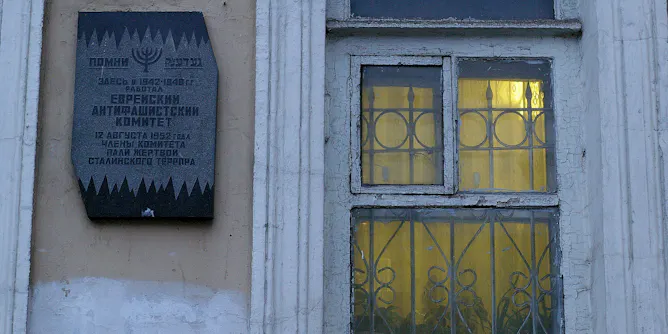
Thirteen Jewish leaders and artists were killed on the ‘Night of the Murdered Poets,’ one of the campaign’s most infamous examples of persecution.
Articles on Stalin
Displaying 1 - 20 of 38 articles
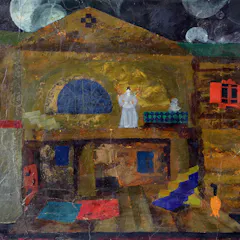
The story behind Shostakovich’s 1934 opera is pretty dramatic itself.
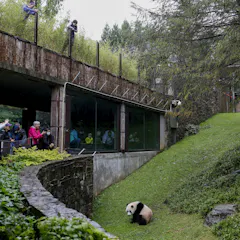
Zoos aren’t woke, but they aren’t politically neutral, either.
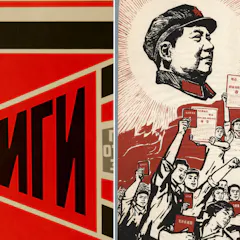
Soviet socialist realist art is often maligned. But there is much to celebrate in this style of art, writes Alison Carroll. Here are her top picks from our own region.
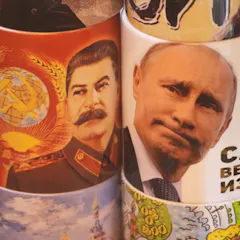
Although tempting to make the comparison, Vladimir Putin’s recent military purge doesn’t appear to be a replay of Stalin’s infamous purge in 1937.

The Arch of Reunification has been destroyed – reversing decades of government policy targeting eventual reunification with the South.
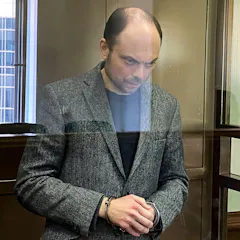
Opposing the Russian president appears as dangerous in today’s Russia as back in the days of the Stalin purges and show trials.
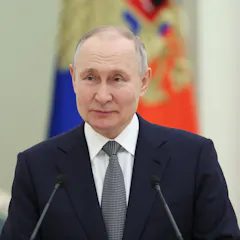
What started as a short military operation will now take years and years. Changing its tune is all in a day’s work for the Kremlin.
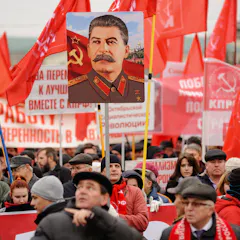
Stalin, who died on March 5, 1953, was partially rehabilitated in the decades that followed. These days, he is in some respects a source of inspiration for Vladimir Putin.
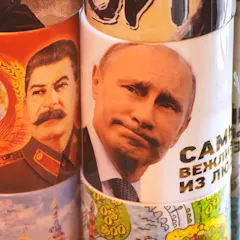
Are comparisons between Vladimir Putin and Josef Stalin useful? It’s a complex question.

Gareth Jones reported on Moscow’s genocide against the Ukrainian people in the 1930s. His story holds lessons and an example for those reporting on the latest conflict.
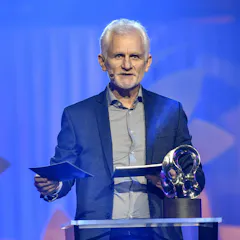
Imprisoned Belarus activist Ales Bialiatski, Russian human rights organisation Memorial and the Center for Civil Liberties in Ukraine have shared the award.
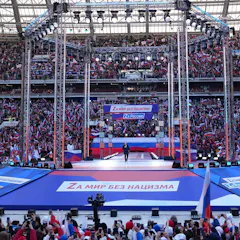
For hundreds of years, Russia has elevated its political leaders as figureheads. That’s part of what makes its propaganda so convincing.
Can social media posts sustain Russia’s endangered dissident cultures?
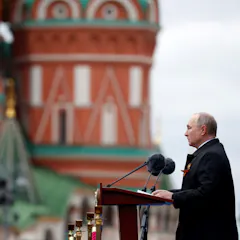
Russia’s take on the Second World War is not merely for nationalist consumption. The actions of the Soviet Union in defeating Nazi Germany appear to be a blueprint for the Russian attack on Ukraine.
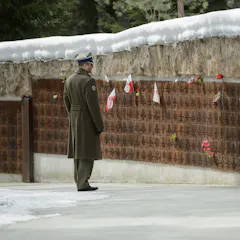
Soviet Russia had a policy of denying its responsibility for war crimes. It looks as if Putin’s Russia may be following suit.
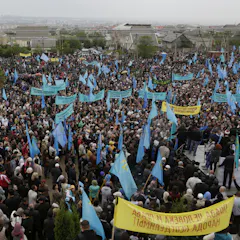
A scholar who spent many years living with the Crimean Tatars explains their long history of persecution.
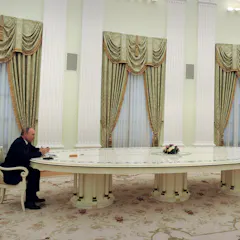
Just because deep-rooted Russian fears might not seem reasonable doesn’t mean they aren’t real in Vladimir Putin’s mind.
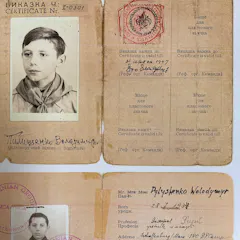
Many Ukrainian Americans feel connected to Ukraine’s history and independence, including scholar Katja Kolcio. She writes about her family’s work preserving Ukrainian culture as immigrants in the US.
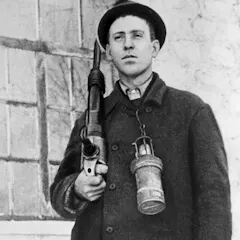
The audio version of an in-depth article about a record-breaking Soviet miner from 1935 who embodied a system of values that is central to contemporary work cultures today.
Top contributors
-

Lecturer (Assistant Professor) in Russian and Post-Soviet Politics, University of Bath
-
Assistant Professor in History, Western University
-
Senior Lecturer in Modern European History, University of Leeds
-
Teaching Fellow in Music, Royal Holloway, University of London
-
Associate Professor, School of Communication, Queensland University of Technology
-
Professor, Dean of the School of Arts & Sciences, Tufts University
-
Quondam Fellow of All Souls College, University of Oxford
-
Associate Professor of Political Science, Brock University
-
Lecturer in Evolutionary Biology, University of York
-
Reader, History, Glasgow Caledonian University
-
Senior researcher, Centre for Social Change, University of Johannesburg
-
Senior Lecturer in Psychology, Leeds Beckett University
-
Professor of Anthropology, Area Studies and Russian, United States Naval Academy
-
Professor of Sociology and Secular Studies, Pitzer College
-
Professor of History, Carnegie Mellon University