
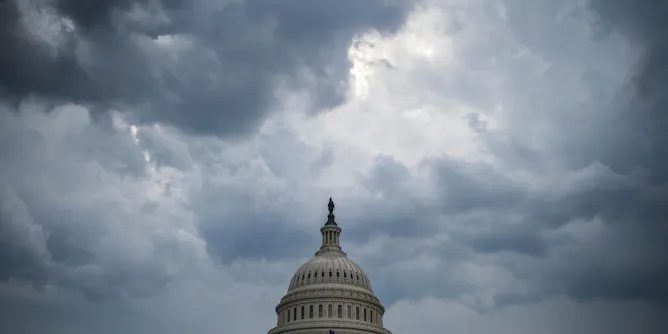
Despite growing numbers of non-religious Americans, self-declared atheists are few and far between in the halls of power – putting the US at odds with other global democracies.
Articles on Stalin
Displaying 21 - 38 of 38 articles
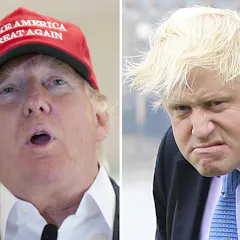
The risk of “pathocracy” is always close. And once entrenched, difficult to dislodge.
The book, Marxism and Freedom was written in 1958. Yet, it remains relevant today.
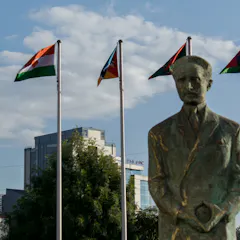
Leaders go in and out of fashion, making statues built in their memory a tricky issue.
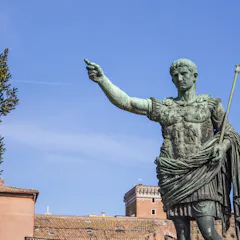
Augustus’s long line of high-profile admirers see him as a great statesman who brought peace to a Roman Republic long afflicted by civil wars. But how admirable was he, really?
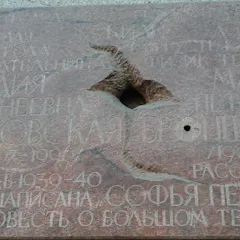
Persecuted by Stalin, writers Lydia Chukovskaya and Anna Akhmatova endured threats, cold and starvation. And in an epic feat, Lydia memorised the poems of her friend that were too dangerous to commit to paper.
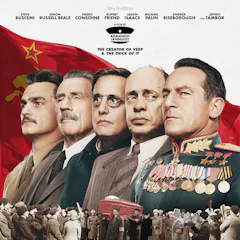
Speaking with: satirist Armando Ianucci on The Death of Stalin
The Conversation, CC BY44.1 MB (download)
Armando Iannucci, the satirist and director behind the film The Death of Stalin spoke with Associate Professor Stephen Harrington, an expert on political satire.
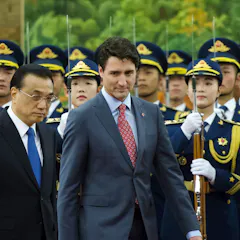
Canada’s “progressive trade agenda” with China might have died in the Great Hall of the People earlier this month. But there’s now an opportunity for a serious reconsideration of the relationship.

Russian revolutionary Nadezhda Krupskaya, like other leading women in the new Stalin-led state, was marginalised. But in her case, because she was Lenin’s widow.
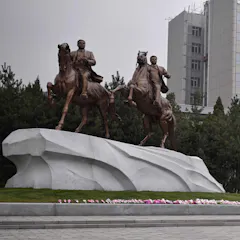
CC BY-ND14.5 MB (download)
In this first episode of In Depth, Out Loud: an audio version of long form stories, a look at the cult of the Kim family.

Two big battles which turned the tide of World War II can tell us a great deal about some important present-day challenges.
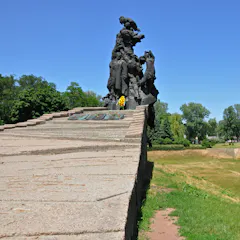
On September 29 1941, Nazis murdered more than 30,000 Jews in a ravine outside Kiev. Dmitri Shostakovich’s 13th Symphony, Babi Yar, is a damning critique of the Soviet Union’s lack of recognition of the massacre, and a condemnation of Stalinism.
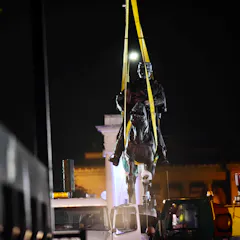
A scholar of southern politics finds inspiration in an unexpected place.
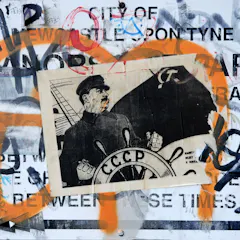
In the West, the public perception of Stalin and the Terror lingers from the period immediately after his death in 1953. It shouldn’t.
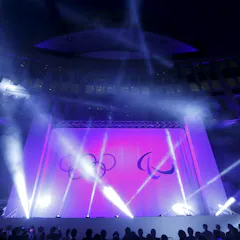
The Olympic Games are a theatre — sometimes farce, sometimes tragedy, reality TV, morality play or soap opera — where geopolitical, social and technological dramas are played out.
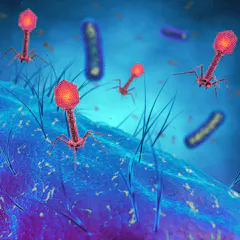
The virus that could cure antibiotic resistant infections.
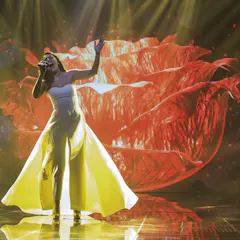
Charged with collaboration with the Nazis, in 1944, 240,000 Crimean Tartars were deported to Soviet Central Asia.
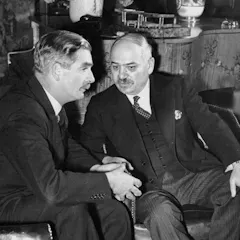
Ivan Maisky was Russia’s ambassador to the Court of St James from 1932 to 1943. By charming his way into Britain’s inner circles he arguably passed on more secrets than the infamous Cambridge Five.
Top contributors
-

Lecturer (Assistant Professor) in Russian and Post-Soviet Politics, University of Bath
-
Assistant Professor in History, Western University
-
Senior Lecturer in Modern European History, University of Leeds
-
Teaching Fellow in Music, Royal Holloway, University of London
-
Associate Professor, School of Communication, Queensland University of Technology
-
Professor, Dean of the School of Arts & Sciences, Tufts University
-
Quondam Fellow of All Souls College, University of Oxford
-
Associate Professor of Political Science, Brock University
-
Lecturer in Evolutionary Biology, University of York
-
Reader, History, Glasgow Caledonian University
-
Senior researcher, Centre for Social Change, University of Johannesburg
-
Senior Lecturer in Psychology, Leeds Beckett University
-
Professor of Anthropology, Area Studies and Russian, United States Naval Academy
-
Professor of Sociology and Secular Studies, Pitzer College
-
Professor of History, Carnegie Mellon University