

Fertility clinics are not for everyone. So many people are going online to look for a sperm donor. But that comes with risks. Here’s what to think about first.
Articles on Sperm donors
Displaying all articles
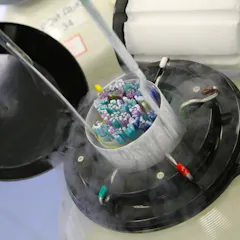
Previously, eggs and sperm (gametes) and embryos were typically only stored for a maximum of ten years.

Many people are filing lawsuits after discovering that sperm banks failed to verify information from donors about their medical and personal backgrounds.

How sperm bank marketing meets the growing demand for donations.
There are sound ethical reasons behind Canada’s decision to ban payment to surrogate mothers and sperm and egg donors in 2004. A new push to remove the restrictions ignores the risks.

From today, more people conceived with donor sperm or eggs in Victoria will have the legal right to know details about their donor – even if the donation was made anonymously.

Why can we choose some things and not others?
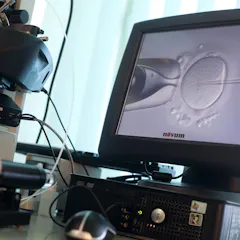
In a world first, Victoria plans to retrospectively open the records of formerly anonymous sperm donors to all donor-conceived people. A system of contact vetoes aims to manage the privacy concerns.

The National Health and Medical Research Council call for public submissions on whether sex selection should be allowed without a medical reason recognises changing social attitudes.
Most heterosexual parents who conceive via donor conception never tell their children.

Historically, donors were told it was best they were anonymous, while recipients were told it was best not to tell their child.
Top contributors
-

Adjunct Senior Research Fellow, Global and Women's Health, School of Public Health & Preventive Medicine, Monash University
-
Principal Research Fellow, Australian Research Centre in Sex, Health and Society, La Trobe University
-
Dean and Professor, Law School, La Trobe University
-
Adjunct Professsor, School of Psychology, Faculty of Health and Medical Sciences, Adelaide University
-
Academic; Consultant (Health Law), University of Sydney
-
Associate Professor in Sociology, Swinburne University of Technology
-
Professor of Bioethics and Health Research, University of Manchester
-
Lecturer in Law, Manchester Law School, Solicitor (non-practising), Manchester Metropolitan University
-
Assistant Professor and Canada Research Chair in the Politics of Reproduction, University of Waterloo
-
Distinguished Research Professor, Emerita, Dalhousie University
-
Research Fellow in Biomedical Ethics, The University of Melbourne
-
Research fellow, Manchester Metropolitan University
-
Professor of Law, University of Virginia
-
Associate Professor in Marketing at ESCP Business School, ESCP Business School
-
Reader in Human Reproductive Biology, University of Birmingham