
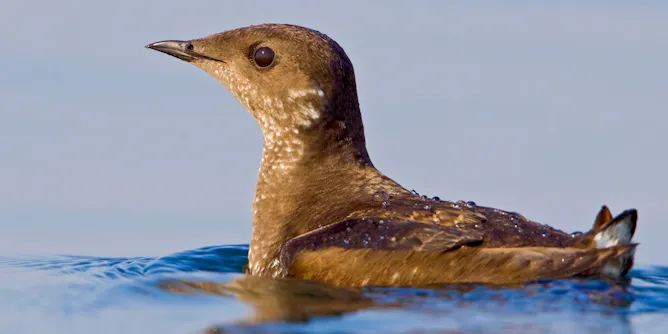
Facing pressures in both marine and terrestrial environments, the marbled murrelet is listed as threatened under Canada’s Species at Risk Act.
Articles on Species at risk
Displaying all articles
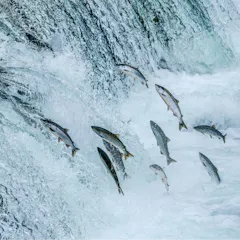
Biodiversity policies fail because governments lack the safeguards, accountability mechanisms and political commitment needed to implement them consistently.
Translocation intends to minimize the impacts of development. Research shows that we are moving millions of animals and have no idea what happens to them next.
Impact assessments prevent harm before it occurs. Circumventing the process before we understand the risks is misguided and a gamble with our collective future.
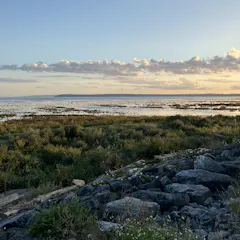
Data shows that almost all of B.C.’s endangered wildlife are not recovering quickly enough, if at all.
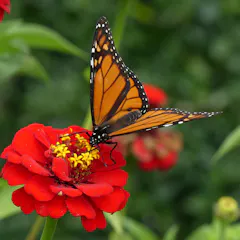
Climate stability and economic health depend on biodiversity. Yet this foundation is hardly mentioned as the federal government seeks to shore up Canada’s economic future.
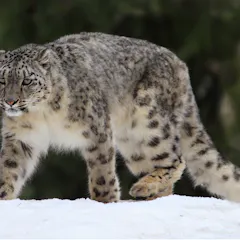
Conservationists have to search rough terrain and thousands of automated photographs to find the elusive cats. Artificial intelligence can help them work more accurately and more efficiently.
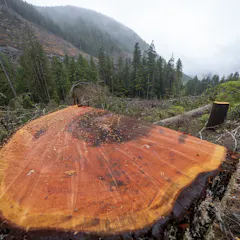
Canada’s existing species at risk legislation fails at protecting its most vulnerable inhabitants. More robust protections are needed.
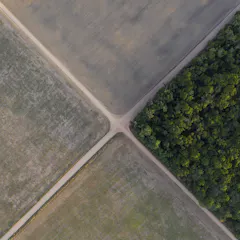
The so-called post-2020 global biodiversity framework is a nature counterpart to the 2015 Paris Agreement on climate change, and will aim to curb the decline of nature by 2050.
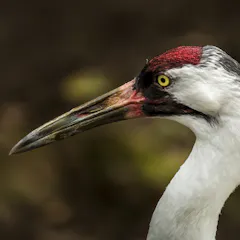
A bewildering array of laws and regulations cover species and ecosystems in Canada, making their protection inadequate.
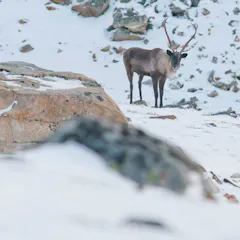
Canada needs a national board of advisers to hold Parks Canada’s feet to the fire and shield it from political interference.
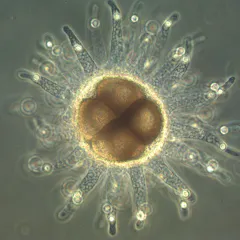
When offspring become more “costly” to make, mothers make fewer of them. And these offspring start life with fewer energy reserves.
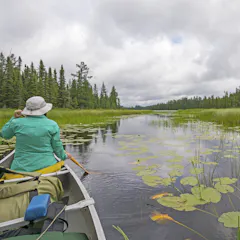
Scientists have a new approach to understanding how pollution threatens species at risk in Canada.
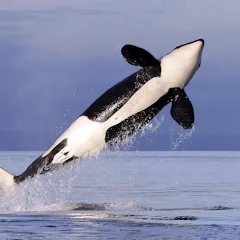
Noisy waters may be making it harder for southern resident killer whales to communicate with each other and find their food.
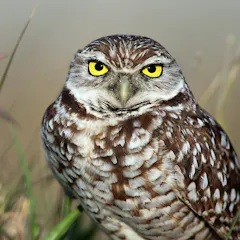
Carving up ecosystems or opening them to development puts the survival of species at risk.
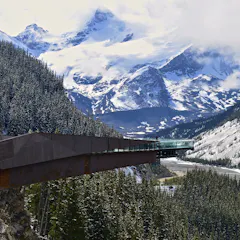
Canada’s national parks don’t need more visitors. They could use more scientists, and better science, to help conserve the country’s species.
Top contributors
-

Adjunct professor, Institute of Forestry and Conservation and Department of Ecology and Evolution, University of Toronto
-
Fellow, Queen's Institute for Energy and Environmental Policy, School of Policy Studies, Queen's University, Ontario
-
Professor of Political Science and Geography, University of Toronto
-
Professor, Marine Evolutionary Ecology, Monash University
-
Assistant Professor, Department of Biology & School of Environmental Studies, Queen's University, Ontario
-
PhD Student, Department of Ecology and Evolution, University of Toronto
-
Research Associate, Department of Environmental Science, Thompson Rivers University
-
Professor and Canada Research Chair, Rural Livelihoods and Sustainable Communities, Thompson Rivers University
-
Adjunct Professor, Department of Biology, Simon Fraser University
-
Assistant Research Scholar, Center for Landscape Conservation Planning, University of Florida
-
Professor of Wildlife and Conservation Ecology, University of Northern British Columbia
-
Postdoctoral Fellow, School of Environmental Science, Simon Fraser University
-
Professor of Biology, Canada Research Chair of Urban Environmental Science, University of Toronto
-
Killam University Professor in Evolutionary Biology, University of British Columbia
-
Professor of Biology, Department of Biology, University of Victoria