
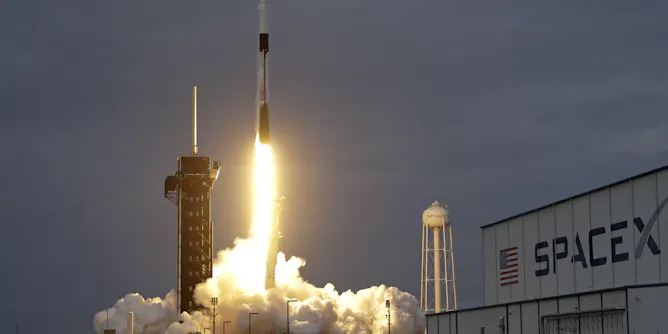
Space exploration is not a waste of resources, but a source of technological and medical advances, a tool for climate monitoring and a source of educational inspiration for youth.
Articles on SpaceX
Displaying 61 - 80 of 192 articles

Nearly a century after the National Labor Relations Board’s creation, big corporations are arguing that it violates the US Constitution.
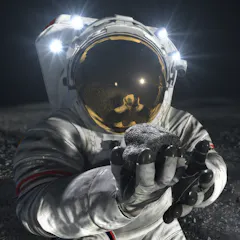
The next generation of spacesuit needs to do more than simply protect an astronaut from the vacuum of space.

Megaconstellations of satellites are hindering the most powerful tool for space exploration: telescopes.

Countries have submitted applications for hundreds of thousands of new satellites to be launched. The scale poses challenges for overcrowding orbit, with environmental and safety challenges.

Starlink satellites emit bright, unintended and unexpected signals that can be detected by radio telescopes.
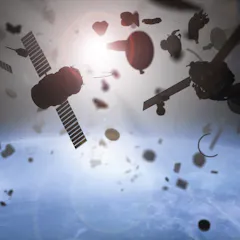
Treaties meant to ensure sustainability in space don’t currently regulate private companies, and not every country has signed on to an agreement for sustainable space exploration.
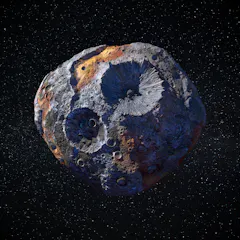
Liftoff to the distant asteroid is scheduled for Oct. 5, 2023 – the beginning of a six-year journey to one of the most unusual objects in the solar system.

With commercial space tourism on the rise and NASA planning to return to the Moon, you might think the US space economy is booming – but the data paint a more complex picture.

Diverse teams can not only solve engineering problems more effectively, but the outcomes tend to be more inclusive, as a geographer and feminist scholar explains.
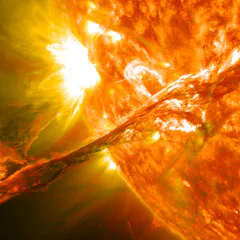
We’re currently a few years into the 25th studied solar cycle. An 11-year period of sun activity, this solar cycle is more active than previously expected.
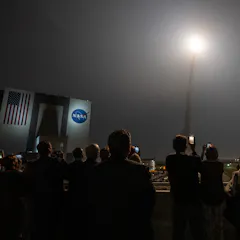
A new survey catalogs Americans’ expectations about the future of space, from NASA to SpaceX. Two space policy experts describe how these results stack up against the current state of space affairs.

Ready or not, sex in space will be happening within the decade.
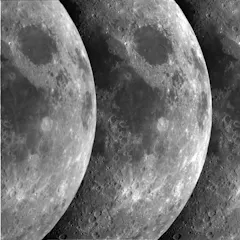
While a return to the Moon will allow the U.S. to collaborate with other nations interested in space, this endeavor is also complicated by geopolitical tensions.
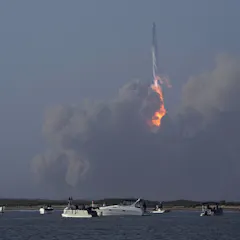
The launch of a new rocket is always an exciting event. SpaceX’s ‘go fast and fail’ approach means that even though the test ended with engineers blowing up the rocket, it was a valuable first flight.
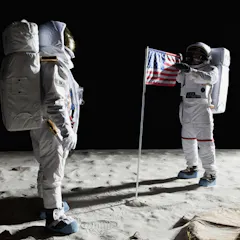
China has invested massively in its space capabilities in recent years and is now a major competitor with the US. But according to a space policy expert, the US still dominates space by most measures.
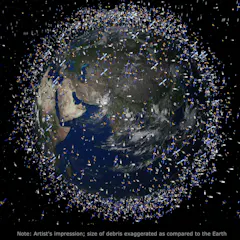
How might the space industry reduce its ecological footprint and better manage the debris it leaves in its wake?
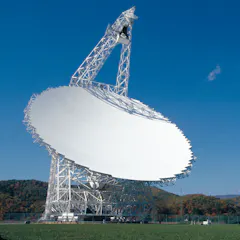
Many telescopes use the radio spectrum to learn about the cosmos. Just as human development leads to more light pollution, increasing numbers of satellites are leading to more radio interference.

Internet access opens up the world in many ways.

Proponents of mining in space often point to the potential benefits for Earth and its people. But this research casts doubt on many of them.
Top contributors
-

Professor of Strategy and Security Studies, Air University
-
Senior Lecturer in Physics, Nottingham Trent University
-
Associate Professor, Astronomy, University of Regina
-
Postdoctoral research associate, University of Oxford
-
Professor of Hypersonic Aerodynamics, The University of Queensland
-
University Distinguished Professor of Astronomy, University of Arizona
-
Associate Professor in Archaeology and Space Studies, Flinders University
-
Professor, Physics and Astronomy, University of British Columbia
-
Professor of Robotics, Head of Centre for Robotics Research, King's College London
-
Professor of Planetary and Space Sciences, The Open University
-
Assistant Professor of Space and International Relations, Johns Hopkins University
-
Reader in Astrophysics, Keele University
-
Professor of Mechanical and Aerospace Engineering, The Ohio State University
-
Senior Lecturer, Centre for Hypersonics, School of Mechanical and Mining Engineering, The University of Queensland
-
Associate Professor of International Affairs, Georgia Institute of Technology