
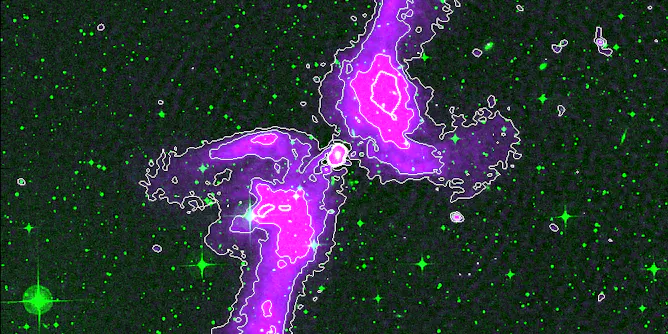
Like a cosmic butterfly in the sky, radio galaxy PKS 2014-55 was observed by CSIRO researchers with the Australian SKA Pathfinder telescope.
Articles on Space telescopes
Displaying 21 - 33 of 33 articles
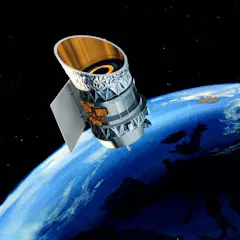
Two defunct satellites passed within metres of one another, prompting renewed focus on the dangers of space debris. But with many satellites treated as military secrets, how do we track the hazards?
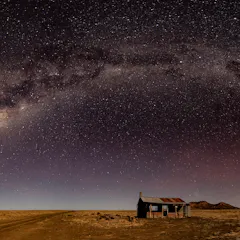
‘The size, the grandeur, the peacefulness of being in the dark’: what it’s like to study space at Siding Spring Observatory
The Conversation, CC BY54.3 MB (download)
Three hours north-east of Parkes lies a remote astronomical research facility, unpolluted by city lights, where researchers are trying to unlock some of the biggest questions about our Universe.
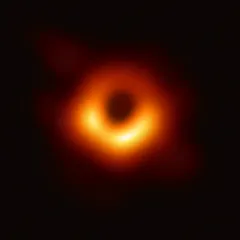
Scientists turned Earth into one giant telescope to capture the uncapturable.
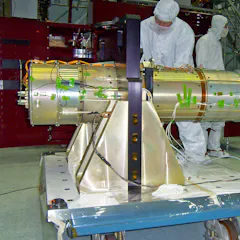
The Swift Observatory passed a milestone: 1 million snapshots of the universe. These exquisite and revealing pictures have captured the births and deaths of stars, gravitational waves and comets.
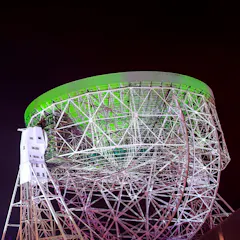
Science and art meet on the ‘big screen’ – turning data into visuals at the Lovell Telescope, Jodrell Bank.
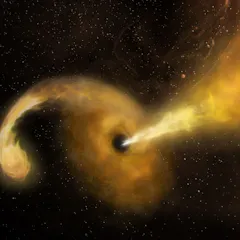
A team of astronomers captured the moment when a wayward star was pulled into the mouth of a supermassive black hole.
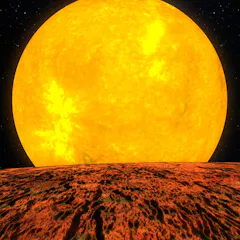
When NASA first started planning the Kepler mission, no one knew if the universe held any planets outside our solar system. Thousands of exoplanets later, the search enters a new phase as Kepler retires.
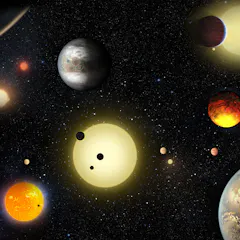
The number of known exoplanets doubled this week to more than 3,200. But why have only a handful of these those new planets caught people’s imagination?
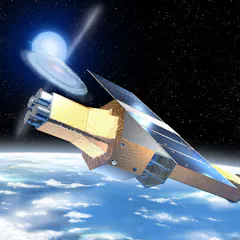
Astronomers were looking forward to the first high-res X-ray spectra from space, and all they would tell us about the cosmos. But unknown disaster seems to have befallen the Japanese satellite.
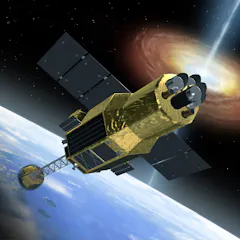
The universe looks very different with X-ray vision, revealing some of the most energetic interactions in our galaxy. Japan’s new Hitomi telescope will help us see these wonders.
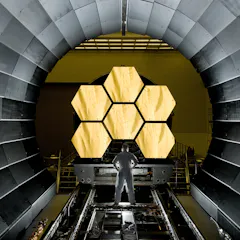
It’s urgent that we turn our attention to a high definition space telescope that will allow us to directly image exoplanets.
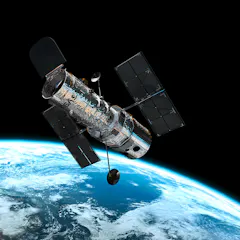
Ground-based telescopes are getting bigger and better while still being cheaper than space telescopes. But the vital scientific contributions made by Hubble demonstrates why we need both.
Top contributors
-

Associate Dean for Research and Professor of Astronomy and Planetary Sciences, University of Arizona
-
ARC Laureate Fellow & Distinguished Professor, Centre for Astrophysics & Supercomputing, Swinburne University of Technology
-
Research scientist & Head of Science Operations and Support, e-MERLIN/VLBI National Radio Astronomy Facility, Jodrell Bank Centre for Astrophysics, University of Manchester
-
Professor (Astrophysics), University of Southern Queensland
-
Research fellow in space physics, Lancaster University
-
Research Professor of Astronomy and Astrophysics, Penn State
-
Senior research scientist, CSIRO
-
Associate Professor, Japan Aerospace Exploration Agency (JAXA)
-
Co-Director Space Technology and Industry Institute, Swinburne University of Technology
-
Researcher, Macquarie University
-
Postdoctoral fellow, CSIRO
-
Assistant Professor of Physics and Astronomy, University of Nevada, Las Vegas
-
Pro Vice-Chancellor and Executive Dean, University of Surrey
-
Postdoctoral Research Fellow, Research School for Astronomy and Astrophysics, Australian National University
-
Assistant Professor of Galaxy & Black Hole Astrophysics, ETH Zurich