
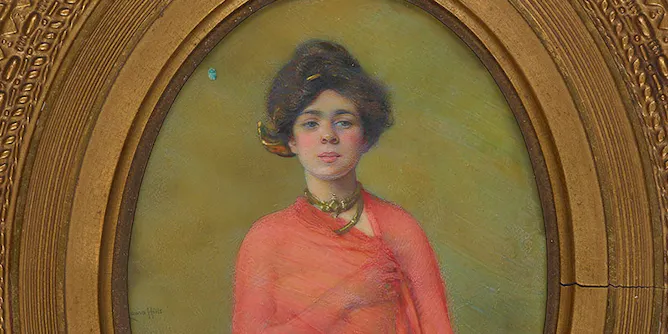
Belle da Costa Greene, who was JP Morgan’s librarian, became a lively fixture at Gilded Age mansions, country retreats, auction houses and art galleries. She was also a Black woman who passed as white.
Articles on Code-switching
Displaying 1 - 20 of 23 articles

The film ‘Past Lives’ provides meaningful insights on how immigrant youth grow into their cultural identity.

Tower Hamlets’ recognition of Cockney as a “community language” celebrates the role that all English dialects play in shaping individual and community identities.

The language question in Ukraine goes back centuries. It is deeply rooted in the history of old empires and Ukraine’s position as the borderland between the West and the East.

Many people change their accent and vocabulary, depending on who they are talking to.

Speakers of minority languages (like Welsh) often insert words from a majority language (like English) while speaking.

African American Vernacular English is a stigmatized dialect that is still ridiculed in education and the workplace. Its speakers are coherent and intelligent communicators, but remain disadvantaged.

Bilingual education is possible for all South Africa’s children.
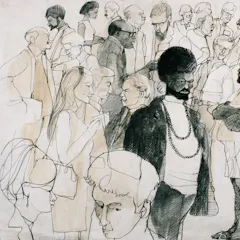
We often imitate styles of speech we hear – what’s known as ‘linguistic convergence.’ But a researcher wanted to see if we alter our speech based on the mere expectation of how someone will sound.

Queer people have learned to build and rely on “chosen families.” Finding ways to creatively bolster and expand our networks of care takes on renewed importance in the pandemic.

Herri steps into a lacuna in the South African arts and culture publishing landscape and deploys design to add richness to its critical texts.
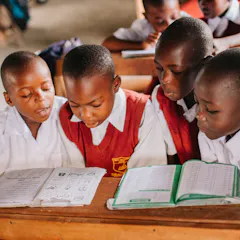
A much more flexible and open teaching and language policy would help teachers and pupils to enable a meaningful learning environment in a multilingual and diverse classroom setting.

And without white privilege, they wouldn’t feel compelled to follow a white script.

It’s not far-fetched to suspect that the common understanding of the idea of “mother tongues” in South Africa is coloured by outside influences.

Africa’s current situation has a parallel in European history - the Reformation and the changes it wrought in terms of language exceptionalism.
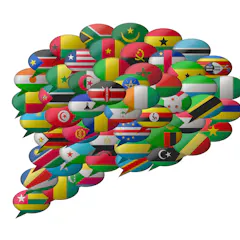
Africa needs a new strategy for mother-tongue based bilingual education, from primary through to tertiary level.

To understand the full scale of the world’s linguistic diversity, we should be thinking about languages and how speakers relate to them.

Learning is an independent activity at university. Students who don’t speak English as a mother tongue struggle to decode the content, let alone make sense of it.

For centuries, written communication was tinged with formality and finality. But since the emergence of casual forms like texting, using proper grammar can be fraught with misinterpretation.
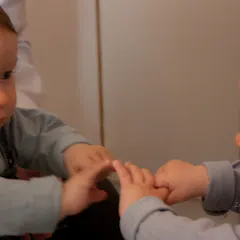
Research shows babies begin to learn language sounds before they’re even born. What about babies who hear two languages from birth? Can a baby brain specialize in two languages?
Top contributors
-

Emeritus Professor of African Linguistics, University of Leipzig
-
Assistant Professor of Sociology, UMass Lowell
-
Head: Science Teaching and Learning Centre, Faculty of Science, University of the Witwatersrand
-
Lecturer of Biology/Life Sciences (research in Science Education), University of the Witwatersrand
-
Associate Professor in the School of Molecular and Cell Biology, University of the Witwatersrand
-
Lecturer in Information Literacy, Cape Peninsula University of Technology
-
Postdoctoral Researcher, University of Pennsylvania
-
Professor in Language Education, member bua-lit collective, University of Cape Town
-
Lecturer in Sociolinguistics, Queen Mary University of London
-
Research Scientist, University of Washington
-
Lecturer of Theoretical and Applied Linguistics, University of Cambridge
-
Professor of English, Wayne State University
-
Post-Doctoral Fellow, Stellenbosch University
-
Professor of African Language Studies, University of the Western Cape
-
Senior Lecturer in Linguistics (Bilingualism), Bangor University