

After three decades of democracy, the status of Afrikaans at formerly Afrikaans universities remains the subject of considerable debate.
Articles on Language of instruction
Displaying all articles

Academic literacy is a mode of reasoning that aims to develop university students into deep thinkers, critical readers and writers.
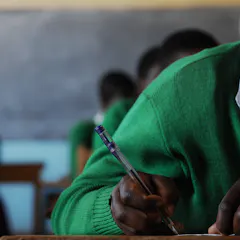
Students’ fears were not unfounded. I recorded many instances of laughter punctuating student responses in class.
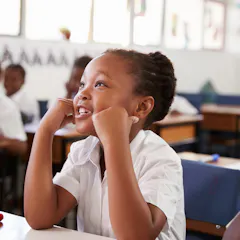
Bilingual education is possible for all South Africa’s children.

Learning is a cumulative process and in language and maths, it is especially critical as every year of learning sets up the building blocks for the next year of learning.
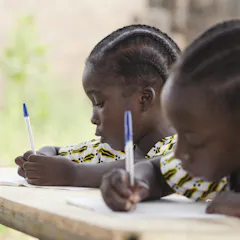
Investing in bilingual education can reduce grade repetition, drop-out rates, and improve literacy outcomes.

South African parents want their children be taught in English despite the fact that research shows that academic progress is hindered if a child is taught in a language they aren’t proficient in.

Children need more than school resources and qualified teachers to attain academic success.
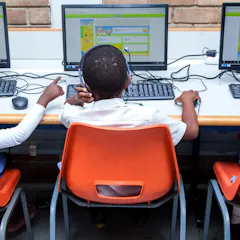
Schools should consider offering mobile learning technology in multiple languages to help pupils learn better in subjects like maths and science
Africa needs a new strategy for mother-tongue based bilingual education, from primary through to tertiary level.
Top contributors
-

Emeritus Professor of African Linguistics, University of Leipzig
-
Associate Professor in Information Systems, University of the Western Cape
-
Associate professor, University of Pretoria
-
PhD student, Developmental Psychology and Education, University of Toronto
-
Professor in Language Education, member bua-lit collective, University of Cape Town
-
Senior Researcher, University of the Western Cape
-
Associate Professor, Applied Psychology and Human Development, University of Toronto
-
Researcher, Human Sciences Research Council
-
Lecturer, University of Strathclyde
-
Associate Professor, University of Johannesburg
-
Researcher, University of Cape Town
-
Chief Research Specialist., Human Sciences Research Council
-
Deputy Director, University of Fort Hare
-
Senior Lecturer, Applied Language and Literacy Studies, University of Cape Town
-
Professor, University of Cape Town