
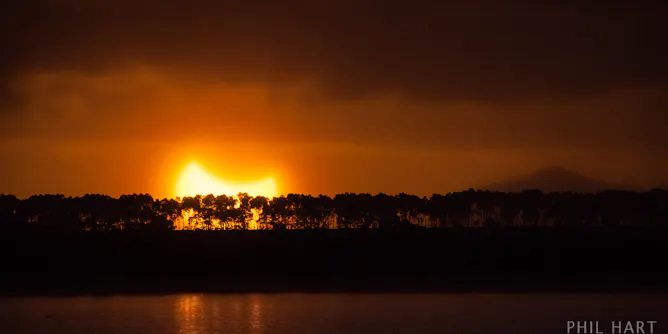
On December 26 a solar eclipse will be visible from northern Australia, southern Asia and parts of the Middle East.
Articles on Solar eclipse
Displaying 41 - 60 of 60 articles

Just 12 people have walked on the Moon and they’ll know better than anyone just how big (or small) the place is. But we can make some comparisons with things on Earth to get a measure of the Moon.

While the world gathers to see an eclipse, what’s the rest of nature doing?
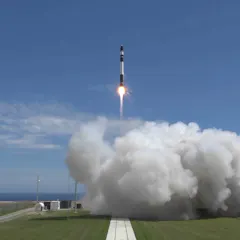
There are plenty of astronomical things to watch out for this year beyond this week’s lunar eclipse, including new Moon landings and a space station falling back to Earth.
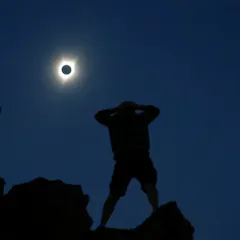
The solar eclipse offered electricity network operators a “live drill” in how to cope with fluctuating output from renewable energy. They passed with flying colours.
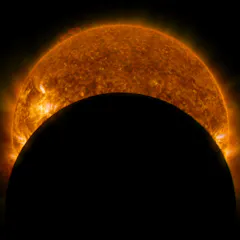
If you’ve ever wondered why you can look at a solar eclipse and why it can harm your eyes, the answer is in the sun’s rays.
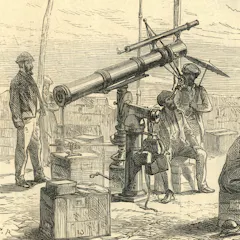
For centuries, scientists have known when and where eclipses will be visible. They pack their bags, head for the line of totality and hope for the best – which doesn’t always happen.
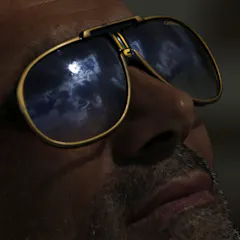
People universally believe scientists’ solar eclipse calendars, but vaccine warnings or climate predictions are forms of science that strangely do not enjoy equivalent acceptance.
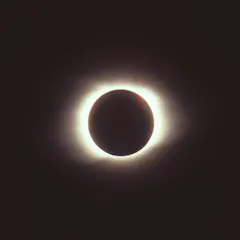
The eclipse will be one of the most digitally recorded events ever. Here’s how to be part of it.
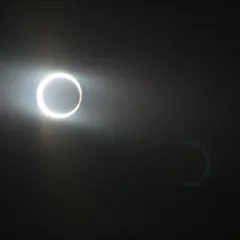
More than 2,000 years ago, the Babylonians understood the cycle of eclipses. They also regarded them as signs that could foretell the death of a king.
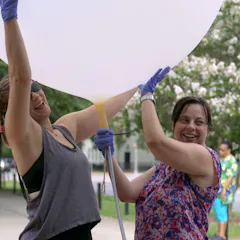
Meteorology researchers across the country are prepping experiments for the mini-night the eclipse will bring on August 21 – two minutes and 36 seconds without the sun in the middle of the day.
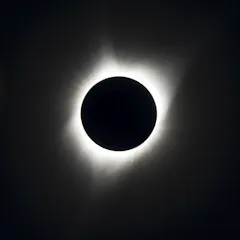
An astronomer explains how. why and when eclipses happen, what scientists can learn from them, and what they would look like if you were standing on the Moon.
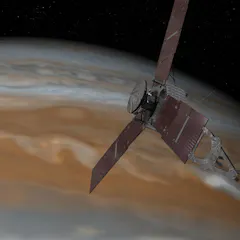
From the high-speed journey to Jupiter to solar eclipses, meteor showers and planetary alignments visible in the skies above – add these space highlights to your 2016 calendar.
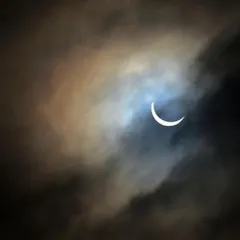
A solar eclipse is something to behold, but they’re rare and useful events for testing scientific theories too.
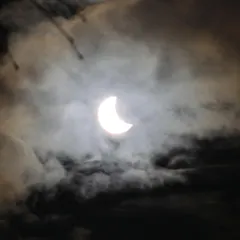
British weather let you down? Watch a livestream of the solar eclipse from the University of Nottingham.
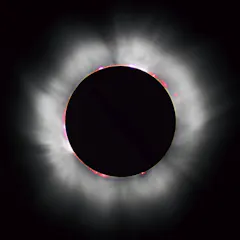
Solar eclipses may not be a once in a lifetime event, but being able to see them from home is rare enough.
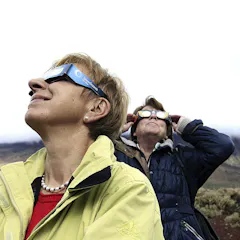
A solar eclipse knocks out Europe’s solar power generation while also causing a huge surge once people get bored. It’s a unique energy challenge.
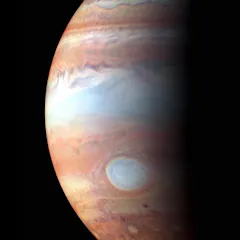
There is no doubt that 2014 was a fantastic year for planetary sciences – the high points were the successful landing of Philae on comet 67P, the discovery of methane by the Curiosity rover on Mars and…
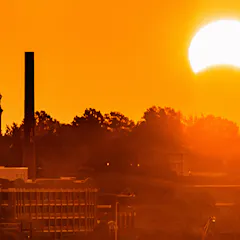
Each month, at the time of new moon, the sun and moon are together in the daytime sky. Most of the time the moon passes by unnoticed. But at least twice a year, somewhere on Earth will see the moon pass…
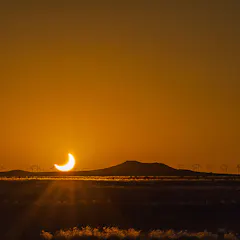
Due to a rare alignment of events, many Australians will today experience a second eclipse this month. A partial solar eclipse will be visible from across Australia later this afternoon, following the…
Top contributors
-

Senior Curator (Astronomy), Museums Victoria Research Institute; The University of Melbourne
-
Professor of Astronomy, Mathematics, and Physics, Athabasca University
-
Lecturer in Astrophysics, Queen's University Belfast
-
Teaching Professor of Astronomy & Astrophysics, Penn State
-
Dean of Science, University of California, Santa Cruz
-
Professor of Physics and Astronomy, USC Dornsife College of Letters, Arts and Sciences
-
Associate Professor, Physics, Engineering Physics & Astronomy, Queen's University, Ontario
-
Professor of Solar Physics, University of Lancashire
-
Professor Global Energy and Resources, UCL
-
Pro Vice-Chancellor Flagship Initiatives, Swinburne University of Technology
-
Associate Professor of Classics & Ancient Mediterranean Studies, History, and Asian Studies, Penn State
-
Professor of Planetary and Space Sciences, The Open University
-
Professor of Astronomy, The Ohio State University
-
Professor and Director of the Centre of Excellence for Data Science, AI and Modelling, University of Hull
-
Associate Professor in Astronomy, Monash University