
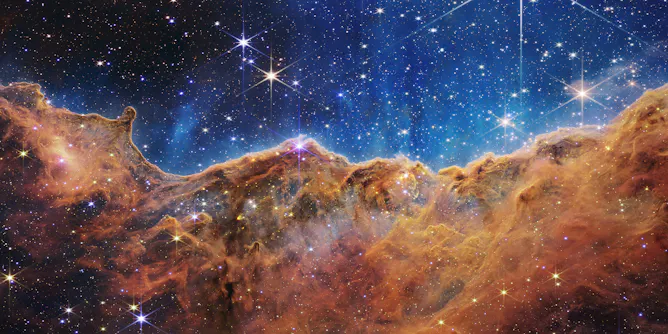
Analysis of fragments of the first solids that emerged out of the birth of the sun date our supernova as being 4.6 billion years old.
Articles on Eclipse April 8, 2024
Displaying all articles
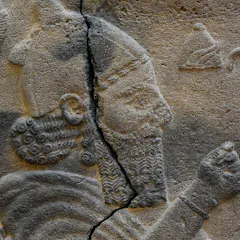
To protect their kings, ancient Mesopotamians discovered how to predict eclipses, which were associated with the deaths of rulers. This eventually led to the birth of astronomy.
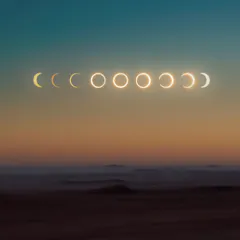
Eclipses have long fascinated and intrigued people, and anticipation of the total solar eclipse on April 8 is no exception. The beauty, history, mythology and science of eclipses justify the hype.
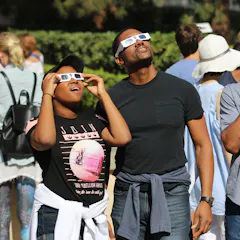
A total solar eclipse is a beautiful phenomenon worth seeing, but worth seeing safely.
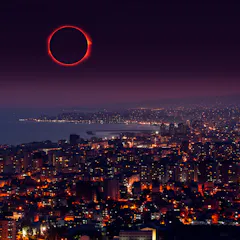
The sky is becoming more cluttered with satellites and space junk. This is affecting astronomical study, but will only have a minor effect — if any — on the viewing of the solar eclipse.

A million people are anticipated to head to the Niagara Region to experience the total solar eclipse on April 8. Keeping large crowds of spectators safe may pose a challenge for the region.
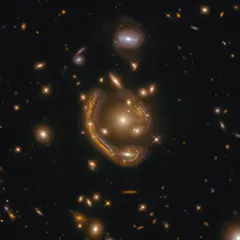
Observations during historical solar eclipses confirmed Einstein’s theory of gravity, and led to the predictions of black holes.
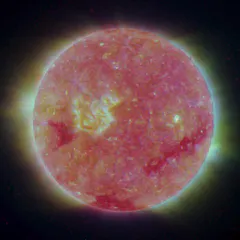
The solar corona can be seen during the solar eclipse on April 8. Astronomers are still trying to figure out the mysteries of the corona, including why it’s so hot.
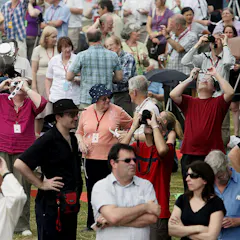
Apart from technical aspects, a successful photograph of the eclipse serves as a lasting reminder of the sense of wonder and the feeling of being part of something larger than ourselves.
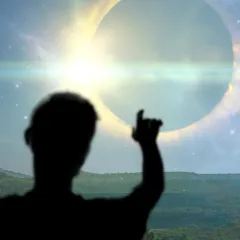
Eclipses have inspired myths, predictions and scientific discoveries. The total solar eclipse occurring on April 8 provides a once-in-a-lifetime opportunity to engage with science and the cosmos.
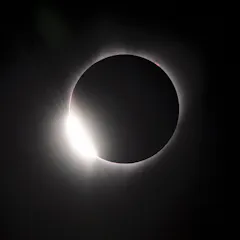
Mentions of total solar eclipses in ancient history help researchers pinpoint precise dates of notable events.
Top contributors
-

Associate Professor, Physics, Engineering Physics & Astronomy, Queen's University, Ontario
-
Professor of Astronomy, Mathematics, and Physics, Athabasca University
-
Associate Professor, Visual Arts Department, Brock University
-
Professor, Physics and Astronomy, University of British Columbia
-
Associate Professor, Department of Earth Sciences, Carleton University
-
Associate Professor of Disaster and Emergency Management, York University, Canada
-
Associate Professor, Astronomy, University of Regina
-
Manager for Education and Public Outreach, Adjunct Professor of Physics and Astronomy, Queen's University, Ontario
-
Professor, Physics, Engineering Physics and Astronomy, Queen's University, Ontario
-
Professor, History of Art & Visual Culture, Brock University
-
Professor, Classics and Archaeology; Philosophy, Queen's University, Ontario
-
Postdoctoral fellow, Physics, Engineering Physics & Astronomy, Queen's University, Ontario
-
Assistant Professor, Physics, Engineering Physics & Astronomy, Queen's University, Ontario
-
Associate Professor, Physical and Environmental Sciences, University of Toronto