

If you have young kids, the solar eclipse on April 8, 2024, represents a rare opportunity to teach them about science.
Articles on Solar eclipse
Displaying 21 - 40 of 60 articles
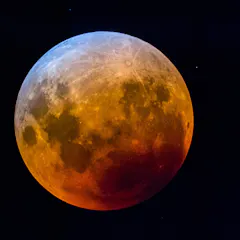
A lunar eclipse ceremony from the Torres Strait turns our understanding of the history of science on its head.

Eclipses are rare, fantastic celestial events. Here’s how educators can help visually impaired students enjoy eclipses alongside their sighted peers.

Don’t skimp on your eye safety.
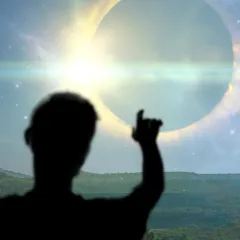
Eclipses have inspired myths, predictions and scientific discoveries. The total solar eclipse occurring on April 8 provides a once-in-a-lifetime opportunity to engage with science and the cosmos.
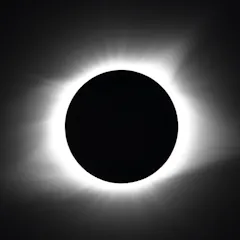
Many people will see a dazzling eclipse this April, but these events are possible only because of the sizes and precise distances between Earth, the Moon and the Sun.
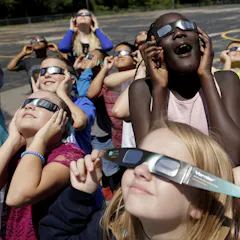
Now’s the time to get your hands on a pair of eclipse glasses in preparation for April’s display of celestial wonder.
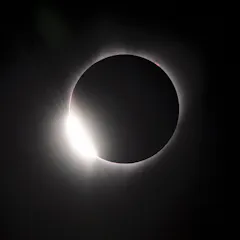
Mentions of total solar eclipses in ancient history help researchers pinpoint precise dates of notable events.
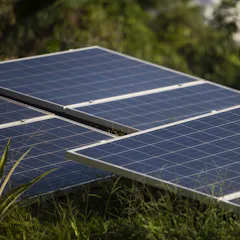
When the Moon blocks the Sun during an eclipse, utility suppliers have to pull power from the grid to make up for gaps in solar energy.
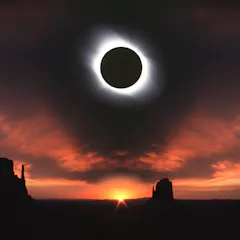
With a solar eclipse and several meteor showers coming up, an astronomy professor shares travel tips for viewing astronomical phenomena.

Witnessing a total solar eclipse can be an unforgettable experience – and apparently, quite addictive.

Calculating when and where exactly we can watch an eclipse in its full glory can be surprisingly hard.
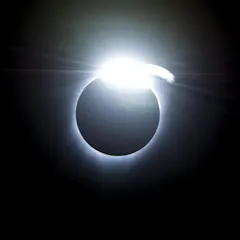
Only a tiny sliver of the Australian continent will witness the totality this time around. But there are five more total eclipses coming over the next 15 years.

Some parts of North America will witness a total solar eclipse in April 2024. This may seem far away, but you should think about preparing for this rare and fascinating phenomenon.
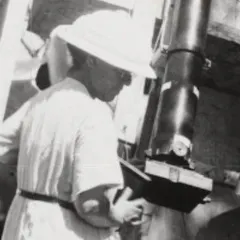
History might give you the impression astronomical discoveries were only done by men. But women were participating in scientific expeditions of eclipses too, even though it wasn’t easy.
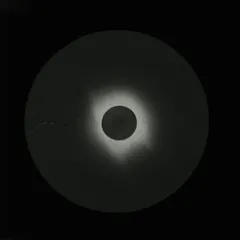
A total eclipse that travelled the full width of Australia in 1922 offered astronomers the chance to confirm Einstein’s theory of general relativity - and for the community to enjoy a rare spectacle.
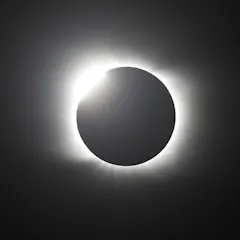
Penguins will have the best seat in the house as a total solar eclipse passes over Antarctica on December 4. Australia and New Zealand will experience a minor partial eclipse, but not a noticeable one.
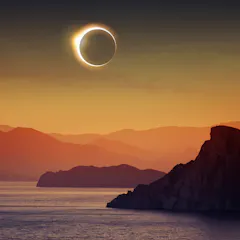
Test out scientific ideas, connect with your ancestors or just marvel at the beauty of nature.
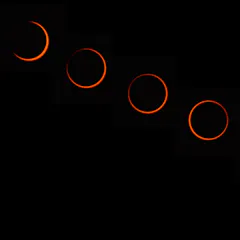
The vast majority of people will be oblivious to what’s going on above their heads.
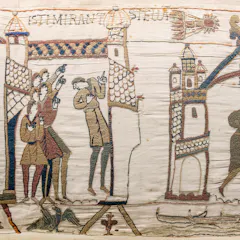
In medieval times natural phenomena, such as comets and eclipses, were regarded as portents of natural disasters, including plagues.
Top contributors
-

Senior Curator (Astronomy), Museums Victoria Research Institute; The University of Melbourne
-
Professor of Astronomy, Mathematics, and Physics, Athabasca University
-
Lecturer in Astrophysics, Queen's University Belfast
-
Teaching Professor of Astronomy & Astrophysics, Penn State
-
Dean of Science, University of California, Santa Cruz
-
Professor of Physics and Astronomy, USC Dornsife College of Letters, Arts and Sciences
-
Associate Professor, Physics, Engineering Physics & Astronomy, Queen's University, Ontario
-
Professor of Solar Physics, University of Lancashire
-
Professor Global Energy and Resources, UCL
-
Pro Vice-Chancellor Flagship Initiatives, Swinburne University of Technology
-
Associate Professor of Classics & Ancient Mediterranean Studies, History, and Asian Studies, Penn State
-
Professor of Planetary and Space Sciences, The Open University
-
Professor of Astronomy, The Ohio State University
-
Professor and Director of the Centre of Excellence for Data Science, AI and Modelling, University of Hull
-
Associate Professor in Astronomy, Monash University