
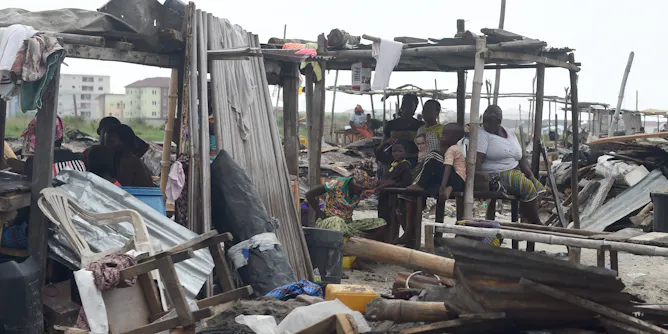
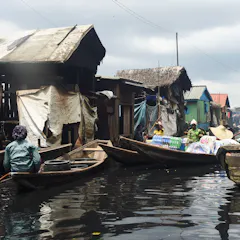
Residents whose homes cluster along waterways, canals and shorelines have built organised systems for living with climate change.
Articles on Slums
Displaying 1 - 20 of 42 articles

Programmes to address transactional sex need to be customised. The drivers change from country to country.
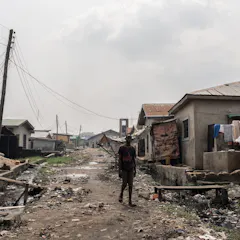
Forced eviction is not a solution to the growth of slums.

Burning plastic as fuel for cooking and heating releases toxic chemicals into the air and contaminates food. Yet this is common in many parts of the world.
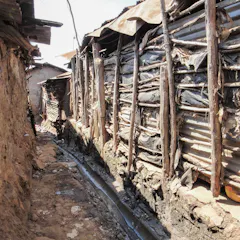
Classifying people as either ‘poor’ or ‘not poor’ based on income oversimplifies poverty.
Hypertension is a manageable condition – but left untreated, it can damage organs such as the kidneys, heart and brain.
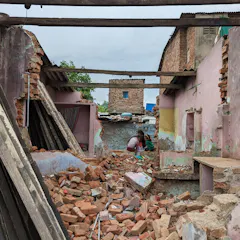
The goal of a ‘slum-free India’ would benefit residents of informal settlements more if the housing being built drew on the features of their old neighbourhoods that made their lives better.
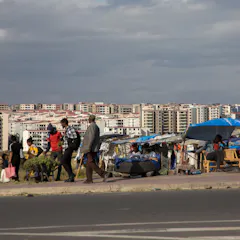
Ethiopia’s mass housing project has built and transferred half-a-million houses in two decades – but it’s damaging the social fabric of communities.
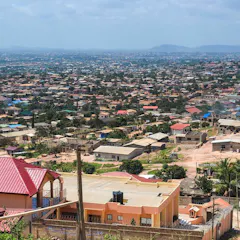
Ghanaian urban and development planners need to move away from looking up to examples of innovations from the global north.
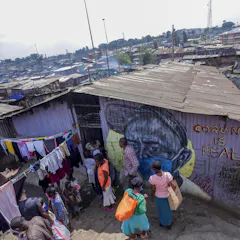
Slums are a challenge for controlling the pandemic. Strengthening their fragile healthcare provision would help mitigate the effects of COVID-19 and future pandemics.
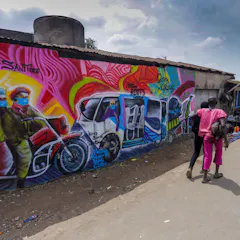
Social protection measures and food distribution targeting adolescents in informal settlements are urgently needed.
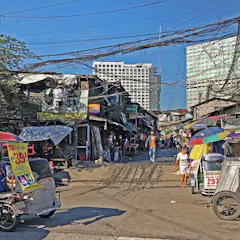
Besides battling the coronavirus pandemic, San Roque residents have long been locked in a bigger struggle for their very survival as a community in the face of home demolitions and relocations.
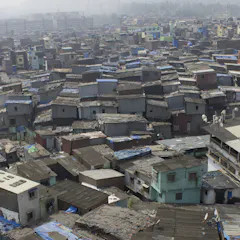
Long before the Indian government responded to the threat of COVID-19 with a lockdown, residents of Shivaji Nagar, with the support of a local NGO, were protecting and helping one another.
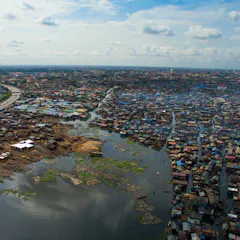
The Lagos state government must go beyond food packages as stimulus, and build capacity for poor people.
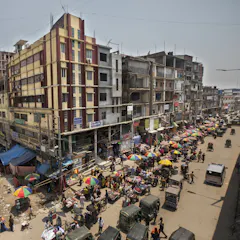
COVID-19 is spreading fast through not only the world’s richest cities but also its poorest, ravaging slum areas where risk factors like overcrowding and poverty accelerate disease transmission.
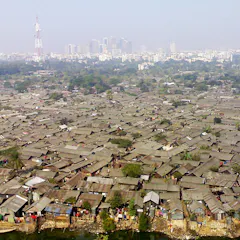
Many are speculating about the pandemic changing how we plan and use our cities. What they overlook is how many people live in unplanned settlements where it’s more likely to be business as usual.

COVID-19 is having a significant impact on the health, economic and social status of slum dwellers.
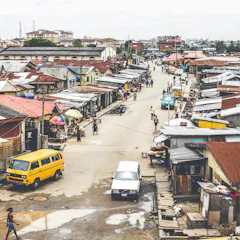
Lagos poses a set of particular challenges when it comes to making interventions work.
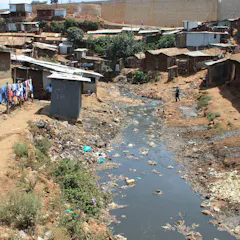
There are huge holes in the governance of Nairobi river and city’s waste which means the river’s condition has deteriorated.
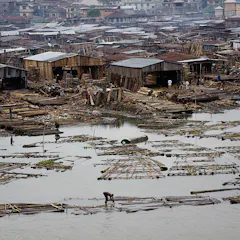
In our urban world, turning the makeshift and the informal into the livable and sustainable is our greatest challenge.
Top contributors
-

Teaching Assistant Professor, University of Pittsburg and Visiting Associate Professor, The University of Osaka, University of Pittsburgh
-
Senior Associate in Kenya, Population Council
-
Associate Professor in Organisation Studies, University of Leicester
-
Research Active Lecturer, Discipline of Psychology, Charles Darwin University, Charles Darwin University
-
Lecturer, Crawford University
-
Professor of Urban Physical Geography, Coventry University
-
Senior Research Fellow, Digital Media, Western Sydney University
-
Associate Professor, Urban & Regional Planning, Sydney School of Architecture, Design and Planning, University of Sydney
-
Lecturer in Environmental Geography, University of Stirling
-
Research Fellow, University of Edinburgh
-
Professor of Geography, University of Sussex
-
Executive Dean, UniSA Business, Adelaide University
-
Research Scholar, Center for Sustainable Urban Development, Climate School, Columbia University
-
Casual Academic, School of Architecture and Built Environment, University of Newcastle
-
Senior Lecturer in Geography and Urban Design, UCL, Fellow 2017, Institut d'études avancées de Paris (IEA) – RFIEA