

Sunny Adé is celebrated as the King of Jùjú music.
Articles on Lagos
Displaying 1 - 20 of 108 articles

Residents whose homes cluster along waterways, canals and shorelines have built organised systems for living with climate change.
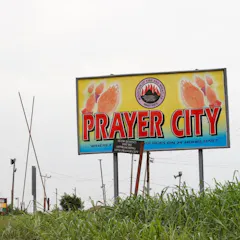
The vast prayer camps challenge stereotypes of Nigerian cities as chaotic, dysfunctional, and driven by religious tension.

English was imposed as Nigeria’s official language, but the British had no way of controlling what people did with it.
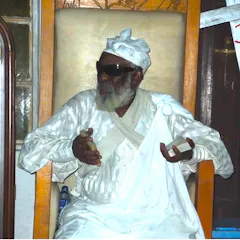
To secure health and wealth, many people combine elements from different religious traditions. One such movement is Chrislam.
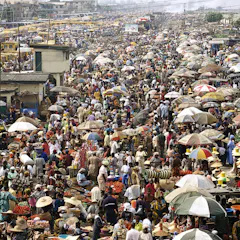
Floods regularly devastate Lagos’s informal workers, but traders and residents have built their own systems to adapt where the state has failed.

Chinese-funded infrastructure projects in African cities are driven by the national elites and therefore do not necessarily lead to community-level improvements.

Providing street lighting will need a new approach to infrastructure development.

In response to the general state of insecurity in Nigeria, local community groups in Lagos are mobilising and providing solutions.

Fela Kuti’s legacy plays out in music, in politics and even in food, with Nigerian restaurants paying homage to him on their menus.

Many African abolitionists who fought and lost their lives in the struggle against slavery have gone unacknowledged.

This was a remarkable event because it defied the tired cliché that Africans do not read.

What was once just a cultural moment has become a powerful economic engine of cultural tourism.

Women are wearing local fabrics in western designs; men are wearing western fabrics in local designs. This reflects the city’s cosmopolitan outlook.

Despite growing global interest in sexual and reproductive health, the voices of women with disabilities have remained largely unheard.
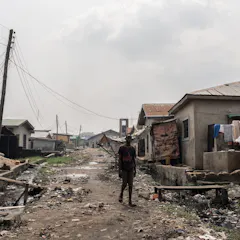
Forced eviction is not a solution to the growth of slums.

Classifying people as either ‘poor’ or ‘not poor’ based on income oversimplifies poverty.

Pregnant women in urban areas of Nigeria are more at risk than rural women of not getting emergency obstetric care. Digital technology can help.

Large banditry and terror attacks were relatively rare in Lagos and other parts of Nigeria’s south-west region until recently.
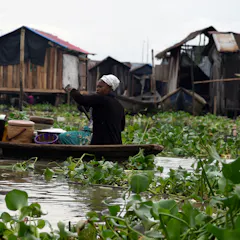
Social inclusion gives slum dwellers a voice to advocate for their rights and interests, leading to more inclusive and equitable policies and practices.
Top contributors
-

Associate professor, London School of Hygiene & Tropical Medicine
-
Professor of Sociology (Criminology, Victimology and Security Studies), University of Ibadan
-
Senior Lecturer, Department of Urban and Regional Planning, Olabisi Onabanjo University
-
Professor and Director of the Institute for Water Research, Rhodes University
-
Lecturer, Crawford University
-
Assistant Professor, University College Dublin
-
Research Fellow, Rhodes University
-
Senior Research Associate, Institute for Environment and Human Security (UNU-EHS), United Nations University
-
Associate Professor in Marketing, Keele University
-
University of Manchester
-
Distinguished Professor of History and Strategic Studies, University of Lagos
-
Lecturer, University of Benin
-
Cardiff Metropolitan University
-
Professor of Planning and Heritage, University of Liverpool
-
University of Manchester