
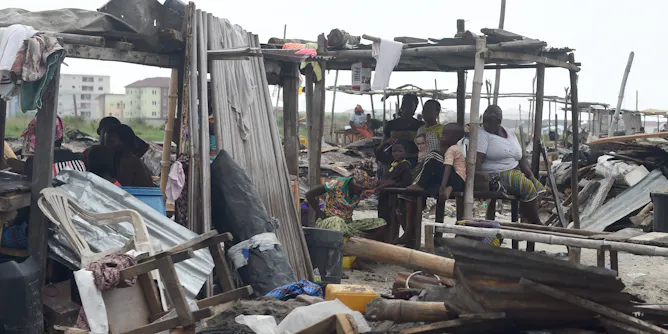
Residents whose homes cluster along waterways, canals and shorelines have built organised systems for living with climate change.
Articles on Urban slums
Displaying 1 - 20 of 34 articles
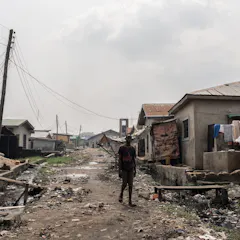
Forced eviction is not a solution to the growth of slums.

Burning plastic as fuel for cooking and heating releases toxic chemicals into the air and contaminates food. Yet this is common in many parts of the world.
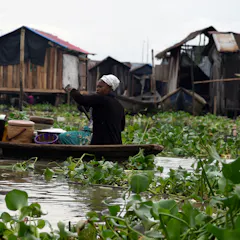
Social inclusion gives slum dwellers a voice to advocate for their rights and interests, leading to more inclusive and equitable policies and practices.
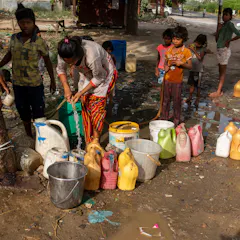
Most of the 1 billion people in informal settlements are in the tropics where the threat of humid heat is rising. Poor weather station coverage that misses local hotspots puts them even more at risk.

Armed police interventions are unconstitutional and incapable of addressing housing and safety in the inner city.

A new approach to urban planning is needed to restore hope in African cities. There are three keys that can help unlock this.
CC BY-NC-ND14.2 MB (download)
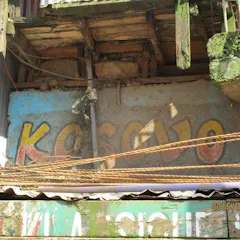
The place names of Nairobi’s informal settlements offer a glimpse into the realities of people who live there.
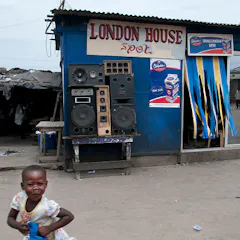
Ghanaian city authorities are focused on addressing problems of poverty, education and health rather than managing green spaces in slums
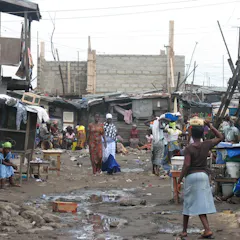
In cross-sector collaboration, communities and citizens articulate their needs and then partner with governments and NGOs to address these self-identified problems.
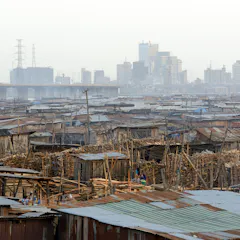
If we learn from COVID-19, there are three key areas to tackle to make cities safer from outbreaks of future infectious diseases.
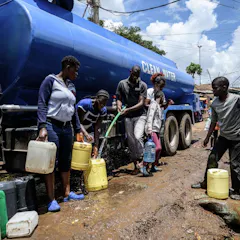
Despite high prices, poor quality and inconvenience, Kenya’s urban poor continued to buy water from private vendors because it’s still their best option.

The demon is not density but rather that African countries have not planned and made the investments necessary to manage the downsides of the type of density found in informal settlements.
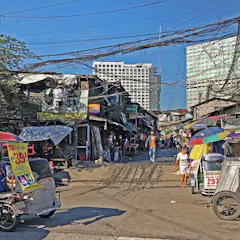
Besides battling the coronavirus pandemic, San Roque residents have long been locked in a bigger struggle for their very survival as a community in the face of home demolitions and relocations.
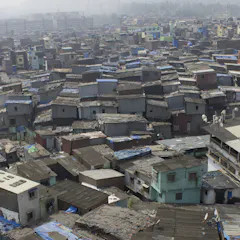
Long before the Indian government responded to the threat of COVID-19 with a lockdown, residents of Shivaji Nagar, with the support of a local NGO, were protecting and helping one another.
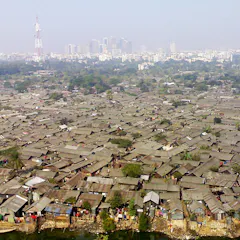
Many are speculating about the pandemic changing how we plan and use our cities. What they overlook is how many people live in unplanned settlements where it’s more likely to be business as usual.

From Santiago and La Paz to Beirut and Jakarta, many of the cities now gripped by protest share a common problem: They’ve grown too much, too fast.
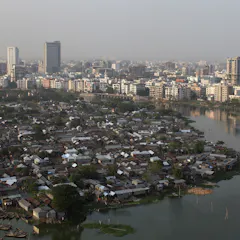
A community of 200,000 in Dhaka faces eviction to make room for “development”. Is it time to rethink the concept, especially with a billion people now living in informal settlements worldwide?
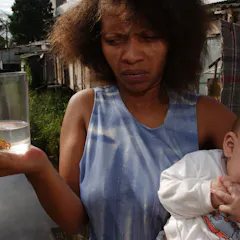
Brazil’s scorpion infestation, which is terrorizing residents of São Paulo and other major cities, is a classic ‘wicked problem.’ That means officials must think outside-the-box to fix it.
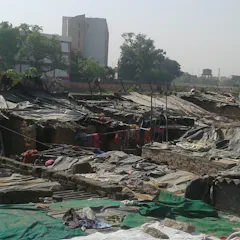
Indians were promised they would be included in planning 100 smart cities and that everyone would benefit. But many of the millions of slum residents have had no say in their homes being destroyed.
Top contributors
-

Associate Professor of Urban Planning, The University of Melbourne
-
Lecturer, Crawford University
-
Researcher, University of Sydney
-
Senior Research Fellow, Digital Media, Western Sydney University
-
Associate Research Scientist, African Population and Health Research Center
-
Researcher for the Environmental Data & Governance Initiative; adjunct instructor, University of Montana
-
Research Scientist, African Population and Health Research Center
-
Dornsife Endowed Professor of Global Health, Drexel University
-
Associate Professor, Urban & Regional Planning, Sydney School of Architecture, Design and Planning, University of Sydney
-
Research Fellow, The University of Melbourne
-
Institute Associate, Institute for Culture and Society, Western Sydney University
-
Senior Lecturer, Department of Architecture, Federal University of Technology, Akure
-
Teaching Assistant Professor, University of Pittsburg and Visiting Associate Professor, The University of Osaka, University of Pittsburgh
-
Professor of Social Epidemiology and Director of the Centre of Research Excellence in Healthy Housing at the Melbourne School of Population and Global Health, The University of Melbourne
-
Head of Urbanisation and Wellbeing, African Population and Health Research Center, African Population and Health Research Center