
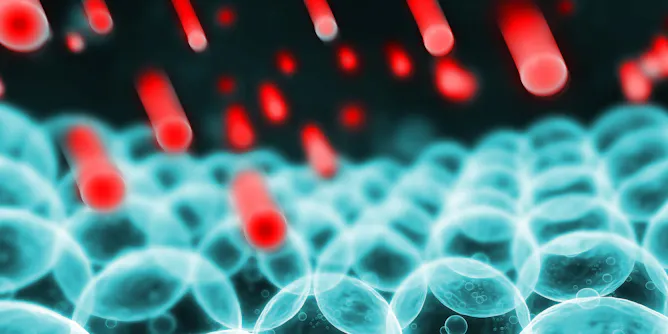
New research suggests that far from helping treatment, antioxidants can change cancer cells to make them spread more quickly.
Articles on Skin cancer
Displaying 81 - 100 of 116 articles

Nearly 40,000 cancers diagnosed in Australia can be prevented if people avoid known risk factors for the disease, according to research published today.
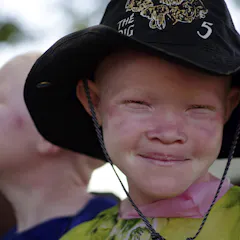
One in every 1000 people in Africa are born with albinism. Apart from facing social stigma, they also face health risks. Countries on the continent should have policies to aid this vulnerable group.

Runners have a greater risk of developing skin cancer because they are more likely have sun damage on their skin as a result of chronic sun exposure.

Researchers have estimated that 8% of the five million cases of skin cancer diagnosed each year in the US can be attributed to indoor tanning.
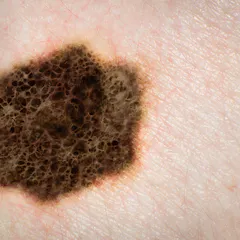
Keytruda® is the latest drug to be registered in Australia for the treatment of widespread melanoma. But we must wait to see if it meets the cost-effectiveness targets for PBS subsidisation.

Summer sunshine makes most of us feel better, but there may be more to the benefits than just feeling good.

Around 30 Australians are diagnosed with melanoma every day and more than 1,200 die from the disease each year. While small amounts of ultraviolet (UV) radiation are required for the production of vitamin…

Common over-the-counter painkillers, such as ibuprofen and aspirin, can decrease risk of developing squamous cell carcinoma, according to a study published today in the Journal of Investigative Dermatology…

The earlier you find a cancerous mole, the easier the treatment and the better the outcomes. But it’s not easy distinguishing between harmless, benign moles and those that warrant further attention. In…

Despite the many awareness-raising campaigns on the harmful effects of ultraviolet (UV) radiation, a walk along any tourist beach will tell you just how many sun worshippers continue to soak up the sun…
The prevalence of itches and pain in patients with skin cancer can help clinicians identify which of these cancers are melanoma…
Fear of developing skin cancer is one of the stronger motives for people to use sunscreen, according to new US research…
A new laser imaging system has been developed by researchers at the University of Queensland to safely view skin structures…

With daylight saving ending yesterday across most of the country and winter approaching, Australians are moving from fears of too much sun exposure resulting in skin cancer to too little sun exposure and…

Non-melanoma skin cancers (NMSCs) are the most common cancers in Australia and account for seven out of every eight new cancers diagnosed. If detected early, they are relatively easy to treat and rarely…
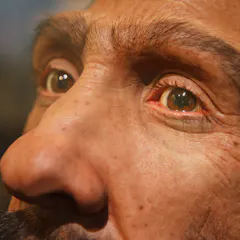
Many theories have been proposed for the evolution of dark skin pigmentation – and a new paper revives one of the oldest: that skin cancer was a more potent selective force for the evolution of protective…

Europeans fall prey to skin cancer because of their lighter skin, while Africans’ dark skin protects them. But East Asians, whose skin colour resembles that of Europeans, are similar to Africans in their…
A gene mutation responsible for red hair and pale skin is also attributed to risk of melanoma. An international study found…

Vitamin D has emerged as “the vitamin of the decade”, with a long and growing list of maladies supposedly caused through its absence or prevented through its bountiful supply. But is there adequate evidence…
Top contributors
-

Postdoctoral Researcher, Dermatology Research Centre, The University of Queensland
-
Adjunct Professsor, School of Psychology, Faculty of Health and Medical Sciences, Adelaide University
-
Adjunct Professor, School of Psychology, Curtin University and College of Health and Medicine, Australian National University
-
Professor of Dermatology, The University of Queensland
-
Professor, Department of Biomedical and Life Sciences, Lancaster University
-
Professor of Dermatology, The University of Melbourne
-
Professor in Behavioural Science, The University of Queensland
-
Senior Lecturer Princess Alexandra Hospital Southside Clinical Unit and Casual Research Assistant, The University of Queensland
-
Chief Specialist Scientist (Public Health), South African Medical Research Council
-
Professor of Biomedical Sciences, Anglia Ruskin University
-
Research Manager, The University of Queensland
-
Assistant Professor of Internal Medicine (Division of Dermatology), The University of Texas at Austin
-
Senior Research Officer, Blood Cells and Blood Cancer, WEHI (Walter and Eliza Hall Institute of Medical Research)
-
Professor and Senior Group Leader, QIMR Berghofer
-
Director Radiation Research and Advice, Australian Radiation Protection and Nuclear Safety Agency (ARPANSA), and Adjunct Associate Professor, University of Wollongong