
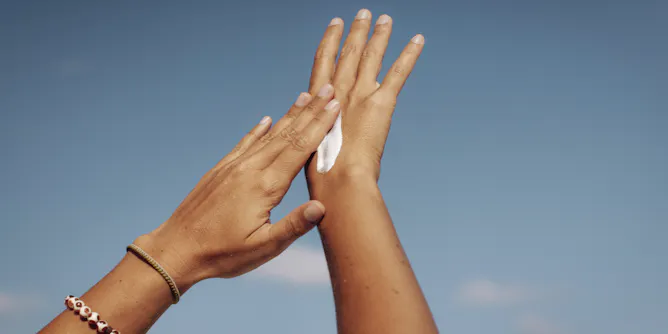
Consumers in Europe and Asia have used sunscreen containing bemotrizinol for decades, and many say its approval in the US is long overdue.
Articles on Tanning
Displaying 1 - 20 of 23 articles

Australian health authorities have been encouraging ‘no hat no play’ for 100 years.

From nausea and vomiting to brain swelling and erection problems. These are just some of the side effects of melanotan-II.
Clothing and makeup are silent, powerful ways for candidates to tell the American public who they are – and how they’ll lead.

It was Coco Channel who first made tanning fashionable. But South Californian and Polynesian surfers and American artists on the Côte d'Azur gave it its ‘raison d'être’.
New Age beliefs, alternative wellness practices and political conspiracies all fall under the umbrella of stigmatized knowledge, which can be attractive to anyone, no matter their political leanings.
Collarium sunbeds are promoted as a means to tan quickly, and reduce the effects of aging on the skin. Two experts explain what to make of their claims.

Early products focused on tanning. Others roasted you like a chicken. Which of these claims can you remember?
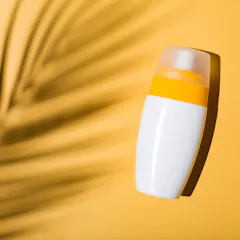
Sunburn can cause cancer, heat stroke and changes to the immune system. Choosing the right sun protection, even for darker skin, is more complicated than it looks.

Can this really give you a natural glow? And is it healthy?
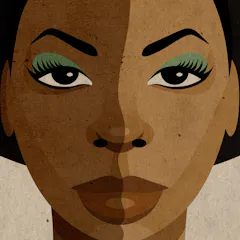
The long history of racist beauty standards alone cannot explain the ongoing global use of harmful skin lighteners.
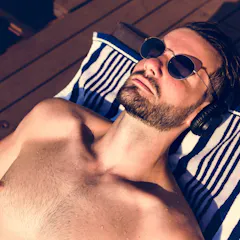
You need far less sun than you think you do.

Comrade Cheetolino, Mango Mussolini, Agent Orange … just a few of Trump’s fake tan induced nicknames.
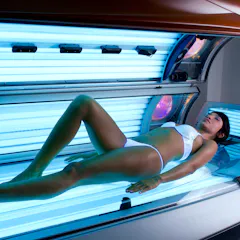
Many gyms use free tanning beds to lure in new members who are eager to look and feel their best. But this, argues Sherry Pagoto, runs against the health lifestyle premise these gyms are advocating.
Whenever summer rolls around, it’s easy to forget the basics of sunscreen. How long should I wait after applying it to go in the sun, and how long can I stay in the sun with it on?
A US study into whether a new drug can give us a tan without going into the sun generated headlines around the world. Here’s what the study really says.

Energy from the sun’s rays can cause skin damage and cancers. Sunscreens can absorb or reflect the dangerous UV light. Here’s how it works.

Melanotan helps to accelerate the production of melanin, the pigment that absorbs ultraviolet radiation and gives skin its colour.

The risks of UV radiation exposure are well-known, but some scientists are exploring lesser-known benefits of UV light.

Researchers have estimated that 8% of the five million cases of skin cancer diagnosed each year in the US can be attributed to indoor tanning.
Top contributors
-

Postdoctoral Researcher, Dermatology Research Centre, The University of Queensland
-
Associate Professor of Health Management Policy, University of Michigan
-
Principal Research Fellow, Dermatology Research Centre, The University of Queensland
-
Professeur en galénique et cosmétologie, Université de Nantes, Auteurs historiques The Conversation France
-
Sociology PhD Candidate, The University of Queensland
-
Medical student, University of California, Davis
-
Research Chemist, University of California, Riverside
-
Adjunct Professor, School of Psychology, Curtin University and College of Health and Medicine, Australian National University
-
Maître de conférences en pharmacie industrielle et cosmétologie, Université de Nantes, Auteurs historiques The Conversation France
-
Director of the International Gaming Research Unit and Professor of Behavioural Addiction, Nottingham Trent University
-
Senior Lecturer, School of Social Science, The University of Queensland
-
Adjunct Senior Lecturer, Centre for Primary Health Care and Equity, University of New South Wales, UNSW
-
Professor of Dermatology, The University of Queensland
-
Professor- Departments of Medical Microbiology & Immunology and Dermatology | Member- Foods For Health Institute | Member- Comprehensive Cancer Center | Director- Autoimmunity | Director- Immune Monitoring, University of California, Davis
-
Associate Fellow in History, University of Warwick