

The $12.6 billion agreement promises a new era of cooperation between governments, the vocational education and training sector, business and the community.
Articles on Skills
Displaying 41 - 60 of 113 articles

In a greener future, what becomes of current fossil fuel workers? Despite possessing skills applicable to green industries, their geographical locations will limit their opportunities.

As part of the new employment white paper the federal government has announced it is thinking seriously about a national skills passport.

The Intergenerational Report puts a long lens on the nation’s future, looking at the implications of demographic changes and covering a broad range of economic and social areas

In the rapidly changing, ambiguous and unpredictable world of work, future leaders must be able to learn fast.

Vocational education and training is facing some big changes. The federal government is proposing a five-year National Skills Agreement with the states to start next year.

The average person will spend 90,000 hours at work over a lifetime, so you might as well try and enjoy it.
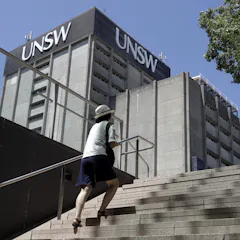
The Albanese government has changed visa conditions for international graduates. But this alone won’t help students stay in Australia.

Education can’t make up for inadequacies in other policies that continue to cause mass unemployment.
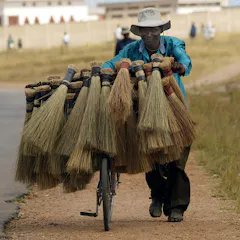
Skills training in Zimbabwe excludes students from poor backgrounds. The informal sector should be used as a training ground for them.

We hear the term ‘skills shortages’ all the time in media and policy debates. But what skills do we need, and more importantly, how do we get them?

Hot rooftops and a looming skills shortage – these are just a few challenges faced by crucial yet undervalued air-conditioning repair people.

Wind turbines need building, heat pumps need installing – but Britain has a chronic skills shortage.

Corruption and fraud make a few rich households richer. But the already poor and low-skilled lose their jobs and become poorer.

Can the structural barriers to low-skilled employment growth be overcome?

Youth unemployment in Nigeria is a skills mismatch problem – corporations can’t find suitable workers in the midst of a large pool of unemployed workers.

Demand for professional development has grown but the pandemic has forced it online. Decades of evidence from online education tells us how to ensure professional development remains effective.

South Africa is producing an oversupply of graduates in fields that don’t support economic growth.

Freelancers who have lost work during the COVID-19 crisis can take steps to ensure they have a successful long-term career in the post-pandemic period.
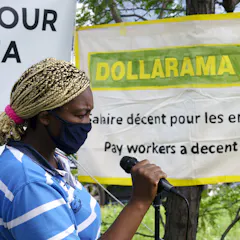
Urgent measures are necessary from various levels of government to develop support programs for immigrant women during the COVID-19 pandemic.
Top contributors
-

Professor of Entrepreneurship and Innovation, Edith Cowan University
-
Associate Professor, College of Business, Government and Law, Flinders University
-
Emeritus Professor of Education, University of Derby
-
Professor, Economics, University of the Western Cape
-
Professor of Economics & Business, Allegheny College
-
Professor, Innovation and Marketing, Mount Royal University
-
Faculty member, Centre for Researching Education and Labour, University of the Witwatersrand
-
Associate, London School of Economics and Political Science
-
Chair of Education (assessment) Melbourne Graduate School of Education, The University of Melbourne
-
Researcher, University of Cape Town
-
Professor of Organisational Psychology and Health, University of Manchester
-
Dean of the Faculty of Economic and Management Sciences, University of Pretoria
-
Principal Research Scientist, CSIRO
-
Professor of Enterprise and Competitiveness, University of Birmingham
-
Senior Lecturer in Psychology, University of Buckingham