

As labour shortages deepen across sectors, the disconnect between formal education and real-world job requirements is becoming harder to ignore.
Articles on skills gap
Displaying 1 - 20 of 28 articles

Adam Smith’s arguments for accessible, universal, quality education could be applied to address the UK skills shortage.

Refugees can help fill labour shortages and skills gaps, while also boosting diversity and competitiveness.

A mismatch between the skills employers want and what young people have is the major cause of youth unemployment in South Africa. Soft skills are key.

To overcome serious shortages of workers, both highly skilled and low-skilled, the government will need to look to migration. But fostering home-grown skills is a better and more enduring solution.

Earth scientists are on the skilled occupation list for immigration even as universities cut back in this area. The problem lies with a funding model that offers no incentive to lift graduate numbers.
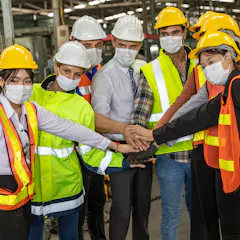
While skilled migration can help fill short-term gaps, Australia needs a more sustainable, long-term approach to skills matching and development to make the most of the people who are already here.

South Africa is producing an oversupply of graduates in fields that don’t support economic growth.

What’s taught in South African schools is at odds with the skills pupils need for the post-school world.

To ensure foreign workers continue to view Canada as a place to live and work, the government must find a way to keep borders open to all workers essential to the post-pandemic economic recovery.
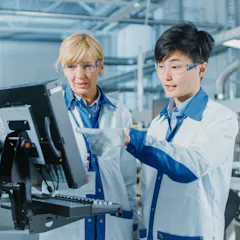
There is a growing mismatch between what education and training provide and the skills needed in workplaces being reshaped by the digital economy. Advanced apprenticeships can help close the gap.

There are a few things South Africa needs to do to close the gap between what the education system produces and what the job market needs.

The skills shortage in the foundry sector shows there is a continuing demand for “traditional” trades.

With Congress so deadlocked in recent years, skills training is a rare example of the two parties actually working together.
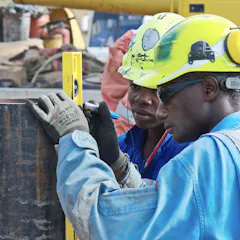
A major constraint that prevents Kenyans from benefiting from the oil sector includes the lack of specialised training or technical skills

The prospect of a post-Brexit talent exodus and the ongoing productivity puzzle underline the urgency of developing homegrown talent.

Young people are the most vulnerable as industry and the labour market undergo radical change, but meeting this challenge could just be a matter of plugging existing gaps.

An initiative to address a skills gap in science, technology, engineering and mathematics may be actually narrowing the pool of students who consider a career in STEM.
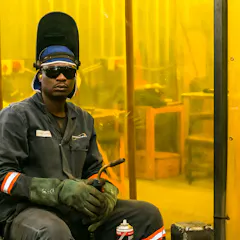
To realise Kenya’s oil, gas and mining potential, the sector needs more people with the right skills to support it.
The subject of Technology can be used to support and develop pupils’ entrepreneurial skills.
Top contributors
-

Associate Professor, College of Business, Government and Law, Flinders University
-
Professor of Entrepreneurship and Innovation, Edith Cowan University
-
Director and Lecturer, Extractives Baraza, Strathmore University
-
Design Thinking Programme Manager, University of Cape Town
-
Associate Professor of Geography and Tourism Studies, specializing in economic geography, regional development and cultural industries, Brock University
-
Professor of Education, Northumbria University, Newcastle
-
Senior Lecturer in Entrepreneurship, Consumer Studies and Technology Education, North-West University
-
Principal Research Scientist, CSIRO
-
Reader, King's Business School, King's College London
-
Professor in the School of Economics, University of Surrey
-
Senior Lecturer in Public Policy, Lancaster University
-
Economist, Data61, CSIRO
-
Research Fellow at BehaviourWorks Australia, Monash Sustainable Development Institute, Monash University
-
Senior Lecturer in Curriculum and Instruction, University of Botswana
-
Research Fellow, The University of Melbourne