
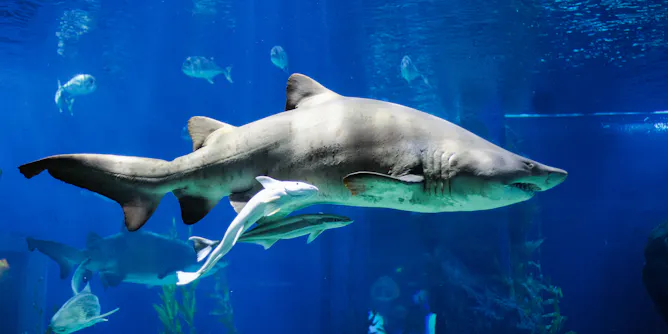
New research shows just how different male and female sharks can be.
Articles on Sharks
Displaying 141 - 160 of 249 articles
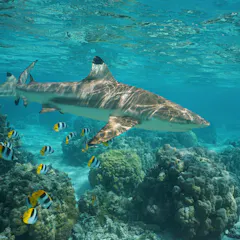
When humans have conflicts with wildlife, the first reaction is often to cull them. But there’s little evidence to show that it works, and removing predators can even backfire and make things worse.
We cannot spot every shark in the ocean. But we can detect their ‘environmental DNA’.
If sharks habitats aren’t known, it’s harder to conserve either the animals or those habitats.
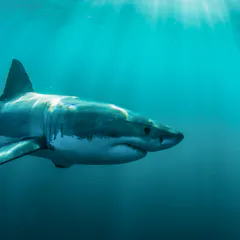
How many shark encounters have there been at your local beach? Explore our interactive map to see 20 years of incidents between humans and sharks in coastal waters around Australia.
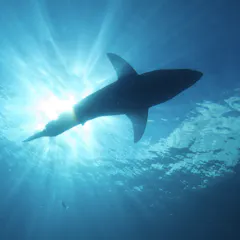
New research has used genetic analysis in a world-first effort to accurately estimate Australian and New Zealand white shark numbers.

Scientists may have discovered why cancer incidence rises with age, and it’s got more to do with the immune system than people thought.
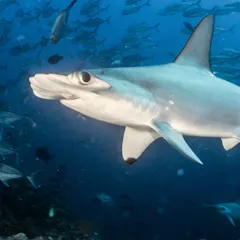
Plankton has a chemical fingerprint that reveals where it came from. Scientists have now used this to track sharks at the opposite end of the food web.
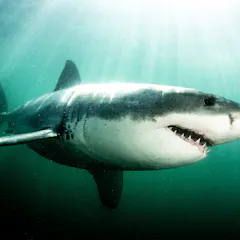
Interactions between sharks and humans happen in a variety of places. That means reducing conflict needs different interventions.
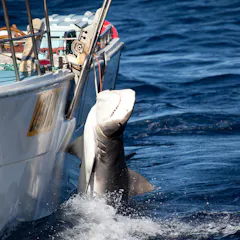
A Senate committee has recommended an end to sharks culls and nets. According to surveys, the public is on board with the idea of ending policies that are lethal to sharks.

Fatal shark bites are very rare. But the stats do suggest that the likelihood of an attack proving fatal is higher in Australia - probably because our waters are home to the “big three” dangerous species.
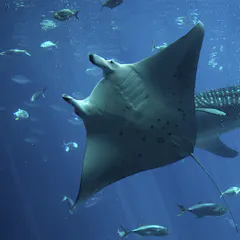
As the Discovery Channel and National Geographic Wild unleash a week of dueling shark programs, a biologist advises viewers to take what they see with a large grain of sea salt.
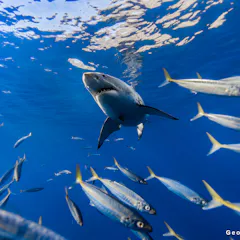
The world’s oceans are home to innumerable life forms, from sponges to sea lions, and scientists have many creative ways of studying them.
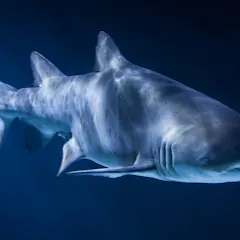
Sharks can’t sneeze like we do, but they can do other cool tricks – like making their stomach stick out of their mouth to get rid of unwanted stuff.
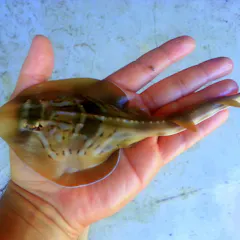
Rays caught unintentionally by fishing trawlers often spend time on deck before being returned to the ocean. New research shows the stress of this experience affects pregnant rays, and their babies.
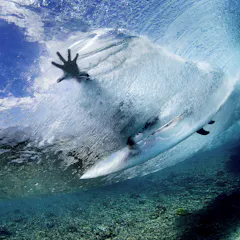
Professional surfers have called for culling sharks to reduce the risk of attacks. A shark biologist explains why culling will not work and surfers should accept risk when they enter the water.

LIfeguards could potentially have a new ally in the fight to reduce shark incidents: drones that can spot when a shark swims nearby, and automatically alert authorities.
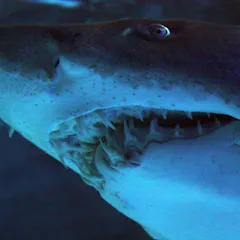
The first teeth may have evolved from combination of scales and tastebuds.
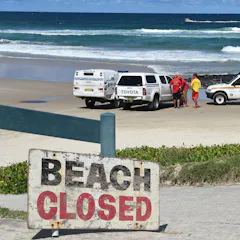
Shark nets are controversial, which is why the New South Wales government is investigating a host of other ways to keep humans and sharks apart – some more tried and tested than others.
Shark nets seem like they should reduce shark attacks. But as these events are so rare and variable anyway, proving it statistically is no mean feat.
Top contributors
-

Associate Professor of Public Policy, University of Sydney
-
Wen Family Chair in Conservation, The University of Western Australia
-
Marine Biologist, South African National Parks (SANParks); Honorary Research Associate, South African Institute for Aquatic Biodiversity (SAIAB), South African Institute for Aquatic Biodiversity
-
Senior Lecturer in Geography, University of Wollongong
-
Senior Research Fellow, Conservation Science, University of Oxford; Bangor University
-
Professor of Marine Fisheries Ecology, Macquarie University
-
Shark biologist, The University of Western Australia
-
Associate Professor of Evolutionary Developmental Biology, University of Florida
-
Doctoral Programmes Manager, Nottingham Trent University
-
PhD graduate, University of Southampton
-
Professor of Marine Ecology, University of Southampton
-
Director, Florida Program for Shark Research and Coordinator of Museum Operations, Florida Museum of Natural History, University of Florida
-
Director, Florida Program for Shark Research, University of Florida
-
Faculty Research Associate in Marine Biology, Arizona State University
-
Executive Dean of the College of Arts, Sciences & Education and Professor of Biological Sciences, Florida International University