
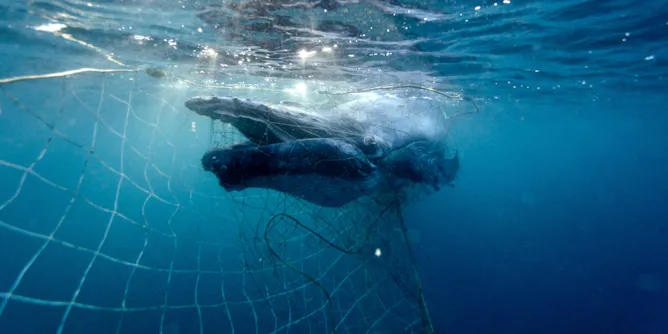
I’ve seen whale entanglement in shark nets firsthand, when a humpback whale calf drowned in one a few years back. It was terrible.
Articles on Sharks
Displaying 81 - 100 of 249 articles
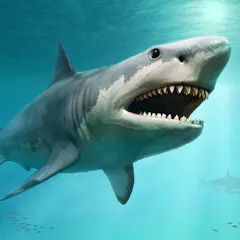
A terrifying sight in ancient waters, the megalodon shark was once the most feared creature in the sea.
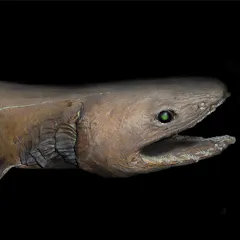
Frilled sharks haven’t changed for about 80 million years! And while they may look a bit like snakes from a distance, they are actually much more similar to other sharks close up.
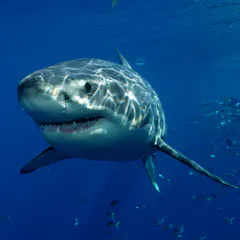
As the oceans warmed, great whites were more adaptable.
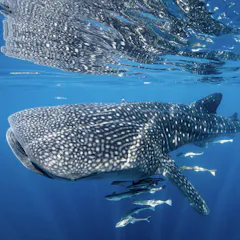
Plankton-eating sharks are struggling to navigate crowded ocean highways, a new study suggests.
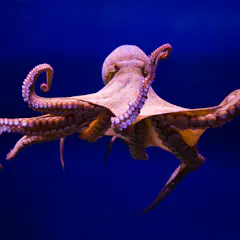
With nine brains, blue blood and a talent for camouflage, the octopus is one of the most fascinating creatures in the sea.

Researchers have discovered that great white sharks are more social than previously thought. Using specialized tags, they tracked six sharks and found that some stay close to each other when hunting.
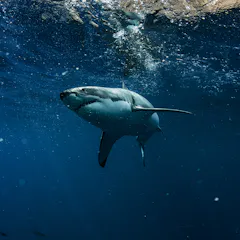
How sharks sleep has been a mystery. Some species of shark need to swim continuously to push water over their gills and breathe. New research is shedding light on how sharks sleep.

Hard and strong, or bendy and flexible? A cartilaginous skeleton provides advantages in the ocean, but wouldn’t stand up to life on land.
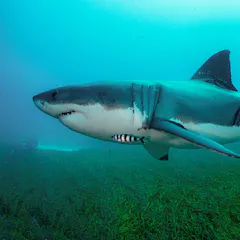
As authorities grapple with the best way to respond to the tragedy, it’s worth remembering all shark mitigation measures come with both merits and drawbacks – and none is a silver bullet.
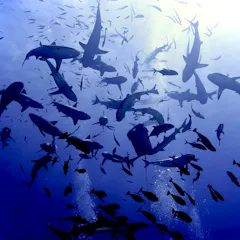
Sharks exhibit astonishing diversity, and this extends to how they reproduce. Experts still don’t know why some species have placentas and others don’t.

The fossil of a gigantic ichthyosaur was recently discovered in the UK. It wasn’t the only creature lurking in the Jurassic oceans.

It’s usually good news when a once-scarce species starts to recover – unless it starts getting in humans’ way. An ecologist explains how science can help predict unwelcome encounters.
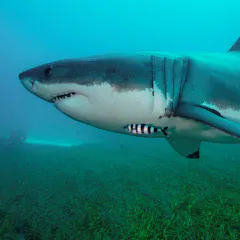
No country has a higher diversity of sharks than Australia. That means we have a special responsibility to protect them.
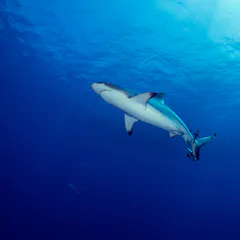
The ‘SharkSmart’ approach, adopted by the Queensland government, aims to educate people to take responsibility for reducing shark bite risk by changing their own behaviour. But can humans change?
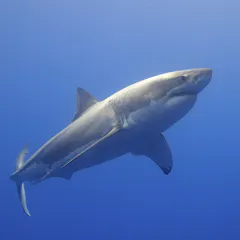
The death of 57-year-old Paul Millachip at Fremantle’s Port Beach is a reminder that shark bites, though rare, can be tragic. New research aims to reduce the risk by understanding sharks’ vision.
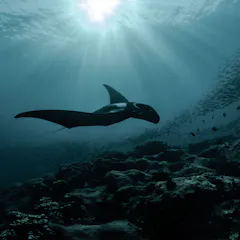
Nearly all species of sharks and rays are captured in fishing operations. But research shows that fishing quotas and closing some areas to fishing can help rebuild threatened populations.
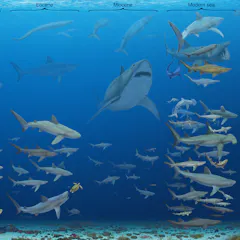
Sharks have been around for more than 400 million years — but not all sharks are equally resilient to changes around them. Why do some groups thrive, while others dwindle?

Which species are becoming endangered and which are recovering, according to the IUCN World Conservation Congress?

These giant predators are helping solve the mystery of Earth’s cooling shift some 50 million years ago.
Top contributors
-

Associate Professor of Public Policy, University of Sydney
-
Wen Family Chair in Conservation, The University of Western Australia
-
Marine Biologist, South African National Parks (SANParks); Honorary Research Associate, South African Institute for Aquatic Biodiversity (SAIAB), South African Institute for Aquatic Biodiversity
-
Senior Lecturer in Geography, University of Wollongong
-
Senior Research Fellow, Conservation Science, University of Oxford; Bangor University
-
Professor of Marine Fisheries Ecology, Macquarie University
-
Shark biologist, The University of Western Australia
-
Associate Professor of Evolutionary Developmental Biology, University of Florida
-
Doctoral Programmes Manager, Nottingham Trent University
-
PhD graduate, University of Southampton
-
Professor of Marine Ecology, University of Southampton
-
Director, Florida Program for Shark Research and Coordinator of Museum Operations, Florida Museum of Natural History, University of Florida
-
Director, Florida Program for Shark Research, University of Florida
-
Faculty Research Associate in Marine Biology, Arizona State University
-
Executive Dean of the College of Arts, Sciences & Education and Professor of Biological Sciences, Florida International University